
Çeşme markets, located in and around Çeşme, offer a vibrant and colourful shopping experience that reflects the charm of this popular Aegean destination. The highlight of Çeşme markets is the fresh, local produce. Stalls brim with seasonal fruits and vegetables, olives, herbs, and spices, often grown by local farmers. The fresh olives and olive oil are particularly popular due to the region’s olive-growing tradition. The markets, especially the Saturday market in Alaçatı, are known for their handmade items, including textiles, ceramics, jewellery, and leather goods. Many products reflect traditional Turkish craftsmanship, making it an excellent place to find unique souvenirs or gifts.
Schedule for market days around Çeşme
| Monday | Ildır |
| Tuesday | Dalyan |
| Wednesday | Çeşme + Reisdere |
| Thursday | Ilıca |
| Friday | Çiftlikköy + Ovacık*1 |
| Saturday | Alaçatı |
| Sunday | Çeşme |
The Saturday market in Alaçatı is by far the largest in the region. It is approximately ten times bigger by area and number of stalls than the primary Çeşme market on Sunday.
Market Schedules – Table of Contents
Çeşme Market (Sunday)
Location (Sunday): İsmet İnönü, 2069. Sk. No. 22, 35930 Çeşme/İzmir
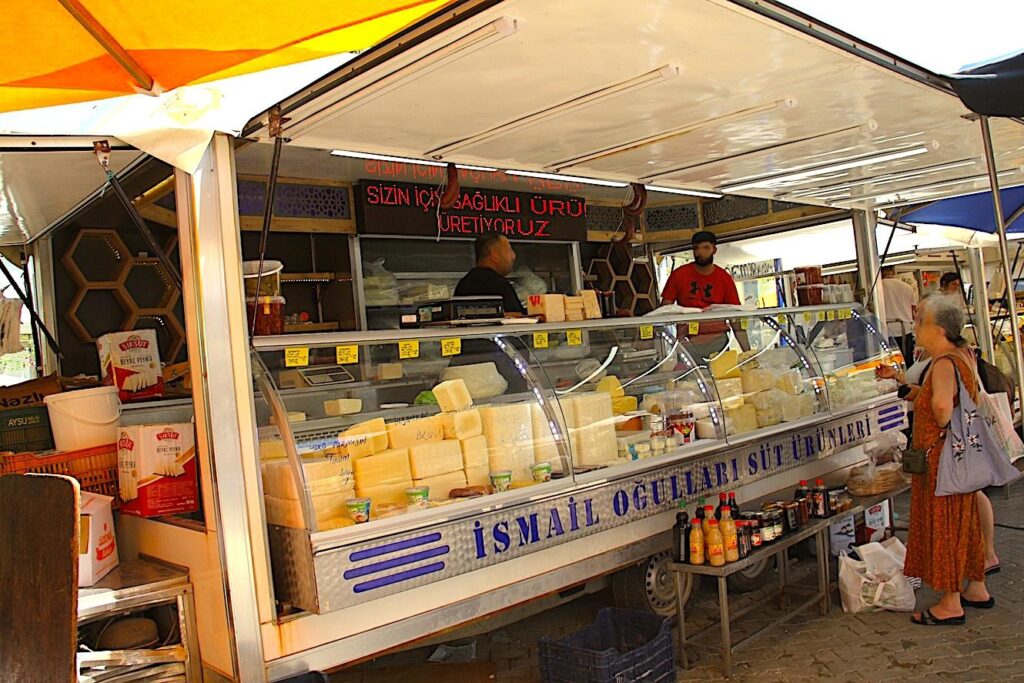
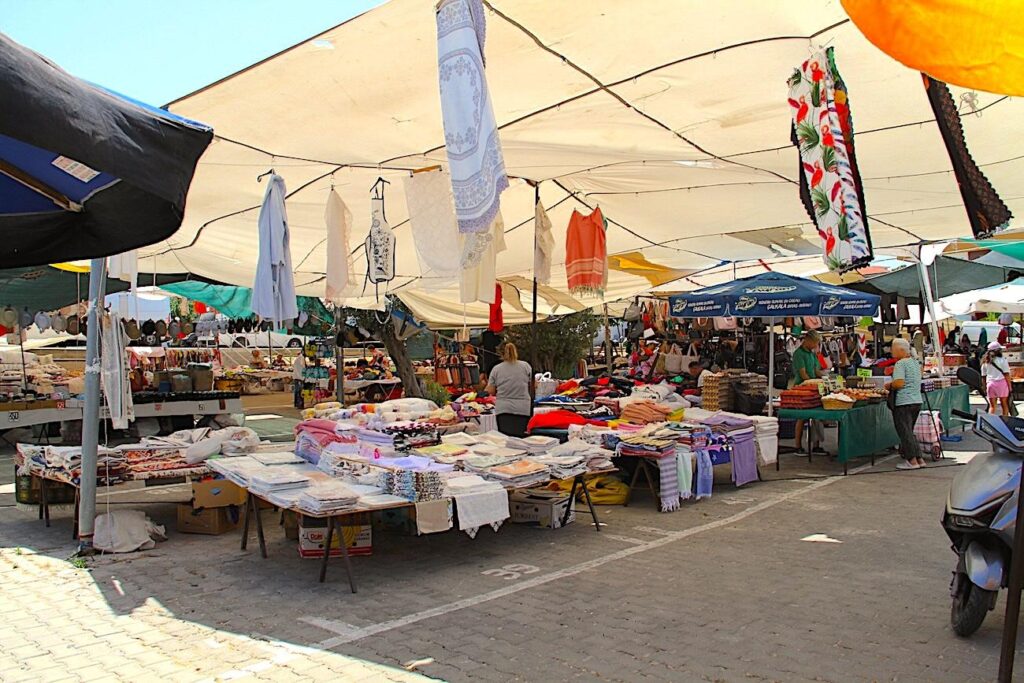
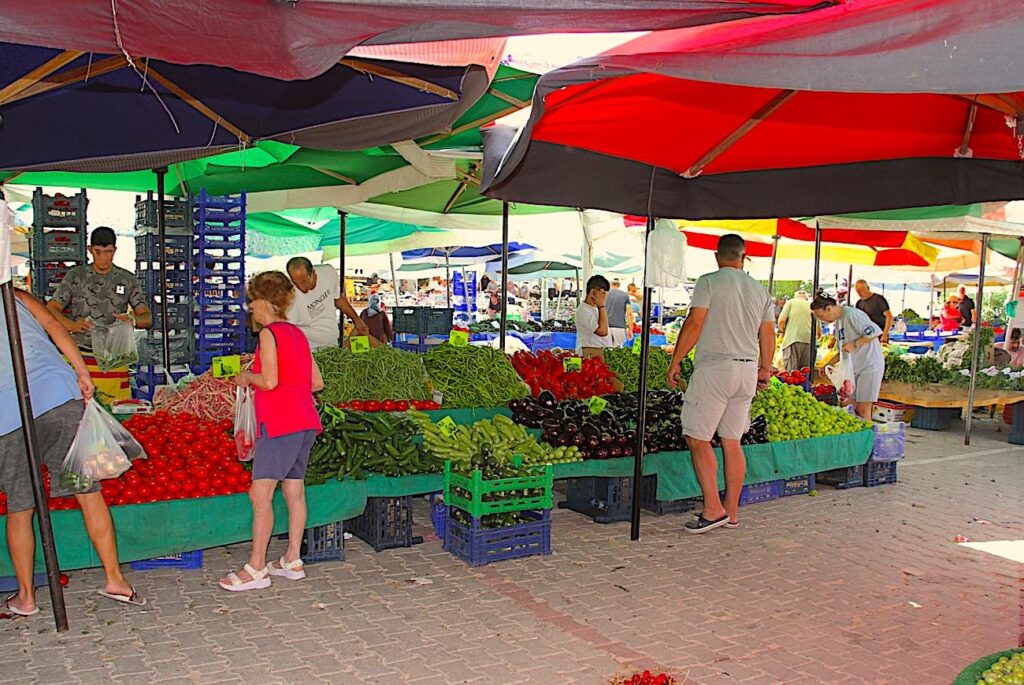
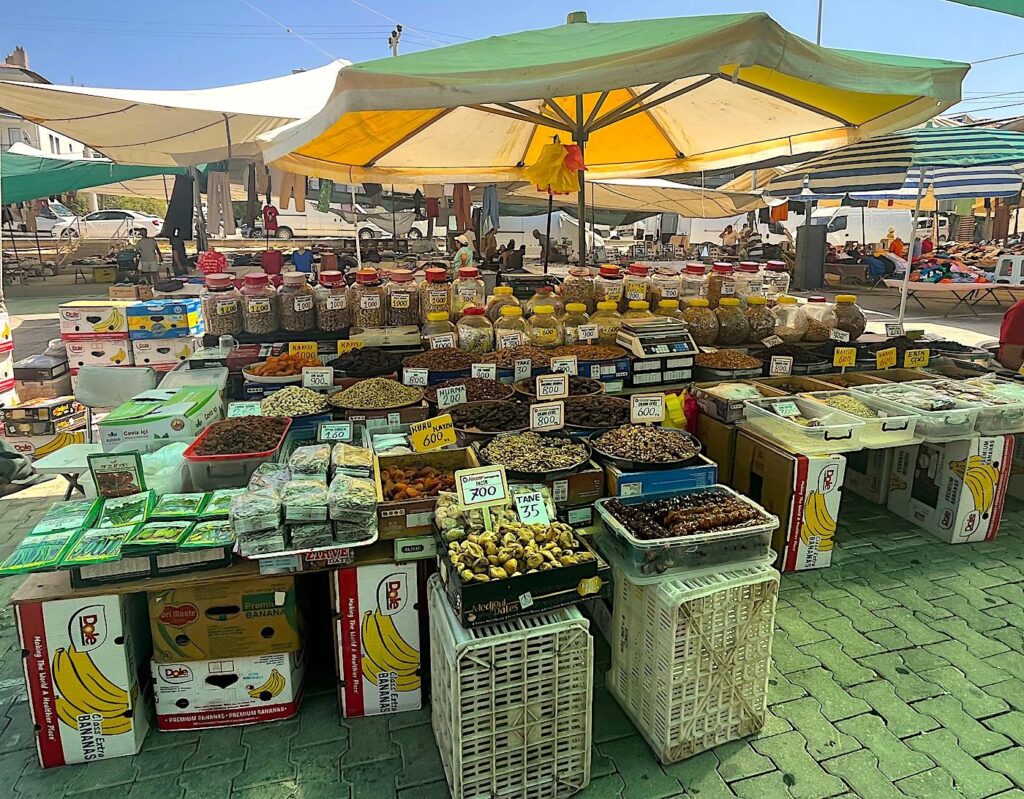
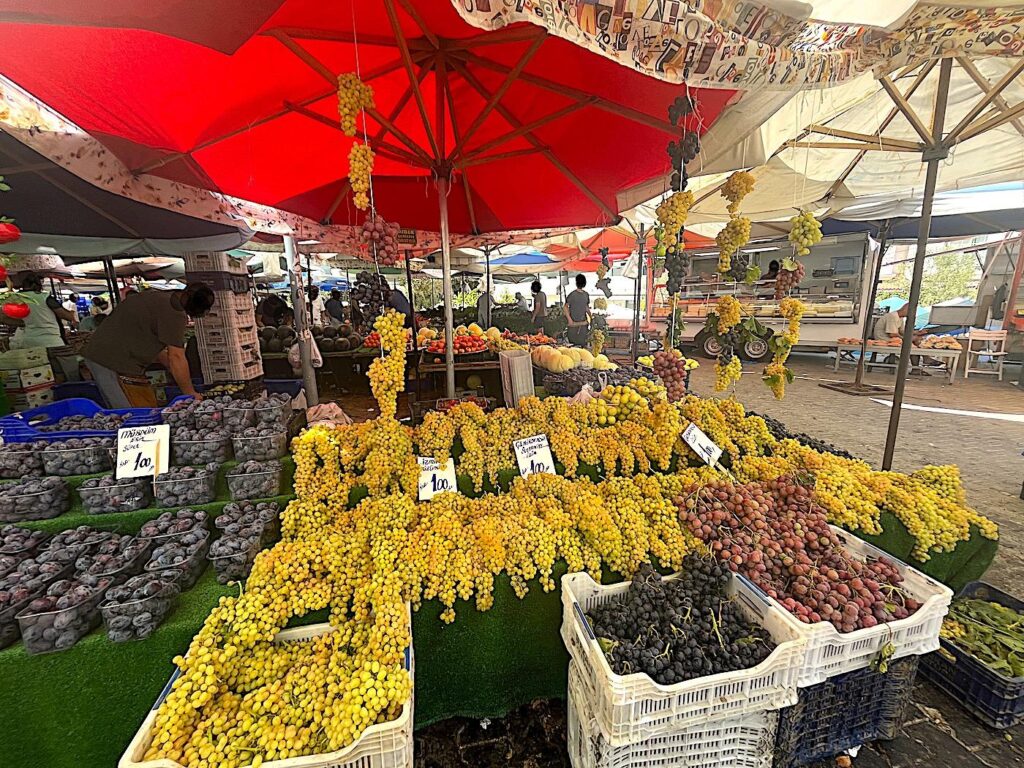
The Sunday Çeşme market (Çeşme Pazarı) is located in the car park area between 2069 Sokak and 2074 Sokak, behind the football stadium (Çeşme İlçe Stadı). The market primarily features fruit, vegetables, and herbs, but also offers stalls selling cheeses, olives, chicken, spices, preserves, jams & honey, shoes, clothing and fabric, kitchenware, hardware, and plants. There is also a smaller Wednesday Çeşme market, which is located mainly along 3001 Sokak.
Alaçatı Market (Saturday)
Location (Saturday): Yeni Mecidiye Mahallesi, 3020. Sk., 35930 Alaçatı Belediyesi/Çeşme/İzmir
Alaçatı Market (Alaçatı Pazarı), held every Saturday, is one of the most vibrant and colourful attractions on the Çeşme Peninsula. Unlike a single square, the market forms a lively labyrinth that winds through several blocks, turning the town into a buzzing hub of shopping and social life. Covering roughly 3 hectares, it draws in visitors with a cheerful mix of Aegean produce, artisan crafts, textiles, and antiques.
Mounds of fresh vegetables, herbs, olives, cheeses, and fruit, all grown in the fertile Aegean countryside, dominate the food section, alongside stalls selling homemade jams, honey, and traditional baked goods. Around the mosque, vendors specialise in clothing, textiles, and accessories, while further along the streets, antique dealers and craft-makers showcase ceramics, jewellery, and decorative objects. It is a treasure trove where you can shop for gourmet produce or find a handmade keepsake.
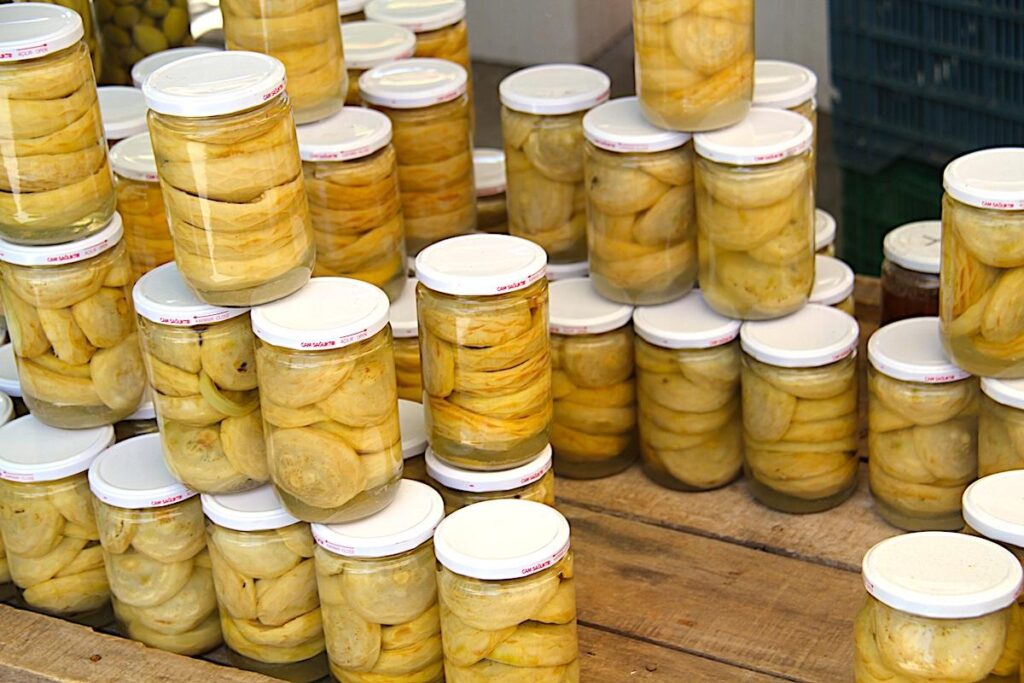
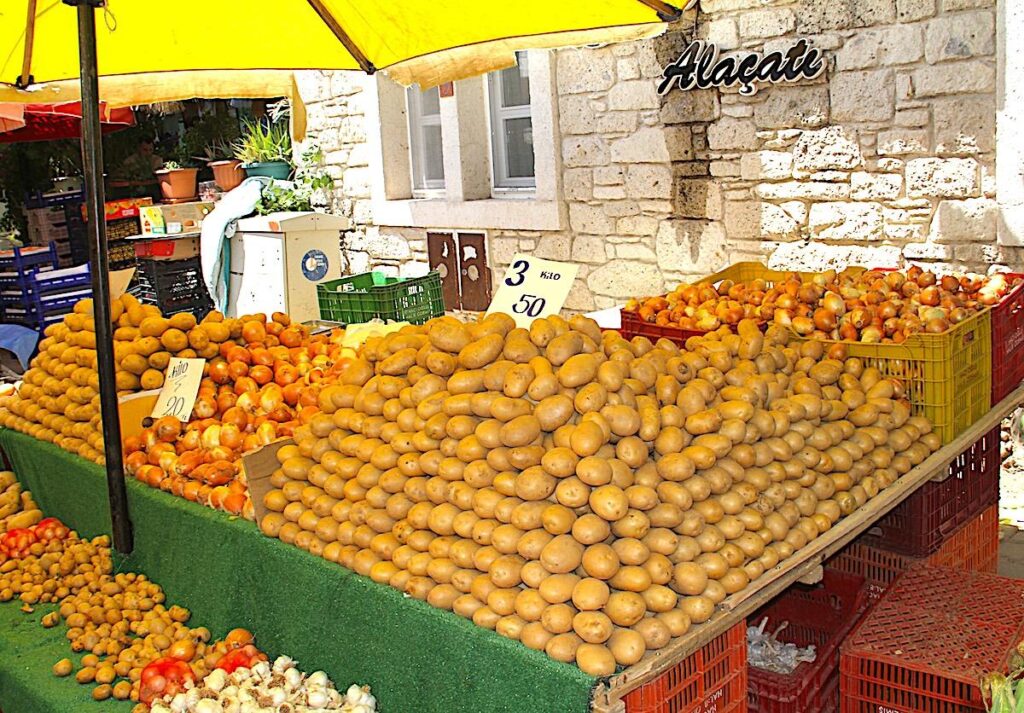
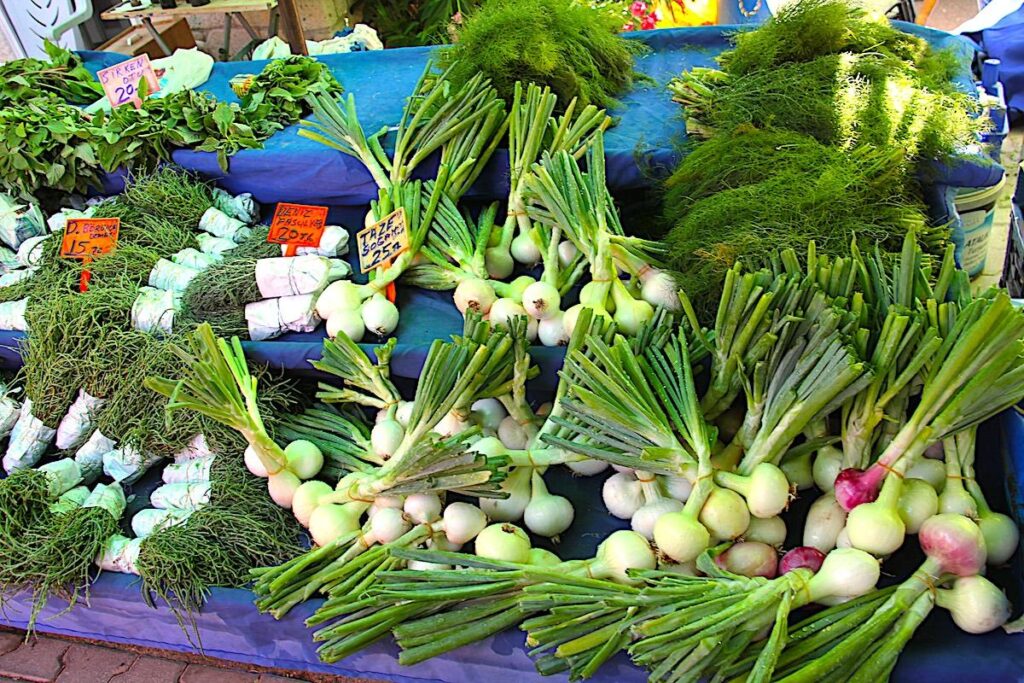
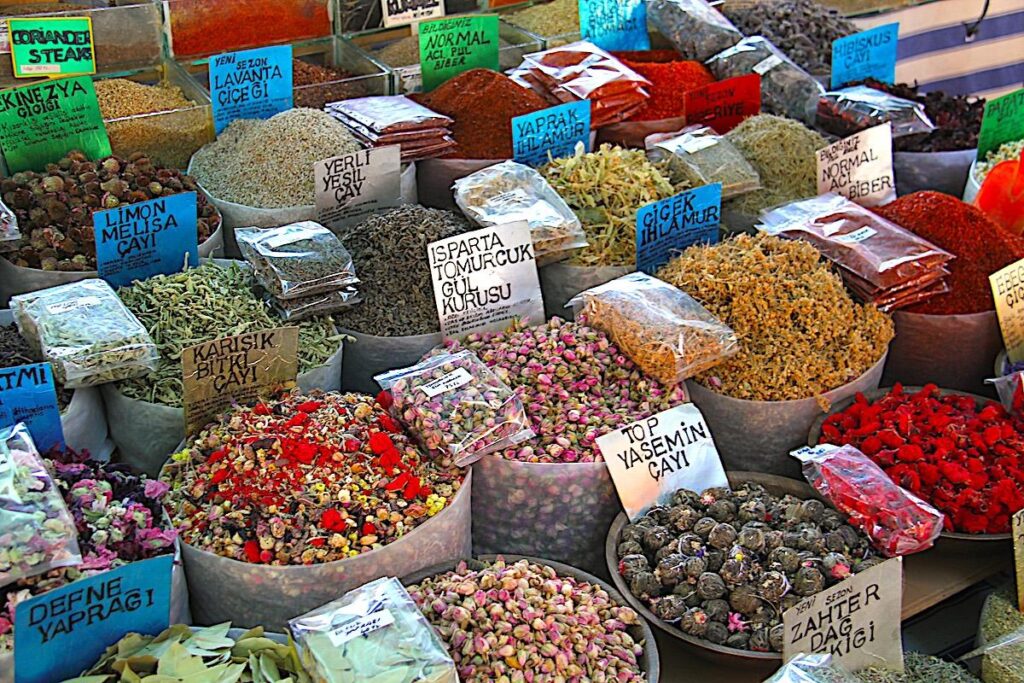
The Saturday Alaçatı market spans a vast area in the southwest part of the town, along İnönü Cd. (Alaçatı Dolmuş Garage and the Tenis Club). Up 2060 Sokak and 3000 Sokak to 3010 Sokak, approximately 750 metres. The clothing and fabrics section is located closer to İnönü Cd., while the fruit and vegetable areas are situated near 3010 Sokak, although the stalls are interspersed in some places.
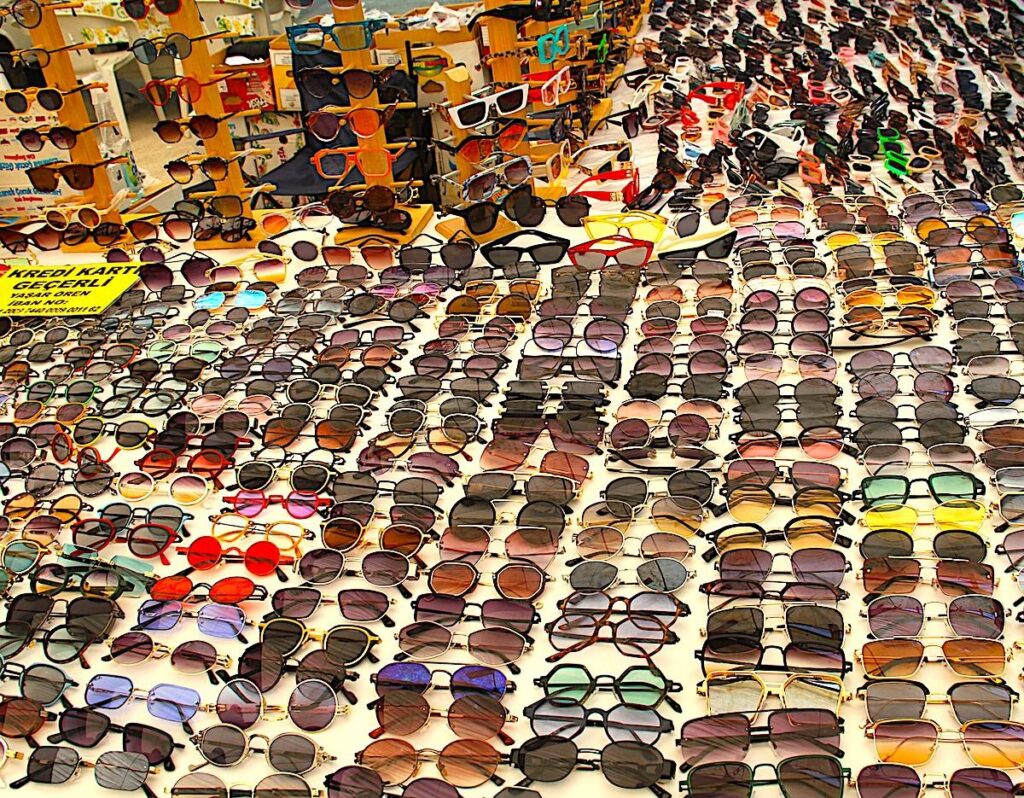
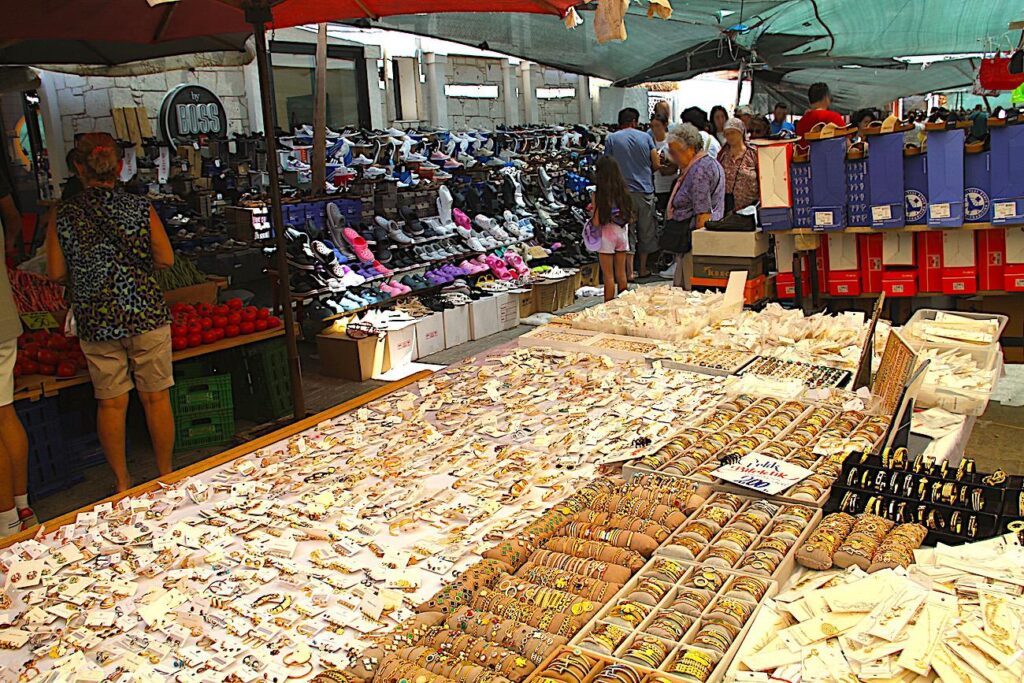
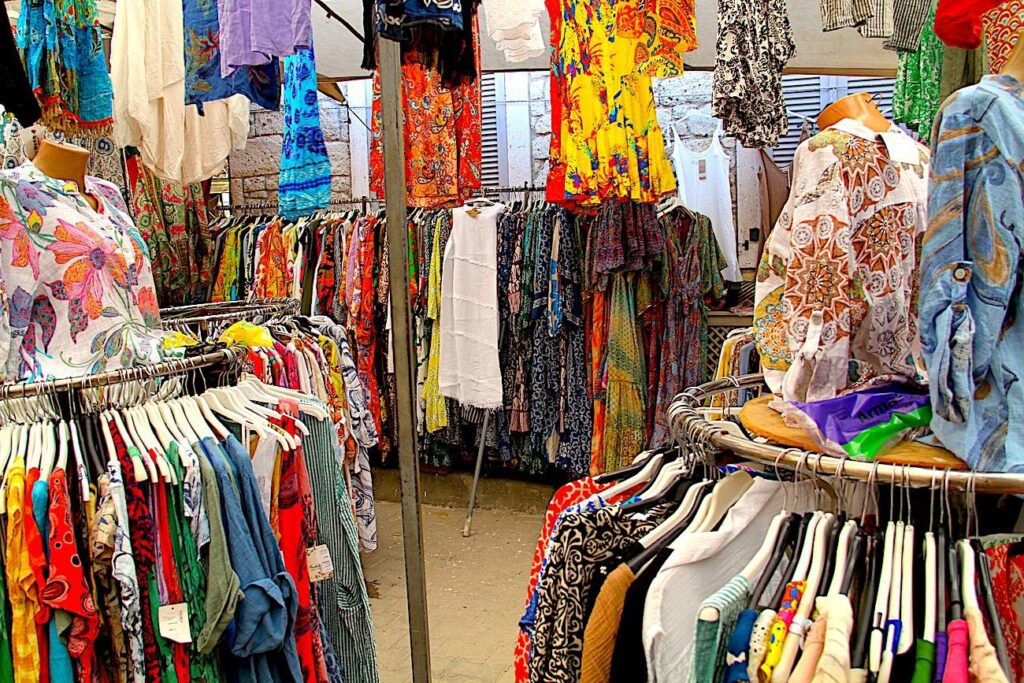
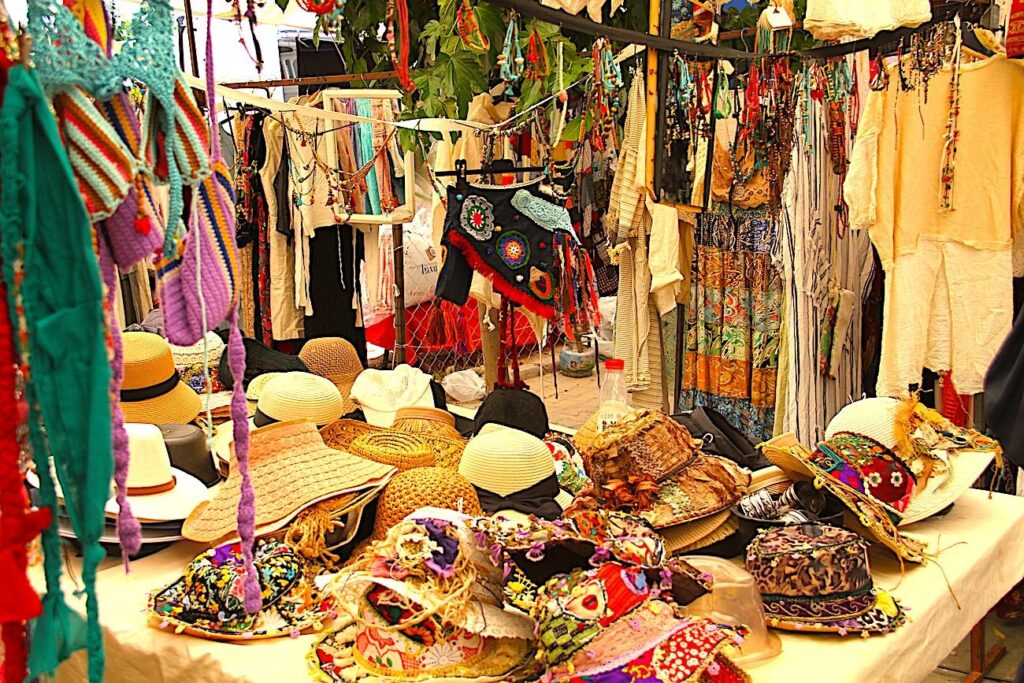
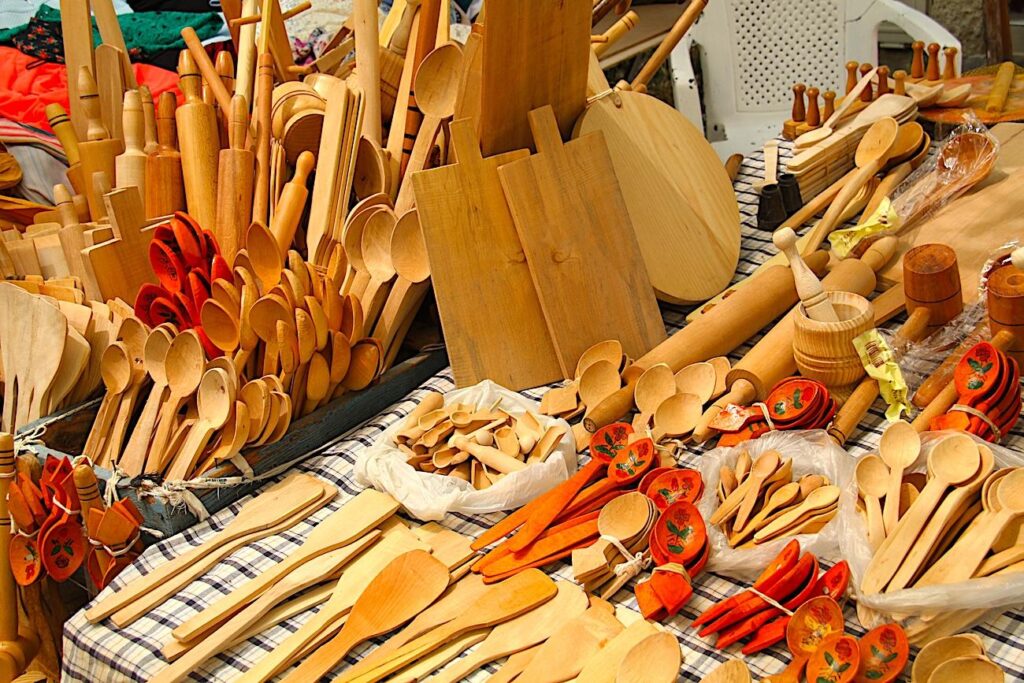
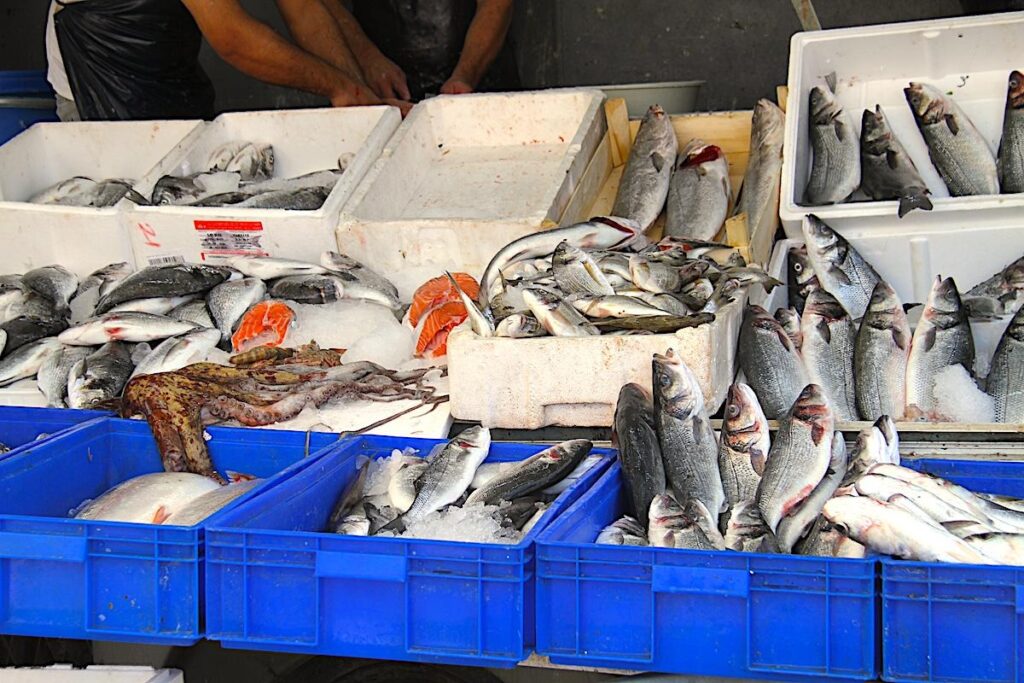
The market offers much more choice than the Çeşme market, and stalls that are in Alaçatı and not in Çeşme include fresh fish, flowers, arts and crafts, jewellery, sunglasses, perfume & make-up, and antiques.
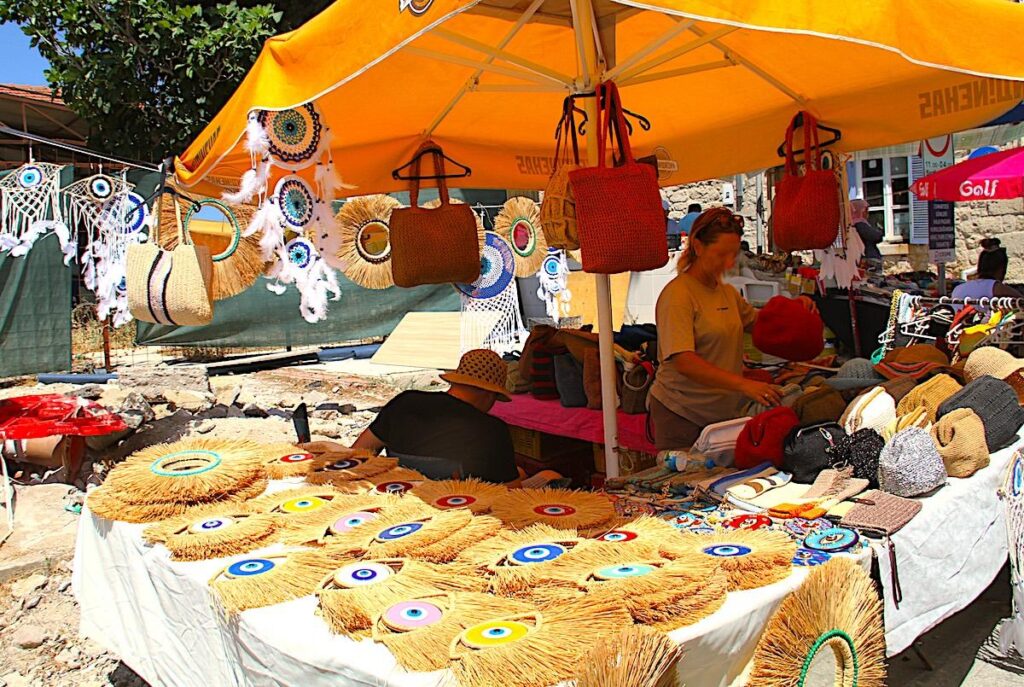
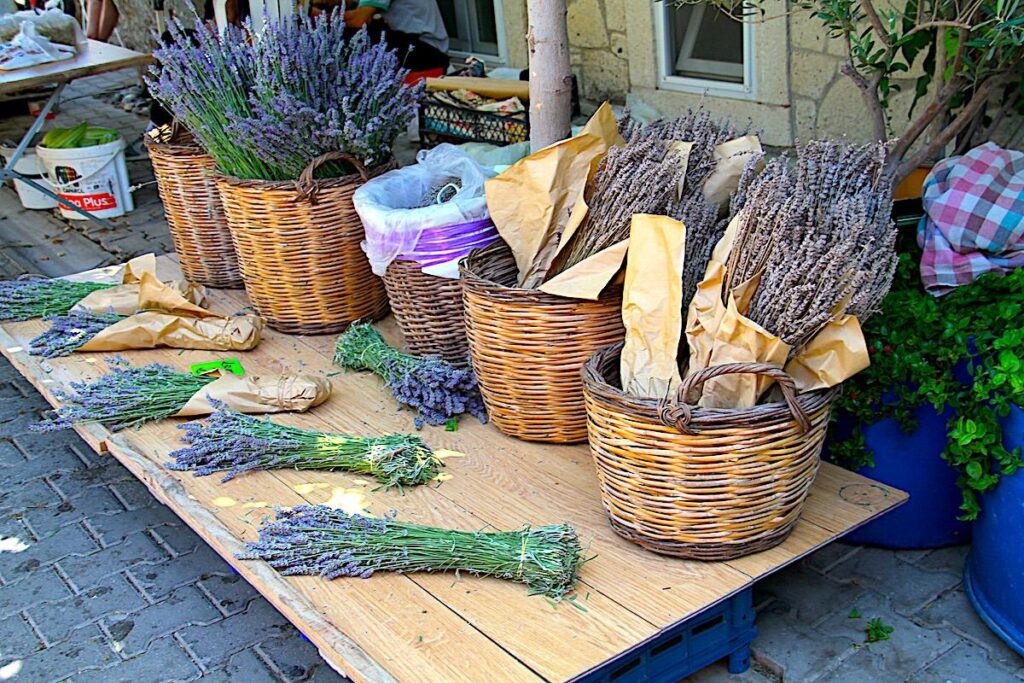
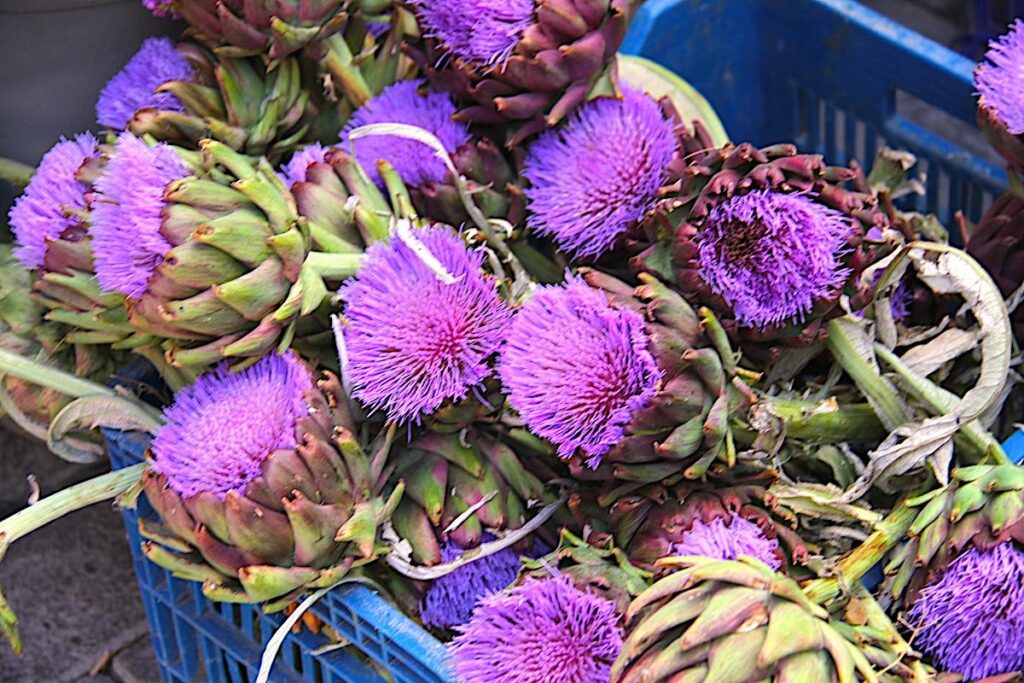
Beyond commerce, Alaçatı Market is also a lively social experience. The air is filled with the aromas of gözleme cooked fresh on griddles, the sound of street musicians, and the cheerful bargaining of locals and tourists alike. Many visitors combine their market stroll with breakfast in Alaçatı’s cafes or pause at a gözleme stall to soak in the atmosphere. With its blend of flavours, colours, and the warm spirit of Aegean hospitality, Alaçatı Market offers an authentic and memorable glimpse into village life, remaining one of the highlights of visiting Çeşme.
Ildır Market (Monday)
Location (Monday): Ildır, Yalı, Çeşme/İzmir
The Ildır Monday Market is one of the smallest markets in the Çeşme region. Located next to the creek at the junction of the main coastal road (27000 Sokak) and the road towards Barbaros (37220/1 Sokak) as you enter Ildır from Çeşme, this neighbourhood market features around 10 stands set up in the car park area. Visitors will find a varied mix of stalls: a truck selling garden plants and flowers, a fish van with freshly caught seafood, and a handful of vendors offering seasonal fruit, vegetables, melons, and clothing.
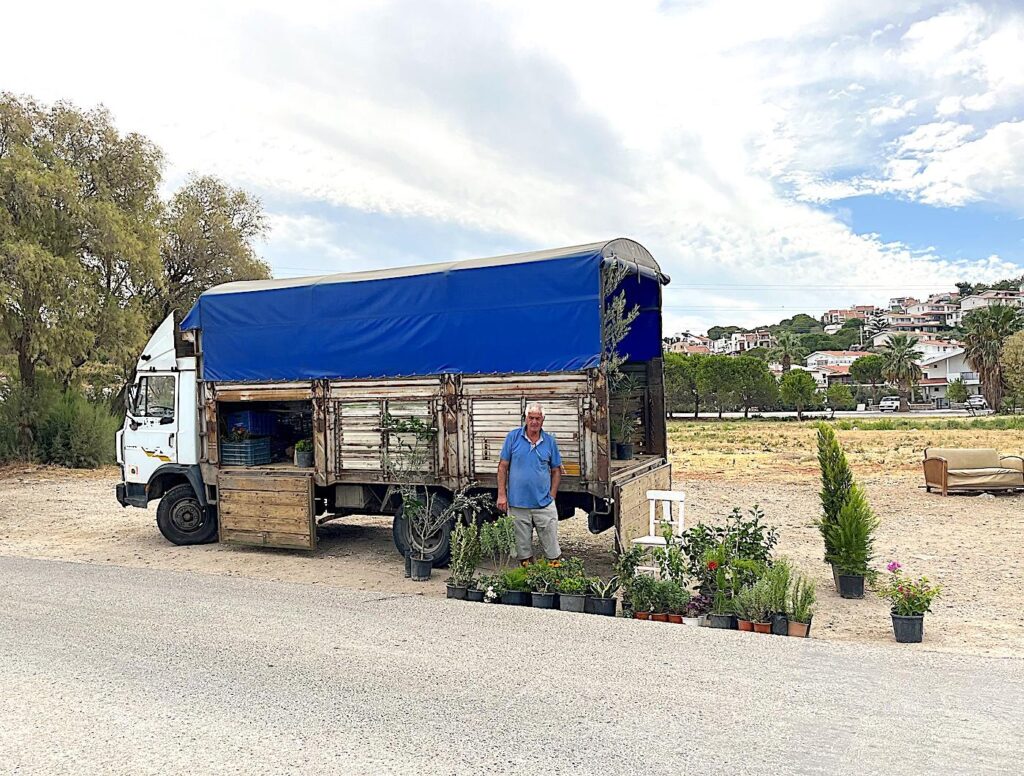
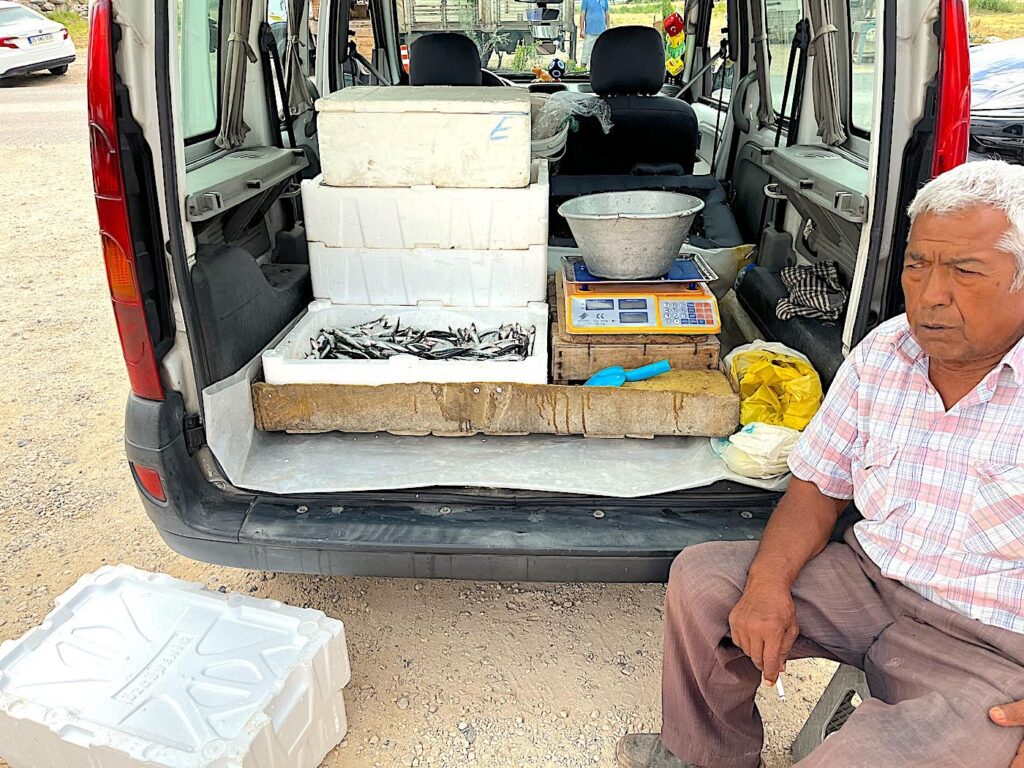
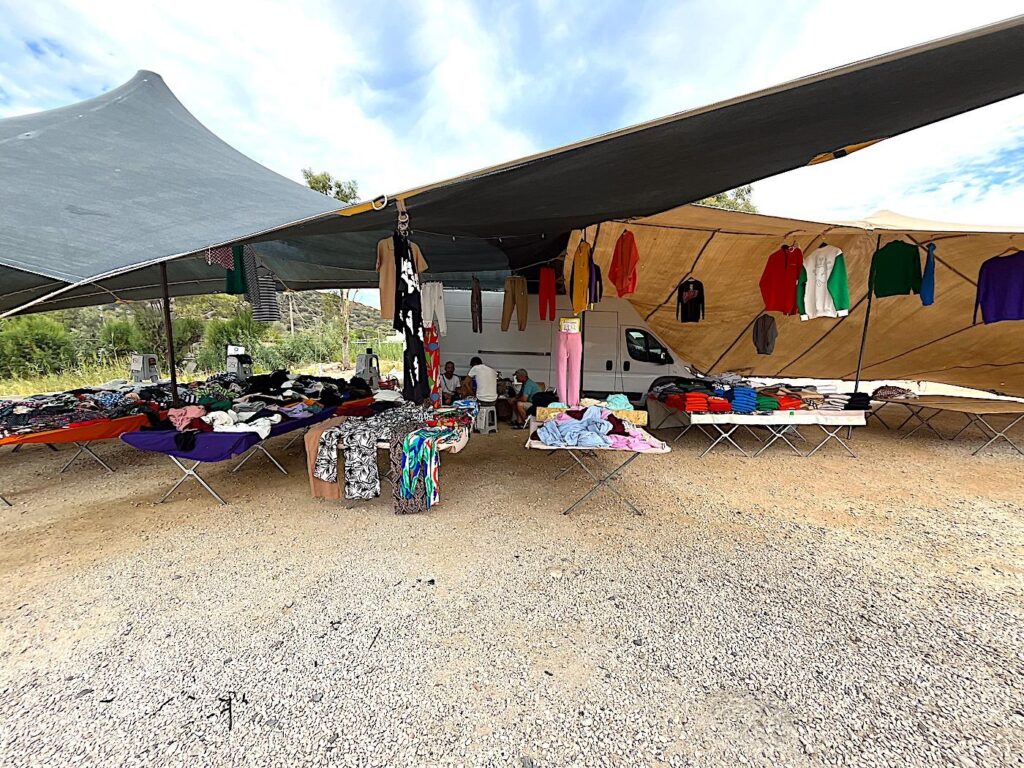
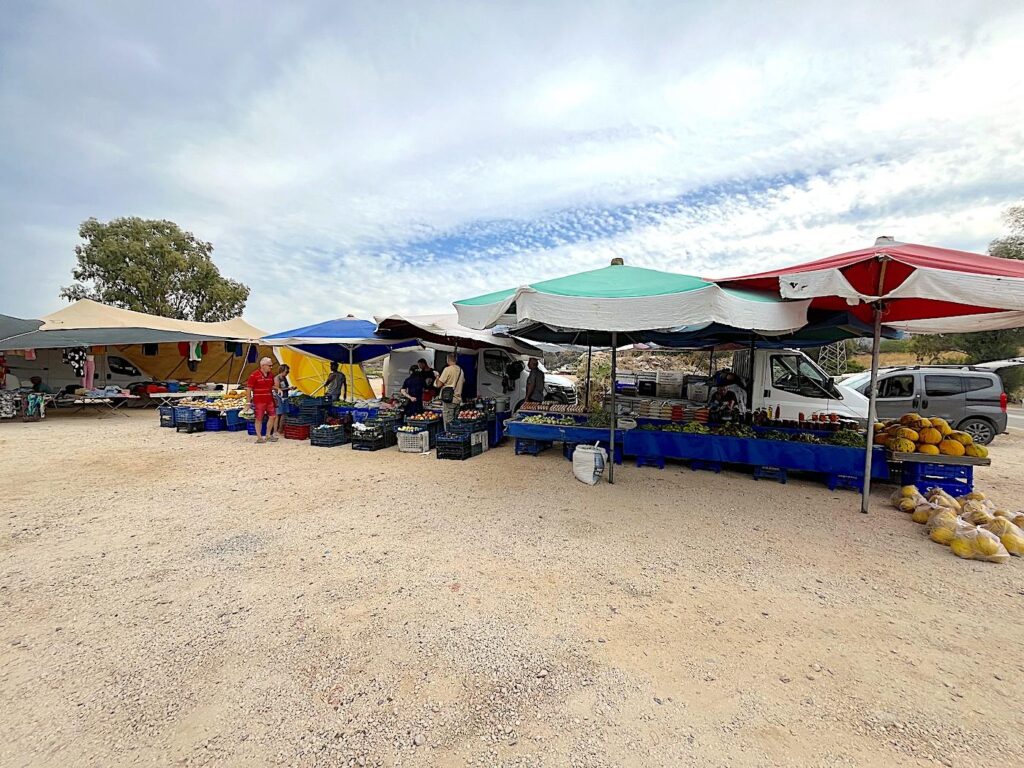
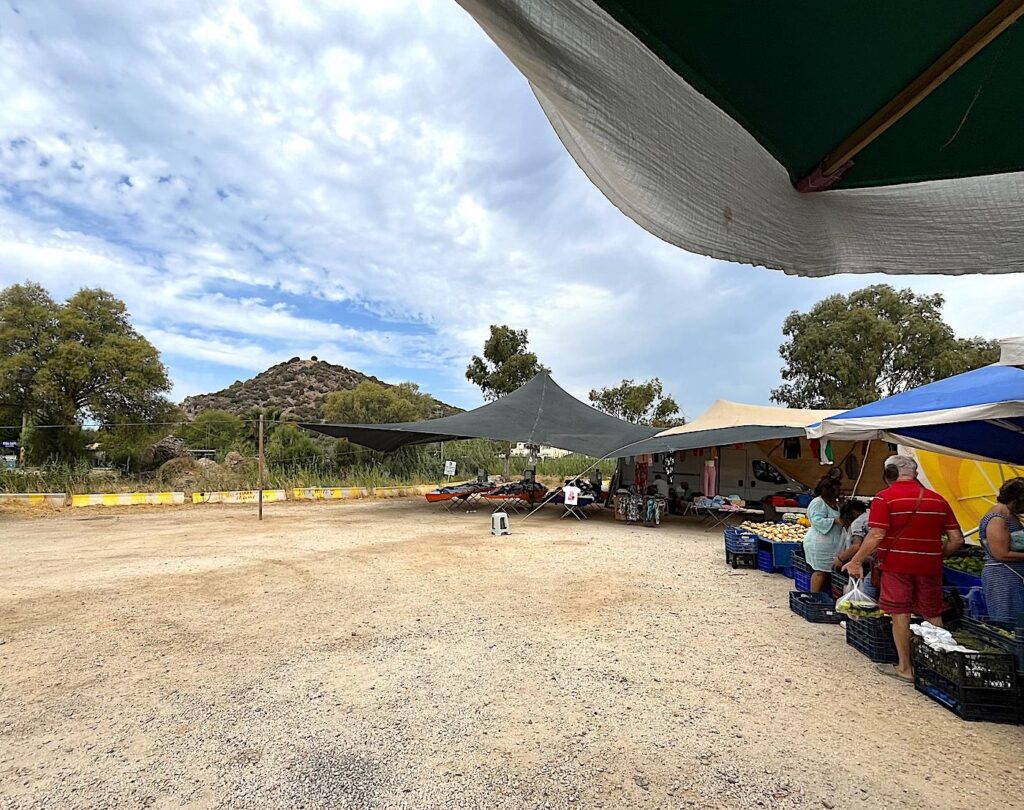
In addition, the upper part of Ildır, near the ancient Erythrai ruins, often has small stands selling local products and handmade crafts. Depending on the week, you may find homemade jams, olive oils, or souvenirs made by local artisans. While modest in size compared to larger Çeşme markets, the Ildır Monday Market offers a genuine village atmosphere and is well worth combining with a visit to the ruins and the scenic coastline.
Dalyan Market (Tuesday)
Location (Tuesday): Dalyan, 4201 Sk. 35930 Çeşme/İzmir
Every Tuesday, the small village of Dalyan, near Çeşme, holds its local market (Dalyan Pazarı), located along 4201 Sokak from the junction of 4188 Sokak for approximately 250 metres, on the hillside 400 metres west of the harbour. This intimate market has a distinctly village atmosphere, with friendly vendors setting up simple stalls and tables shaded by awnings.
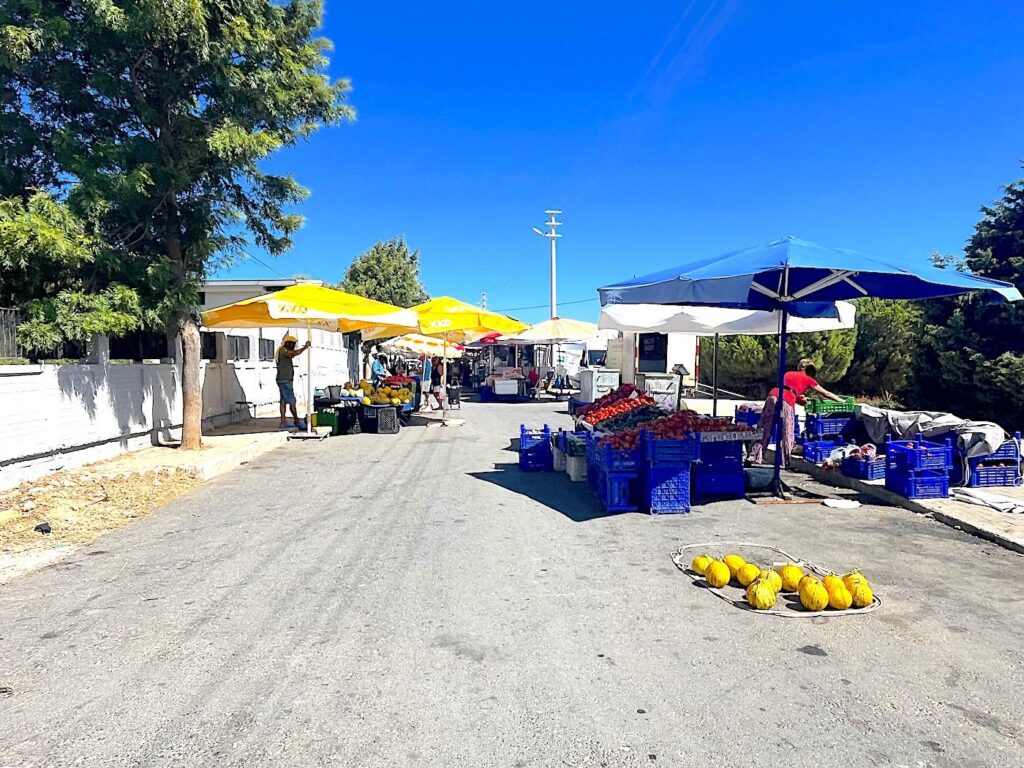
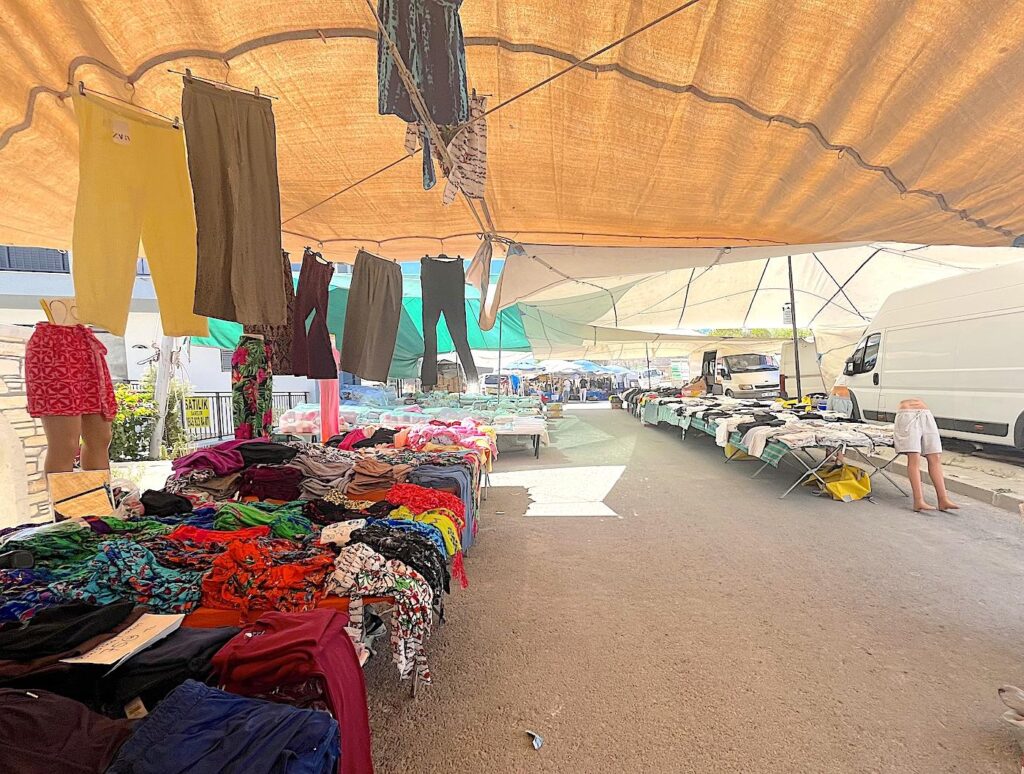
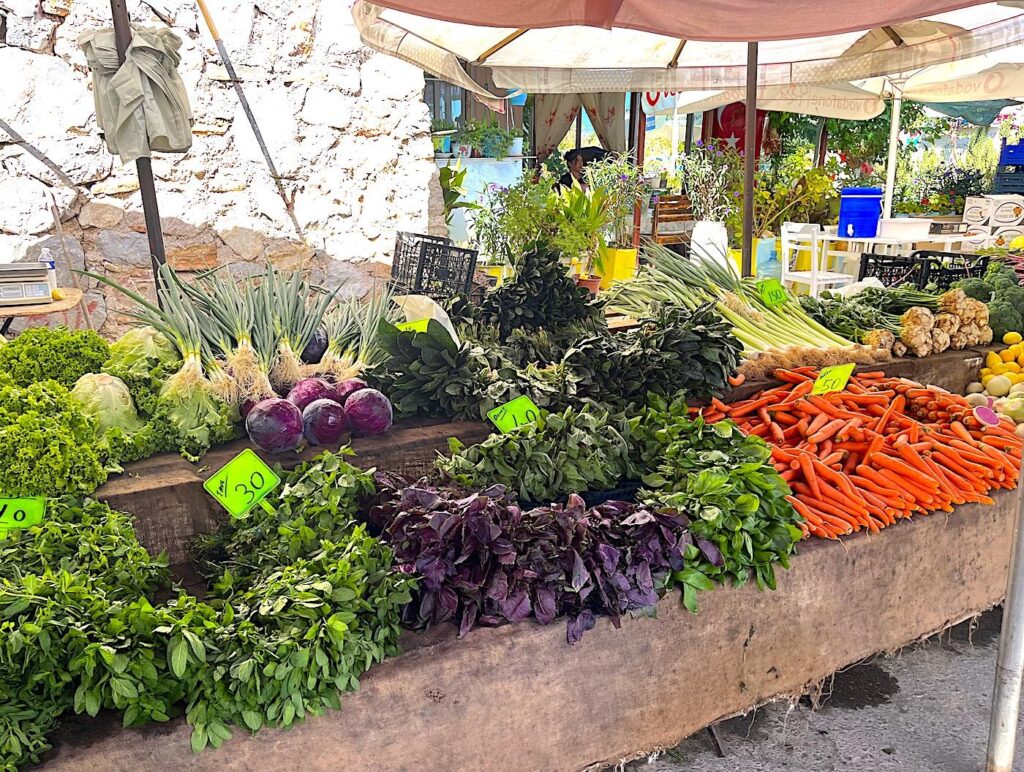
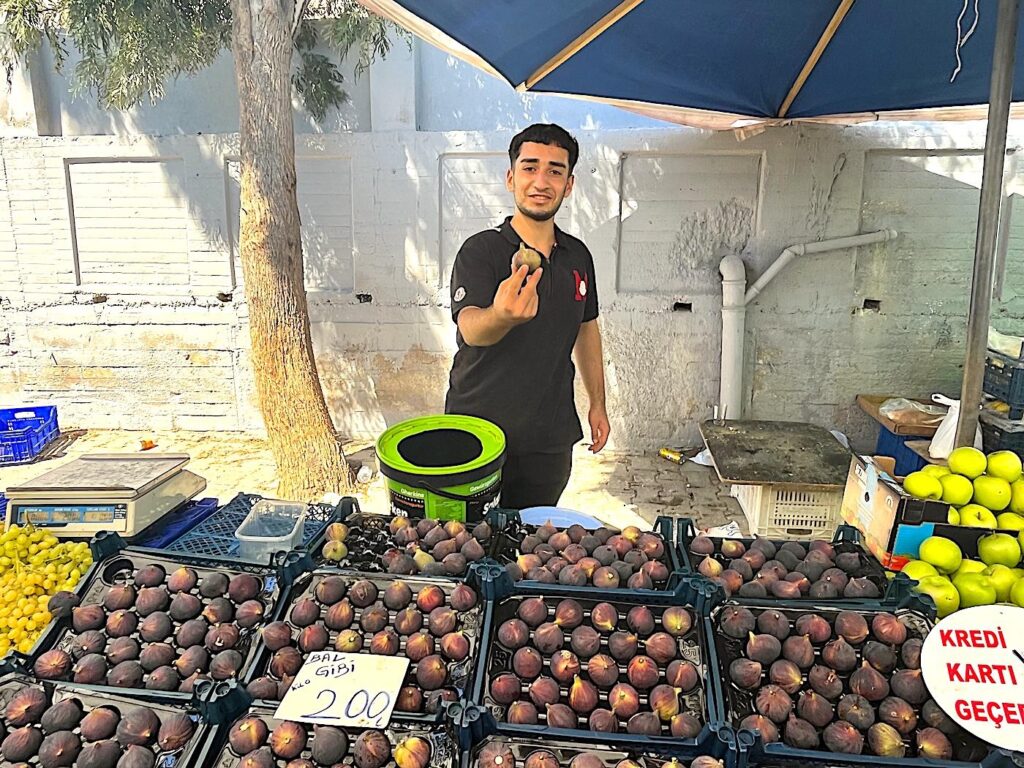
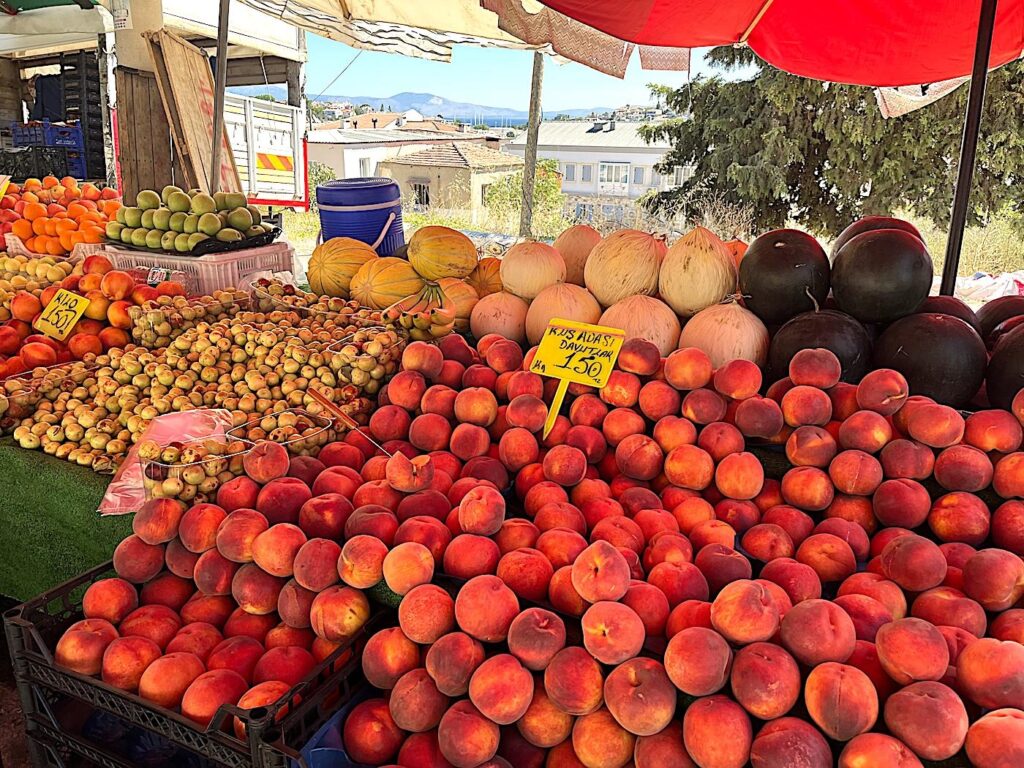
Most of the goods on offer are produced locally. Farmers bring freshly harvested fruits and vegetables, bunches of herbs, and seasonal produce from the surrounding countryside. Alongside these, you can find homemade cheeses, olives, olive oil, and jars of preserves, as well as a modest selection of clothing, household items, and everyday essentials that make the market a crucial weekly stop for residents. The Dalyan Tuesday Market is not as large as those in Alaçatı or Ilıca, but its charm lies in its authenticity and convenience. For travellers staying in Dalyan, visiting the charming harbour or its popular beaches offers a perfect glimpse of local life and an easy way to pick up provisions without heading into town.
Çeşme Market (Wednesday)
Location (Wednesday): 16 Eylül, 3001. Sk. 35930 Çeşme/İzmir
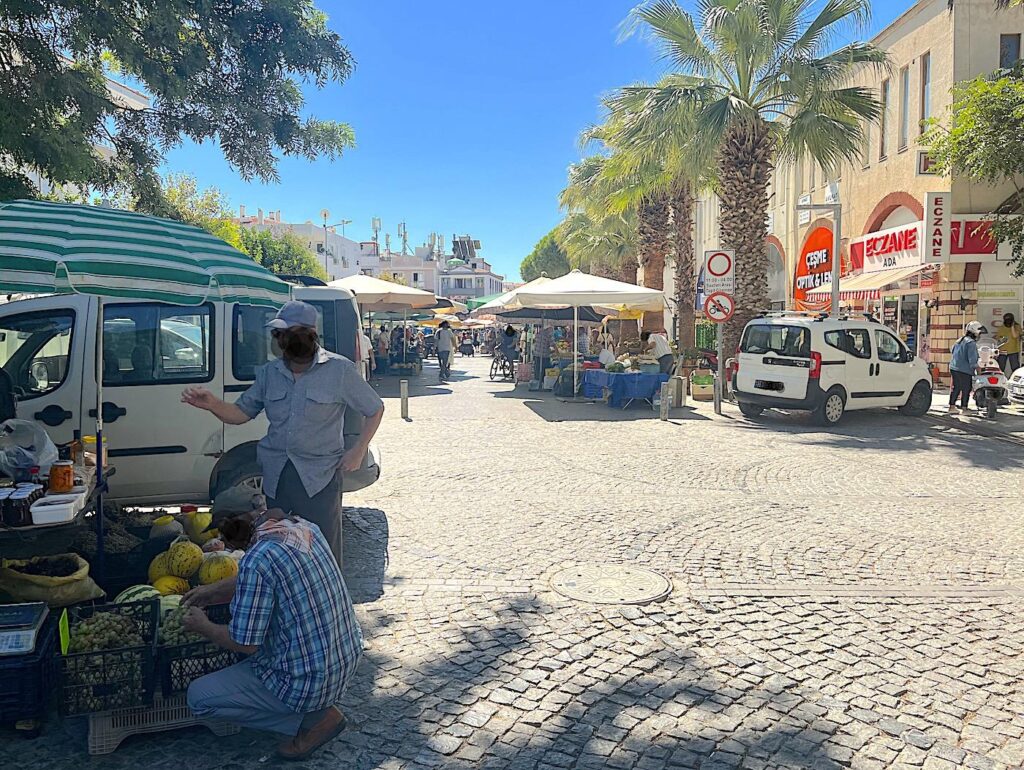
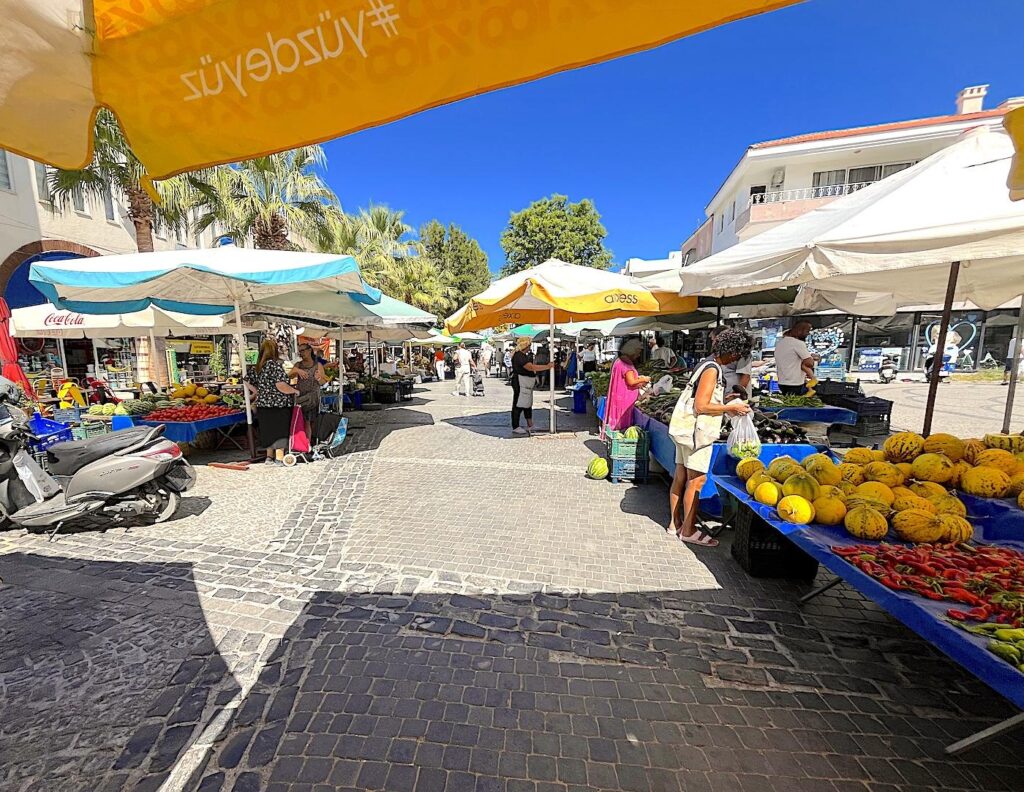
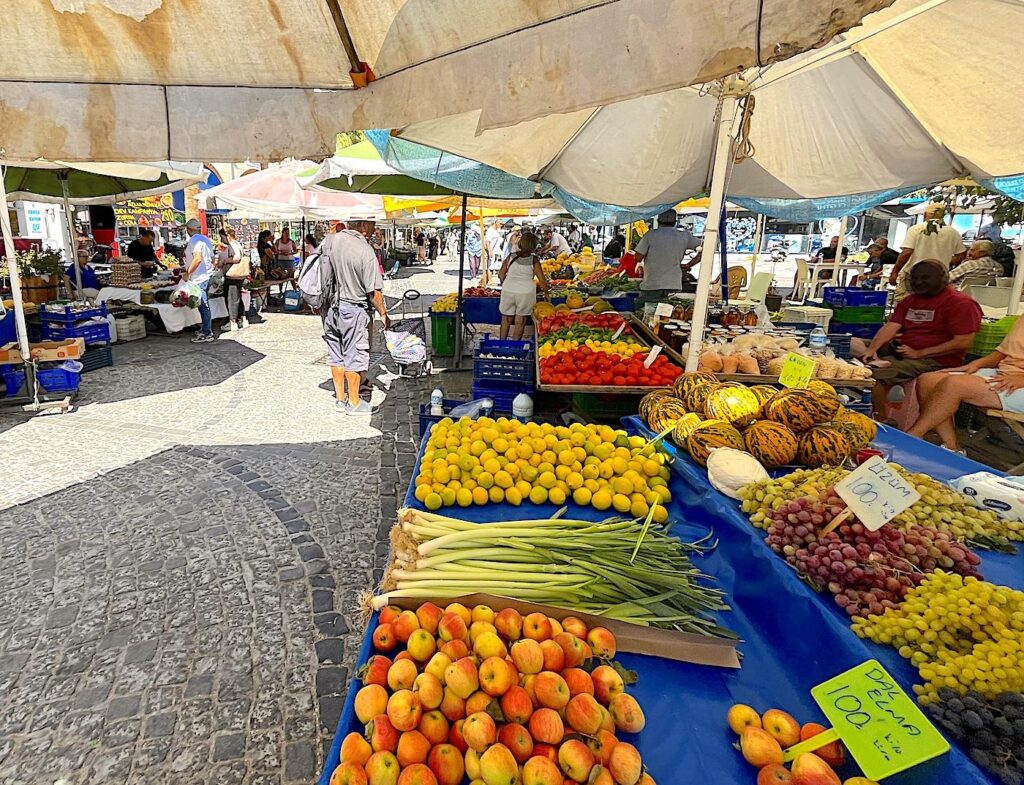
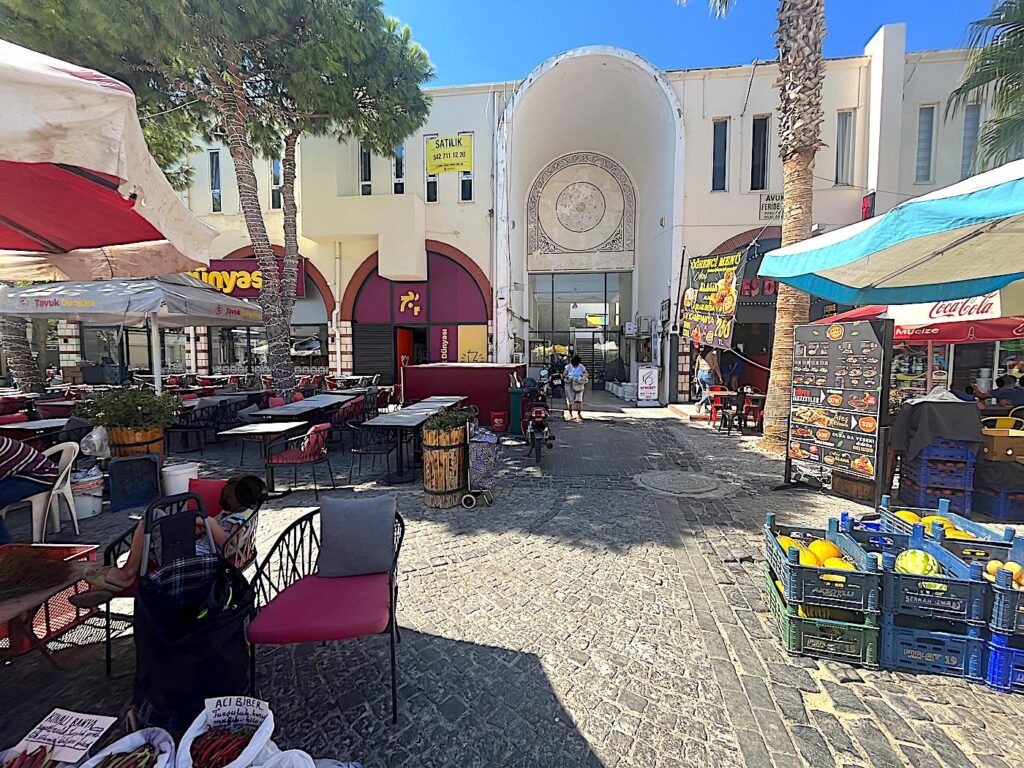
The Çeşme Wednesday Market takes place in the centre of town on the pedestrian street 3001 Sokak, in the small square near the entrance of the town centre. It is located directly in front of the “Çeşme Kapalı Çarşı” shopping centre that houses Ateş Doner Çeşme and Tavuk Dünyası Çeşme. This is a small market with around 20 to 30 stalls, almost all of which sell fresh fruit and vegetables. It is a practical mid-week market, smaller in scale than most other markets in the area, and is mainly used by locals and visitors to stock up on fresh produce in the middle of the week.
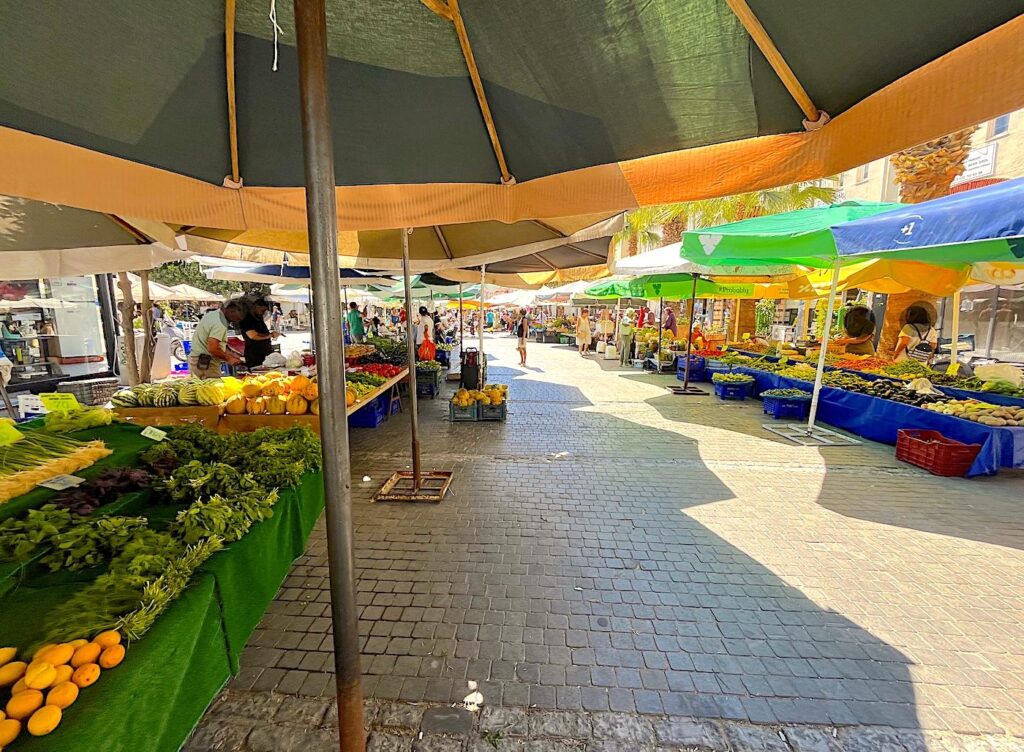
Ilıca Market (Thursday)
Location (Thursday): Ilıca, 5076. Sk., 35930 Çeşme/İzmir
The Ilıca Market (Ilıca Pazarı) takes place every Thursday close to the D300 (İzmir-Çeşme Yolu) along 5151 Sk., centred around the triangle formed by 5101/ Sk. and 5076 Sk. It is a slightly smaller and more local counterpart to the Saturday Alaçatı Market, but larger than both the Sunday and Wednesday Çeşme markets. The market spans several streets near the main road and bus stops, making it accessible for both locals and visitors, though parking can be chaotic.
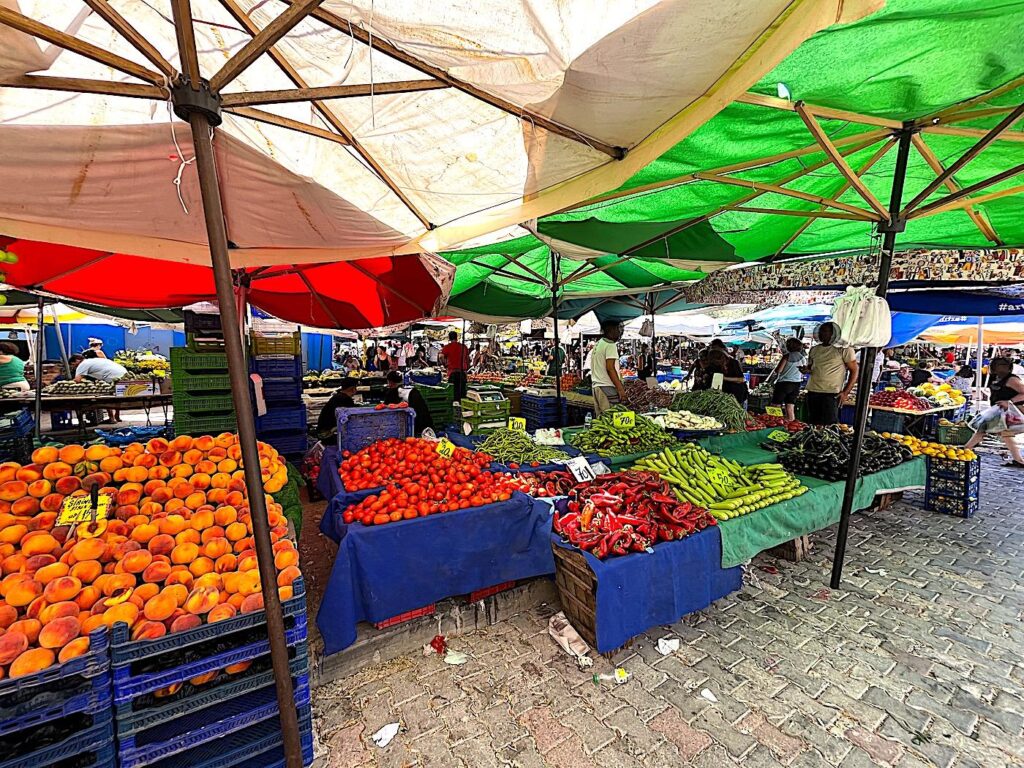
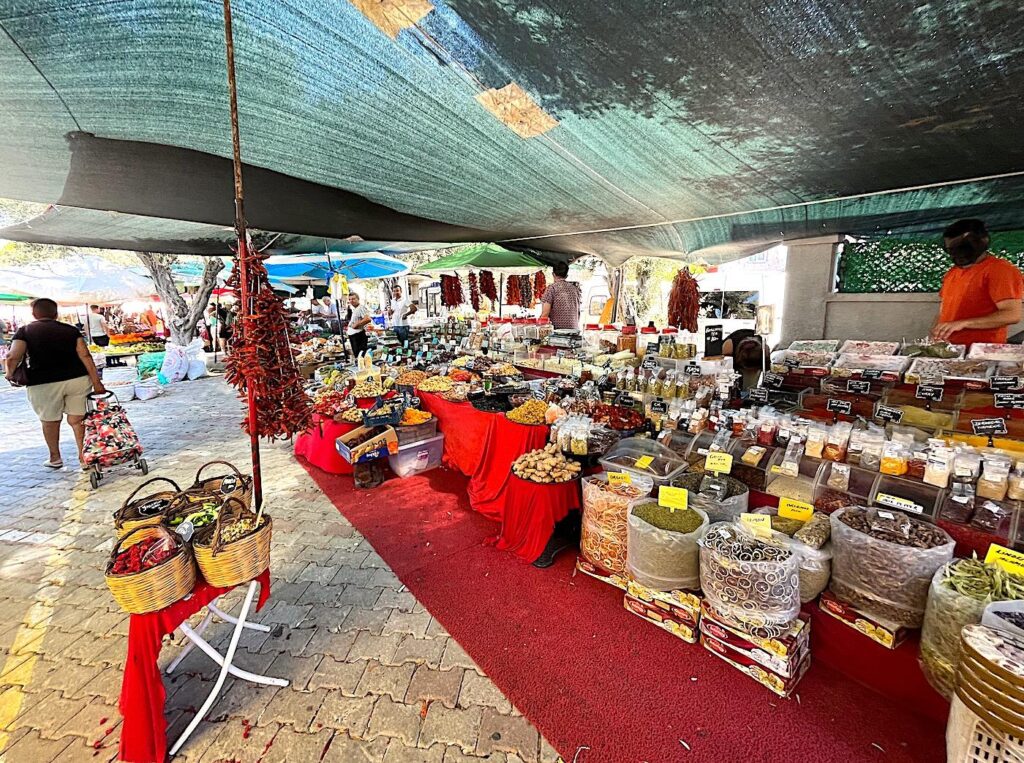
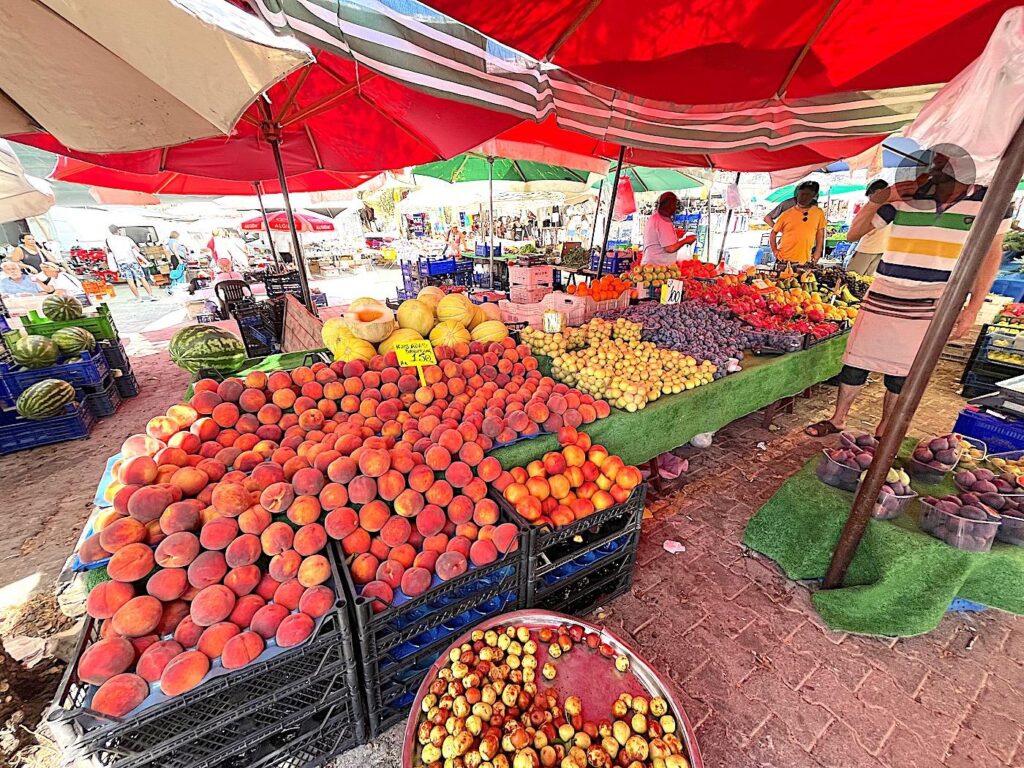
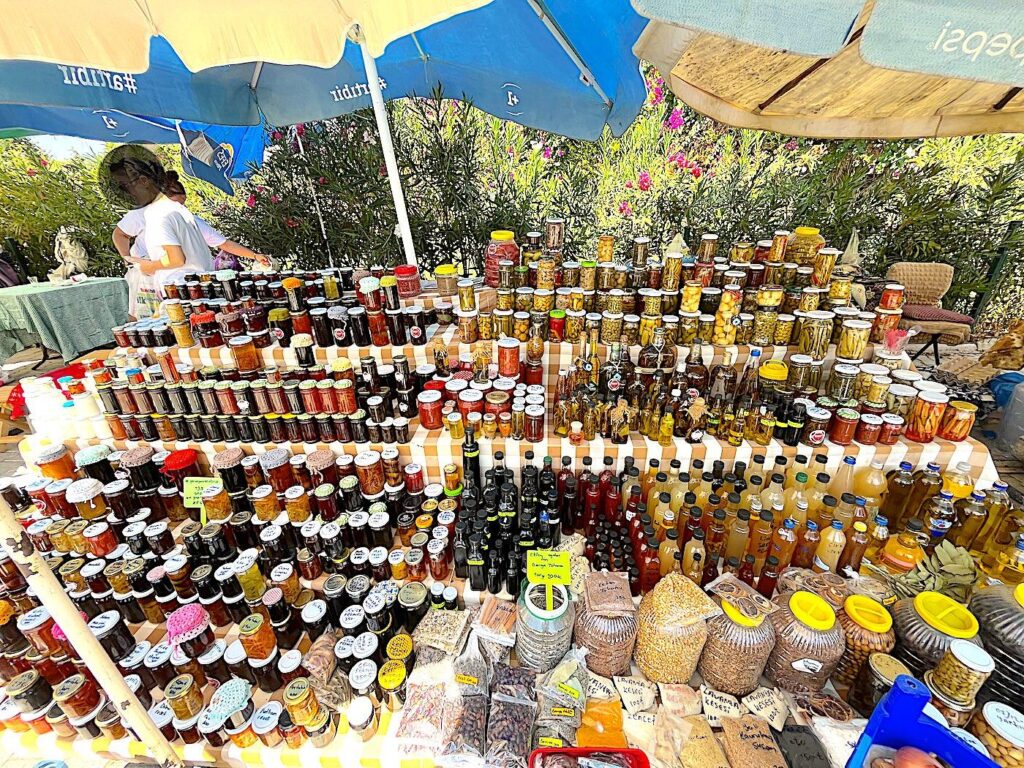
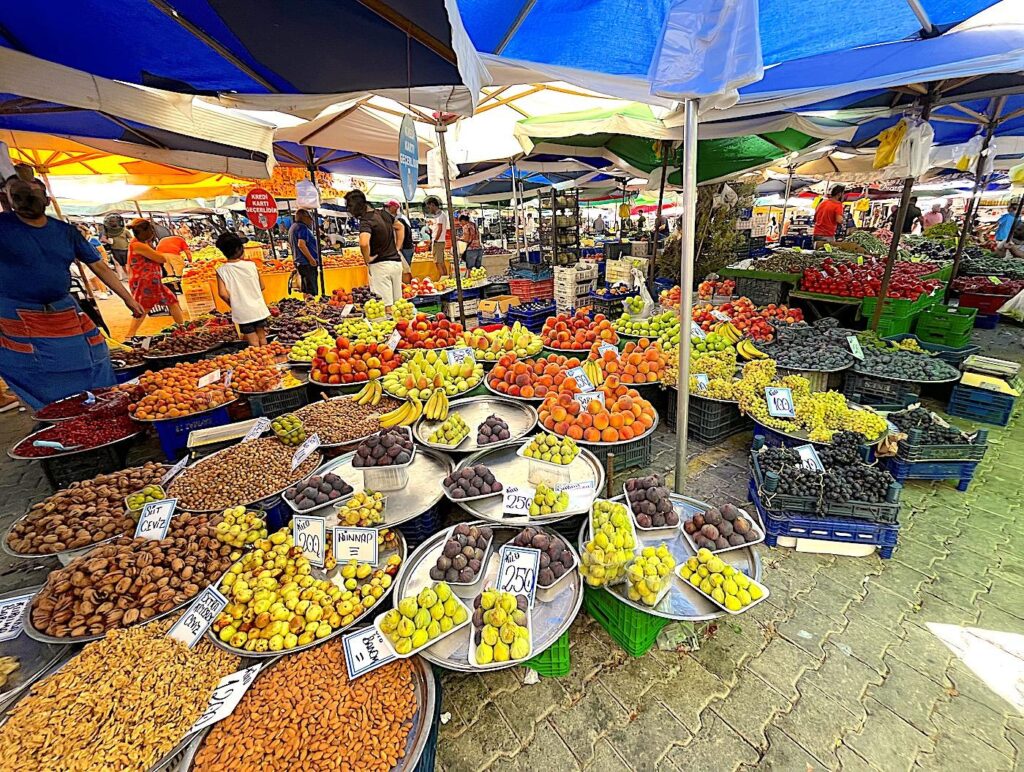
Fresh produce dominates the stalls: sun-ripened tomatoes, figs, melons, herbs, and olives from surrounding villages, alongside local cheeses, honey, and homemade preserves. It is an excellent place to experience the rhythm of daily life in Çeşme while shopping for authentic regional ingredients.
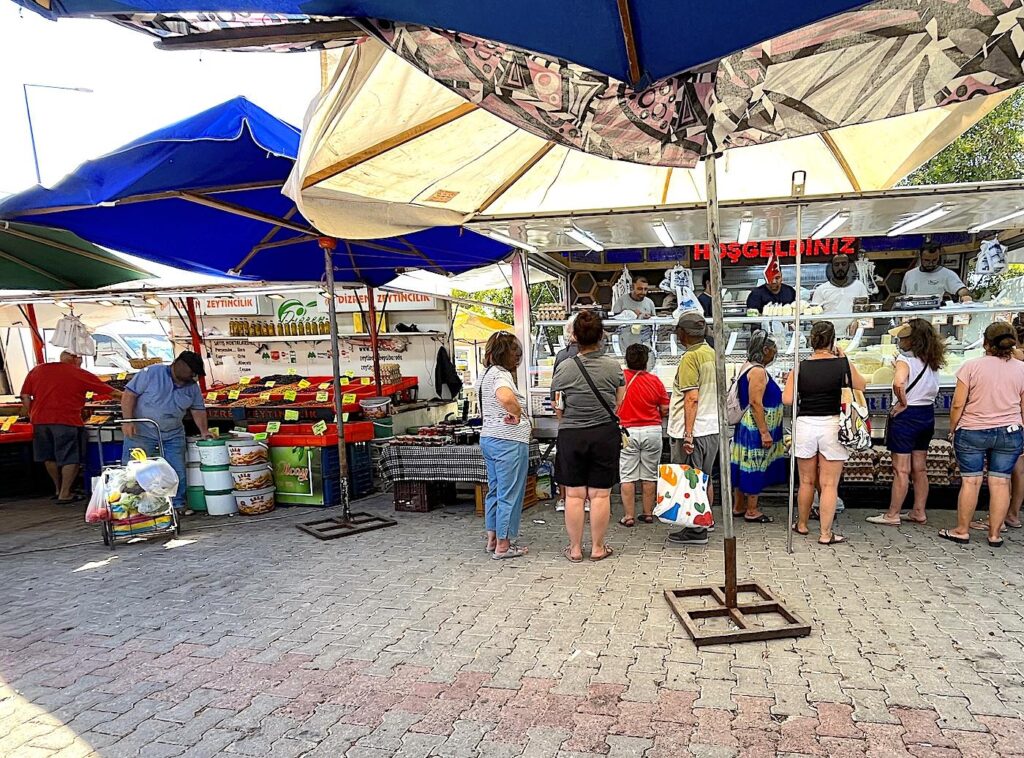
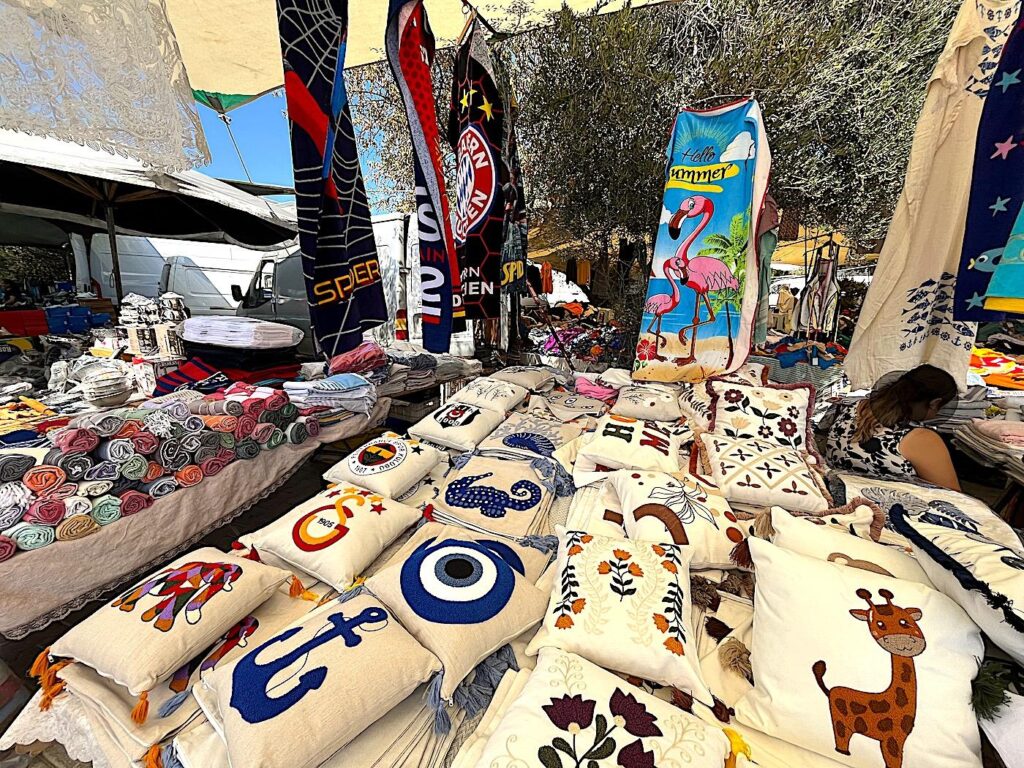
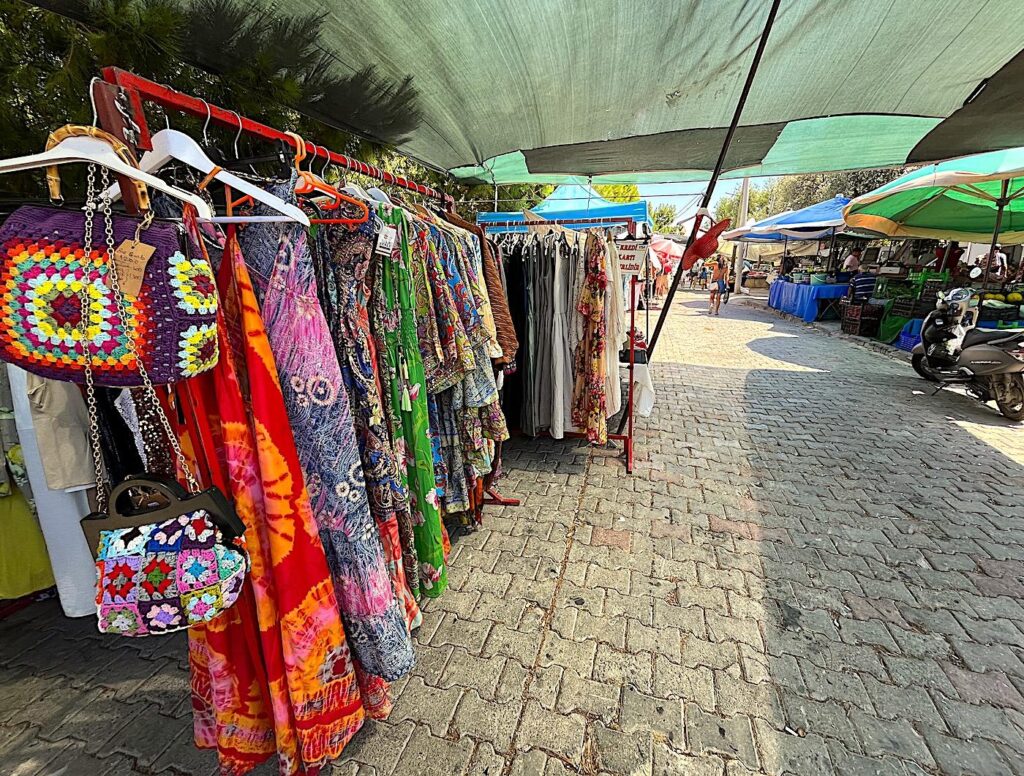
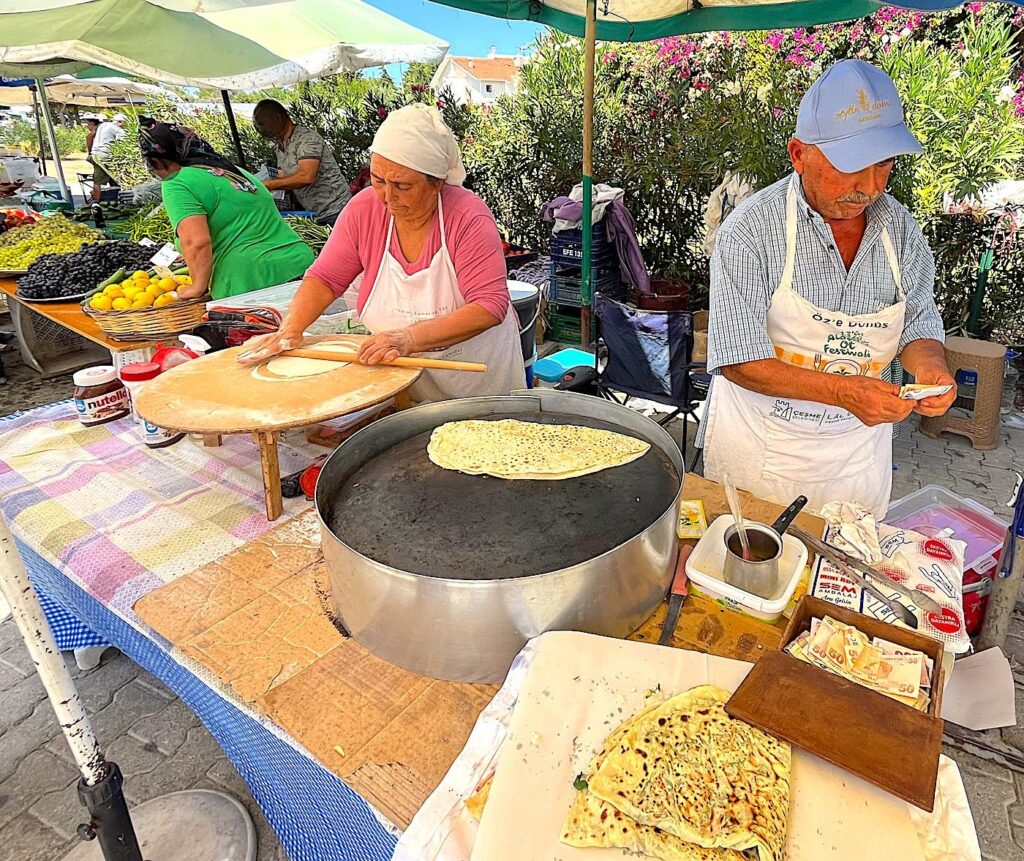
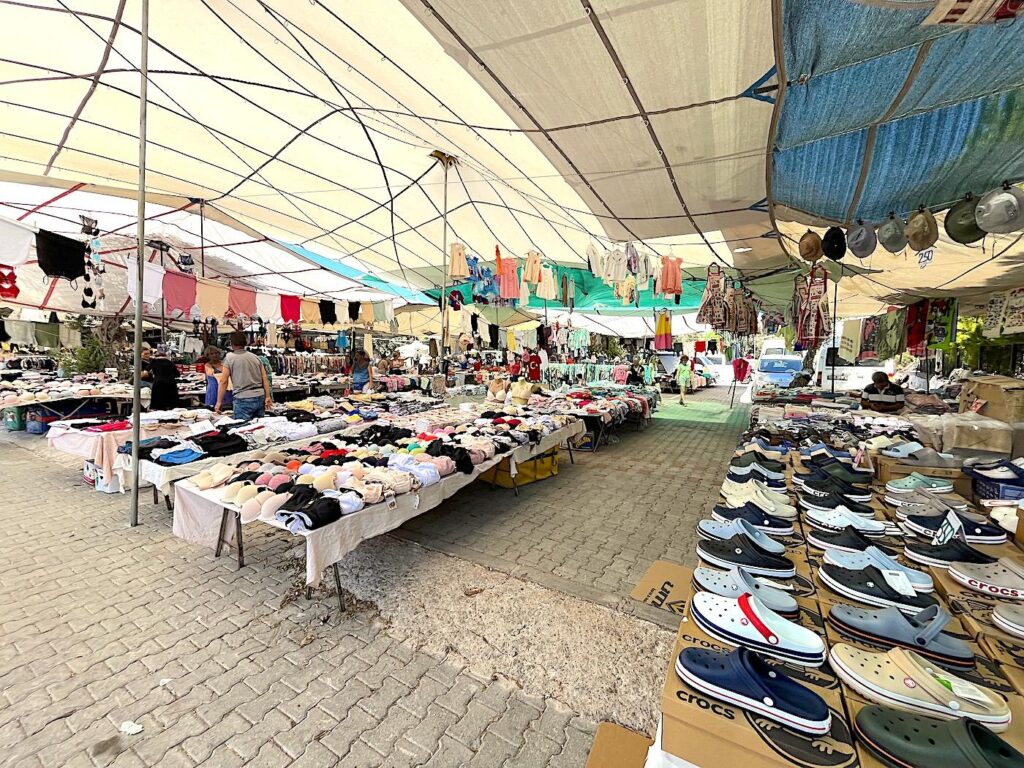
In addition to food, the Thursday Ilıca Market also offers clothing, textiles, and household items, with vendors setting up long rows of colourful stands that attract bargain-hunters. Local women sell gözleme (flatbread stuffed with spinach, cheese, or potatoes) and börek, giving shoppers the chance to pause and enjoy a traditional snack. Because it is less crowded than Alaçatı, the Ilıca Market feels more relaxed and intimate. For visitors, it combines a practical shopping stop with an authentic cultural experience.
Çiftlikköy Market (Friday)
Location (Friday): Çiftlik, 8. Sk., 35930 Çeşme/İzmir
The Friday Market in Çiftlikköy is held just east of the town centre and seafront, on 22 Sokak at the junction with 8 Sokak, in a quiet residential quarter of the village. Since the summer of 2025, it has been housed in a modern steel-framed market hall, giving it a clean, organised layout and a sheltered space for both shoppers and vendors. Although smaller in scale compared to the larger and more famous markets of Alaçatı and Çeşme, the Çiftlikköy Market retains a friendly, village atmosphere that makes it especially popular with locals.
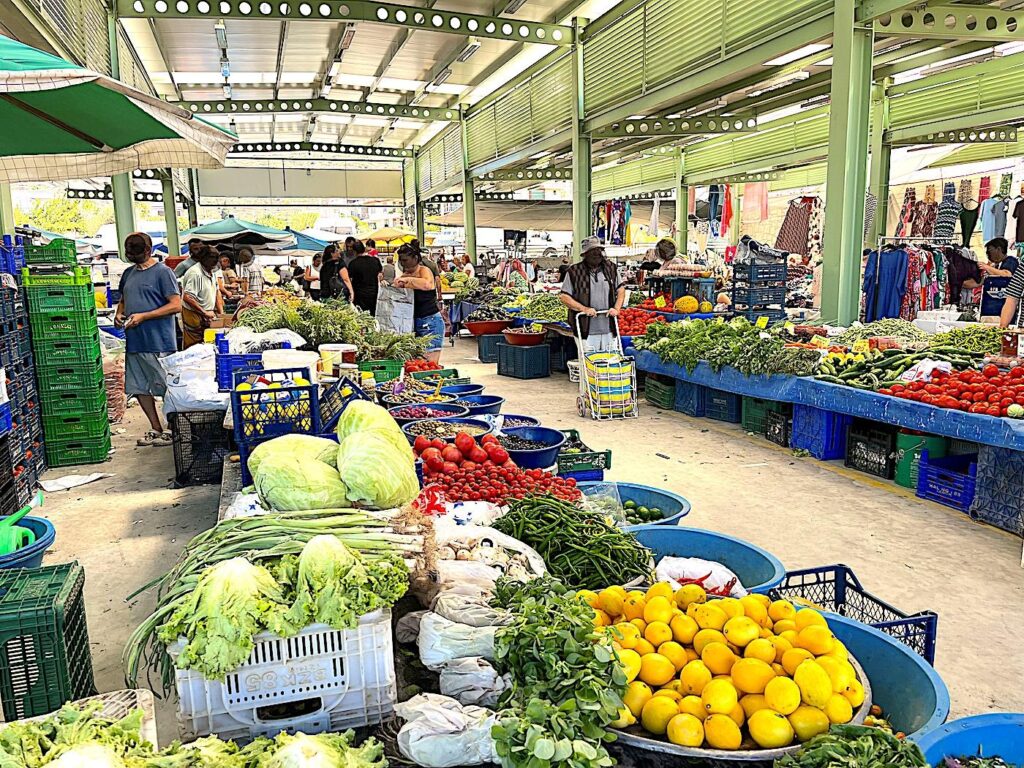
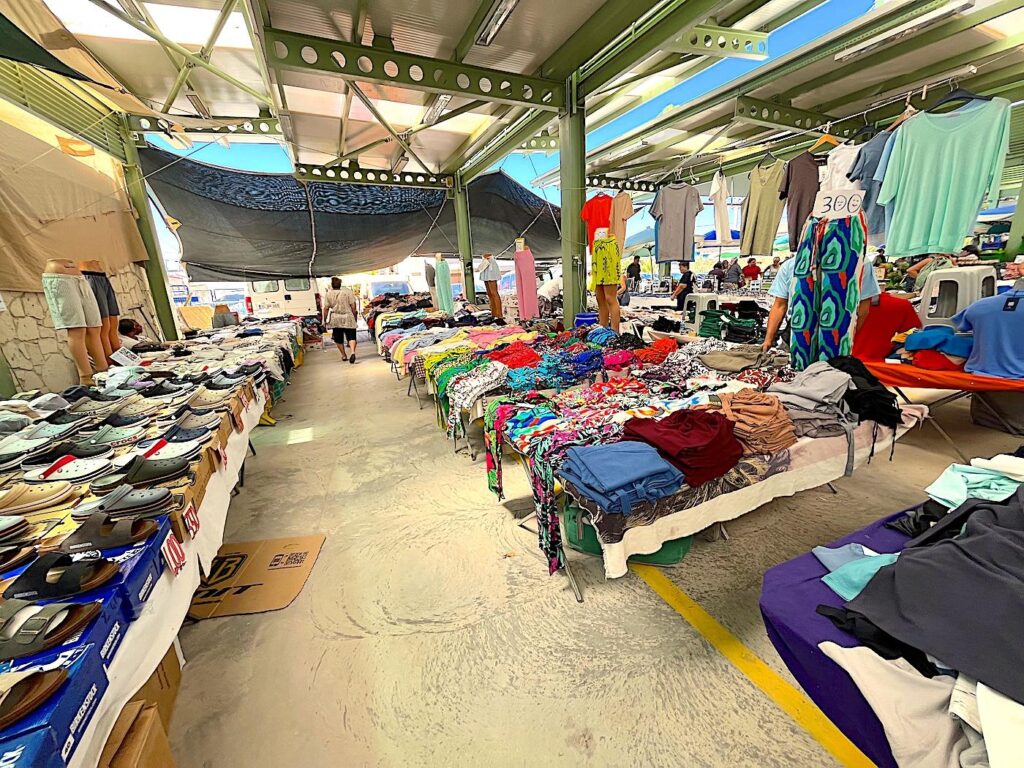
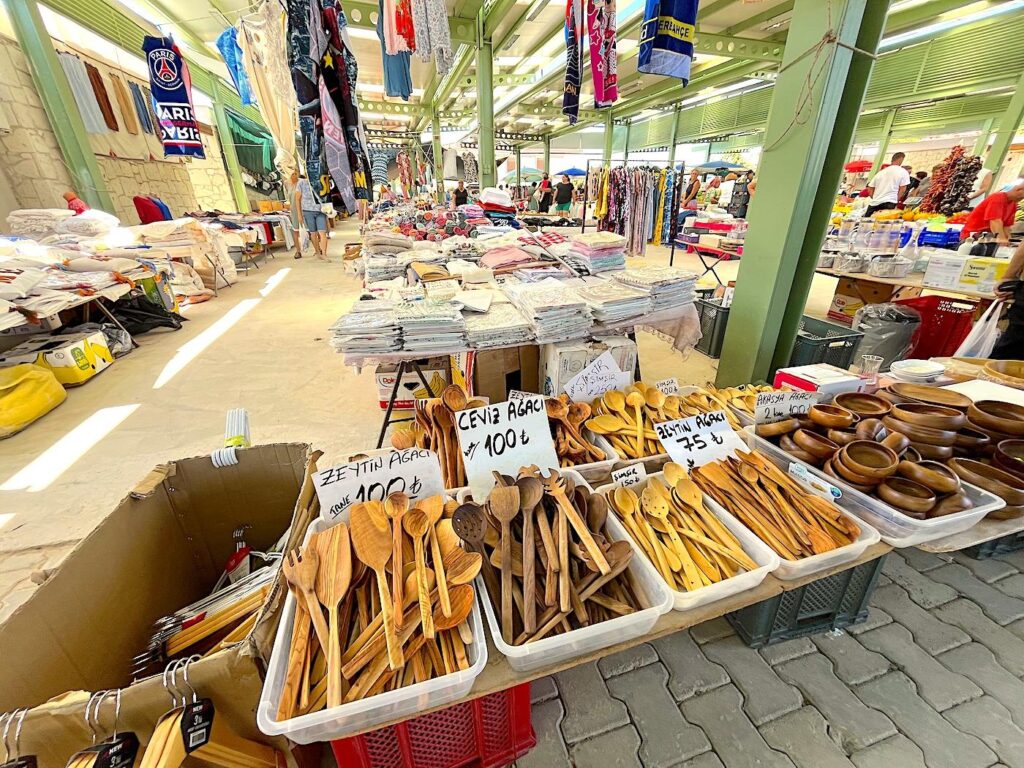
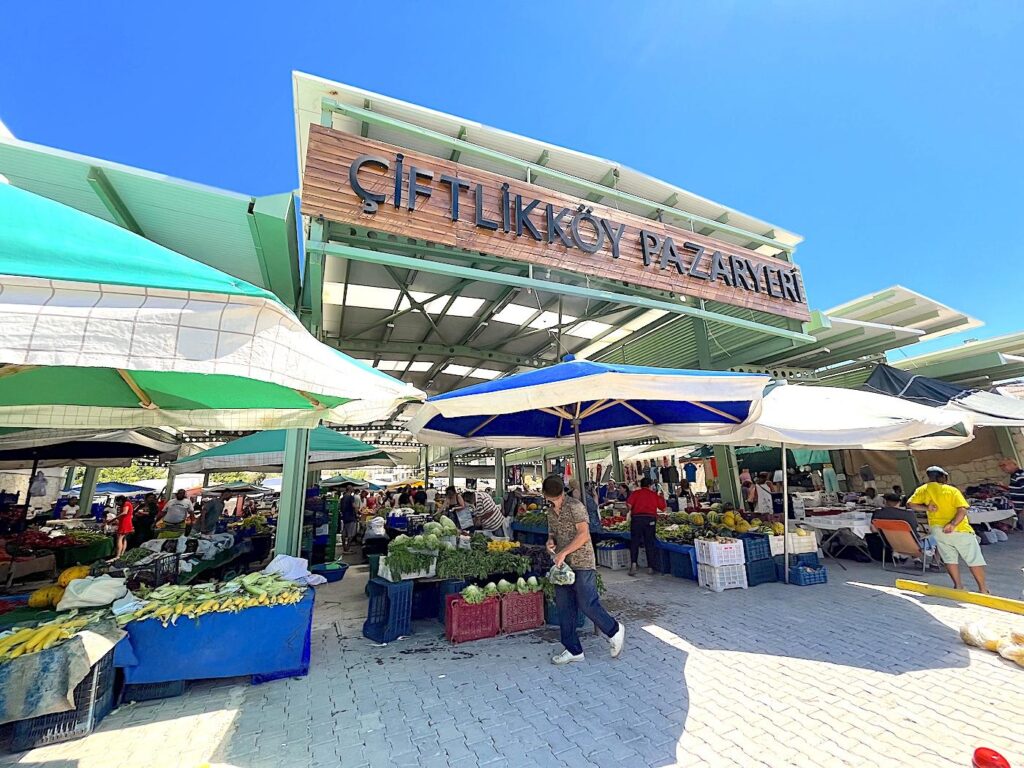
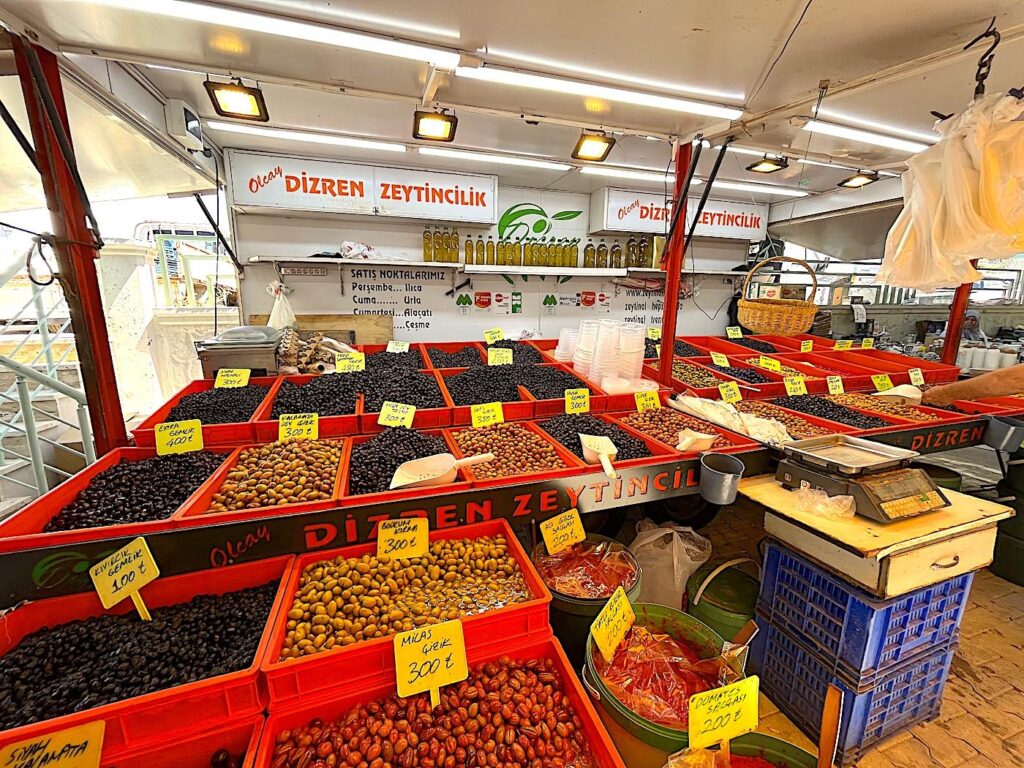
Roughly half of the market is devoted to local farmers’ stalls, where shoppers can browse seasonal fruits, vegetables, and fresh herbs brought directly from the surrounding fields. Alongside these, there are dedicated stands for olives, cheeses, yoghurts, and dairy products, as well as vendors selling spices, dried goods, and traditional pantry staples. The other half of the market features a mix of clothing, shoes, household items, accessories, and hardware, offering a practical one-stop shop for the community. For visitors, the Çiftlikköy Friday Market provides an authentic, everyday experience of village life, less touristic than Alaçatı, yet rich in genuine Aegean produce and local character.
Market Vegetable Guide
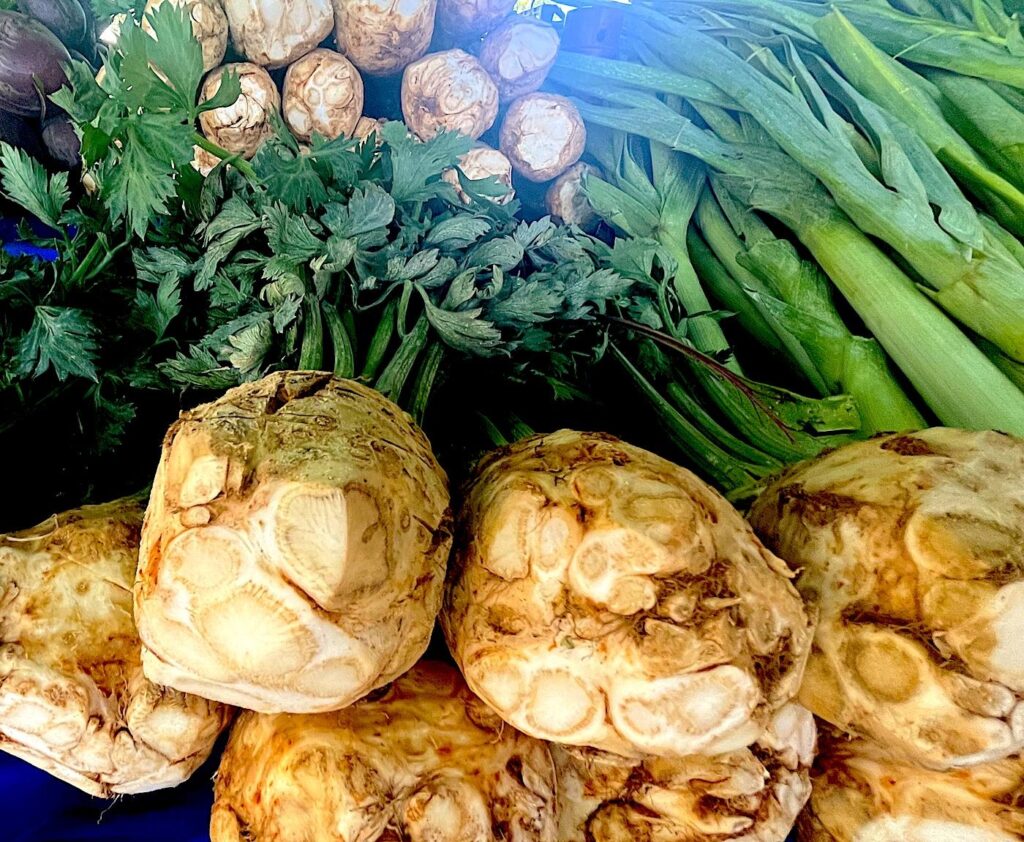
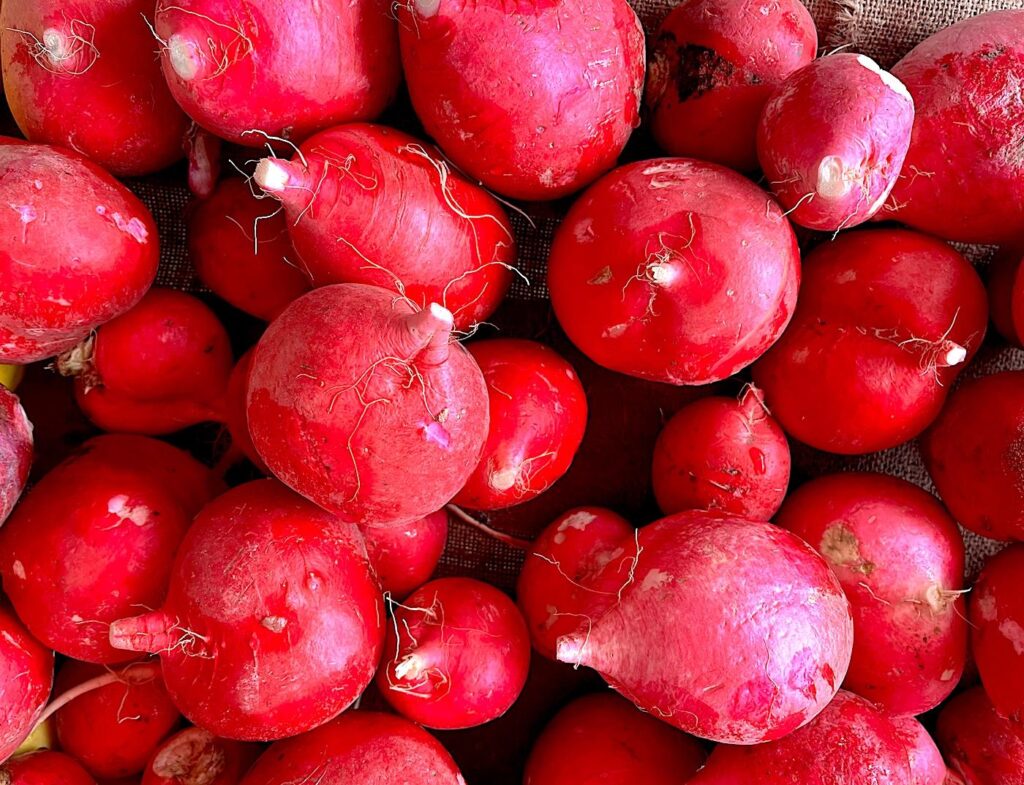
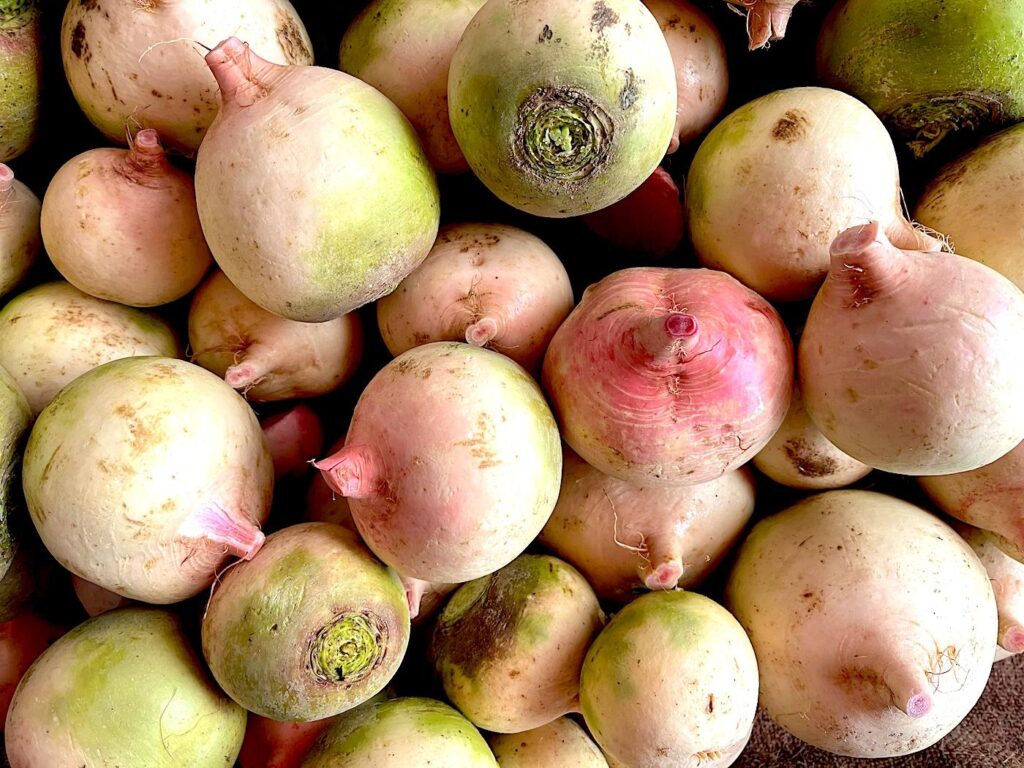
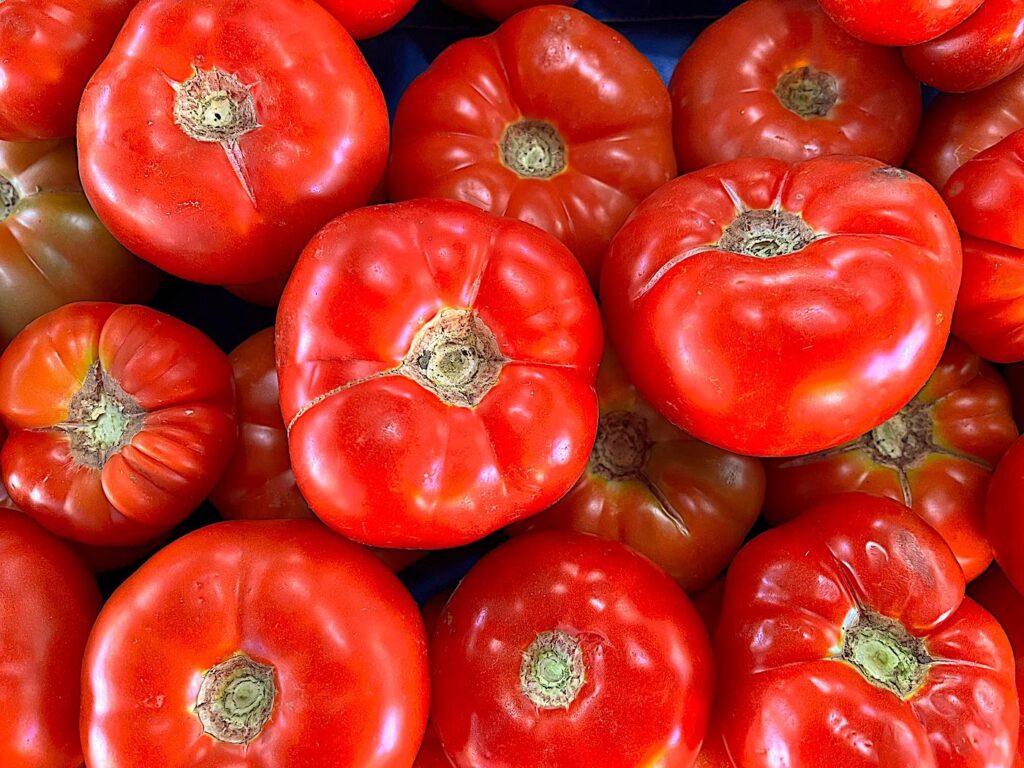
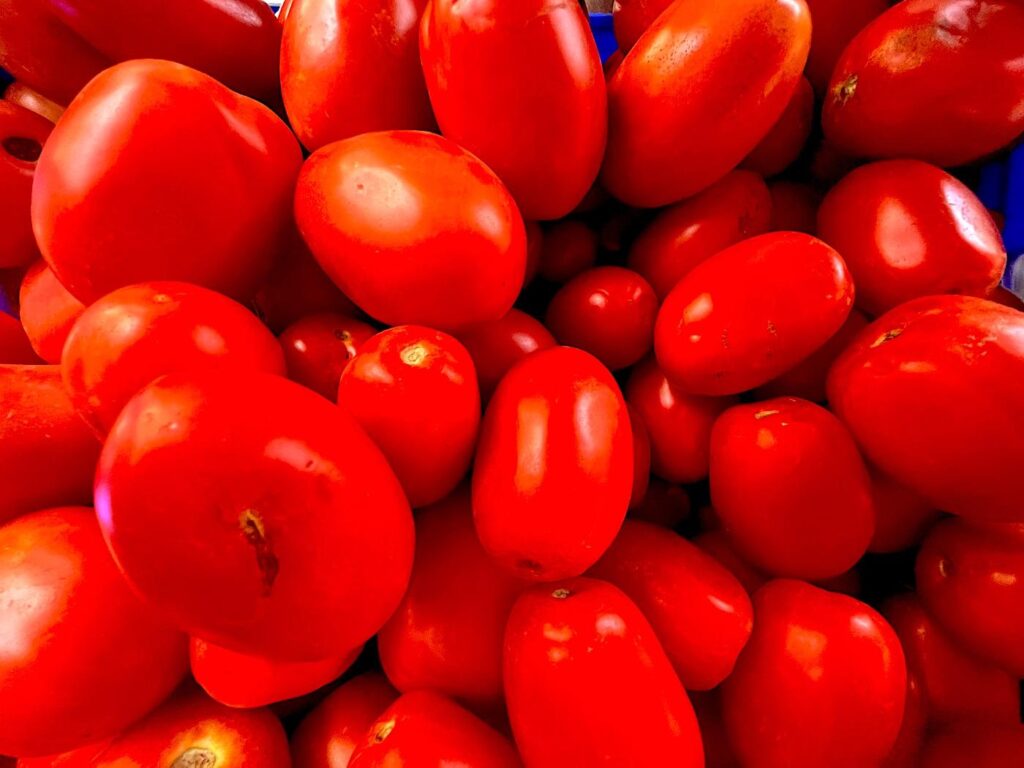
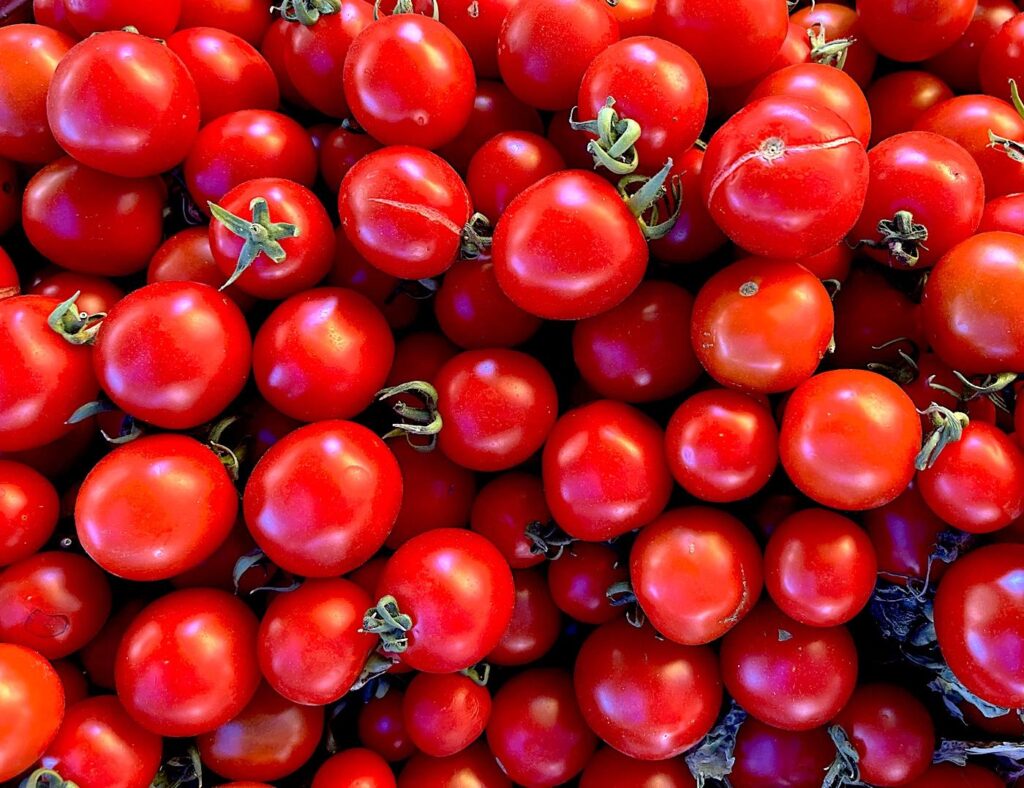
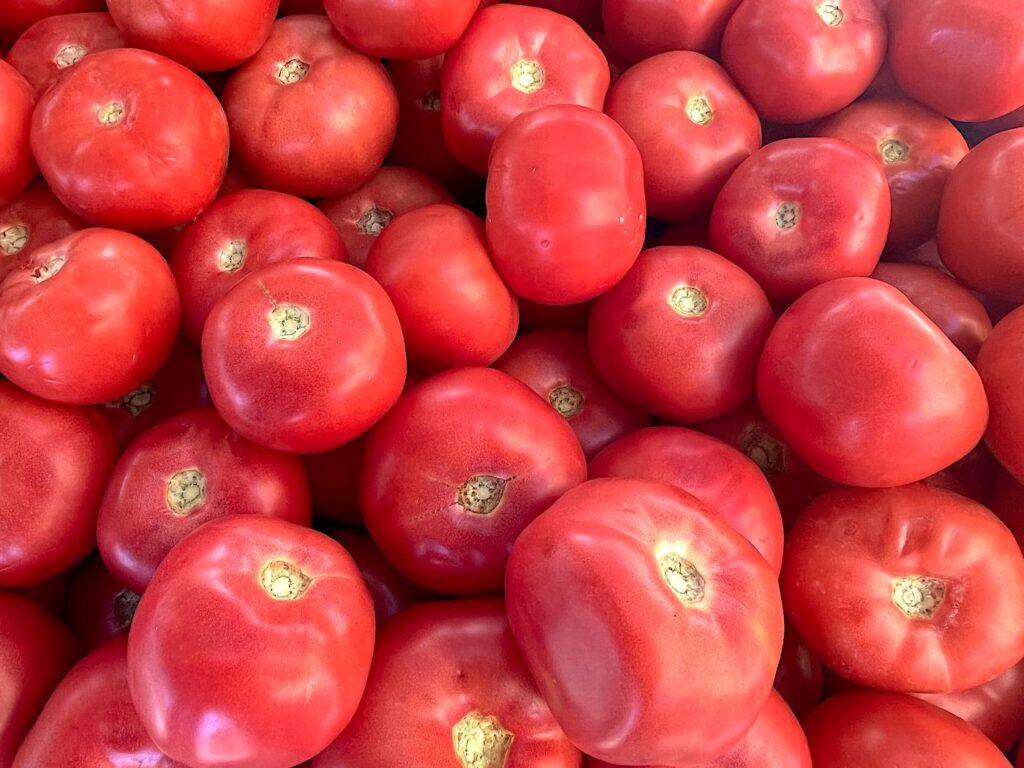
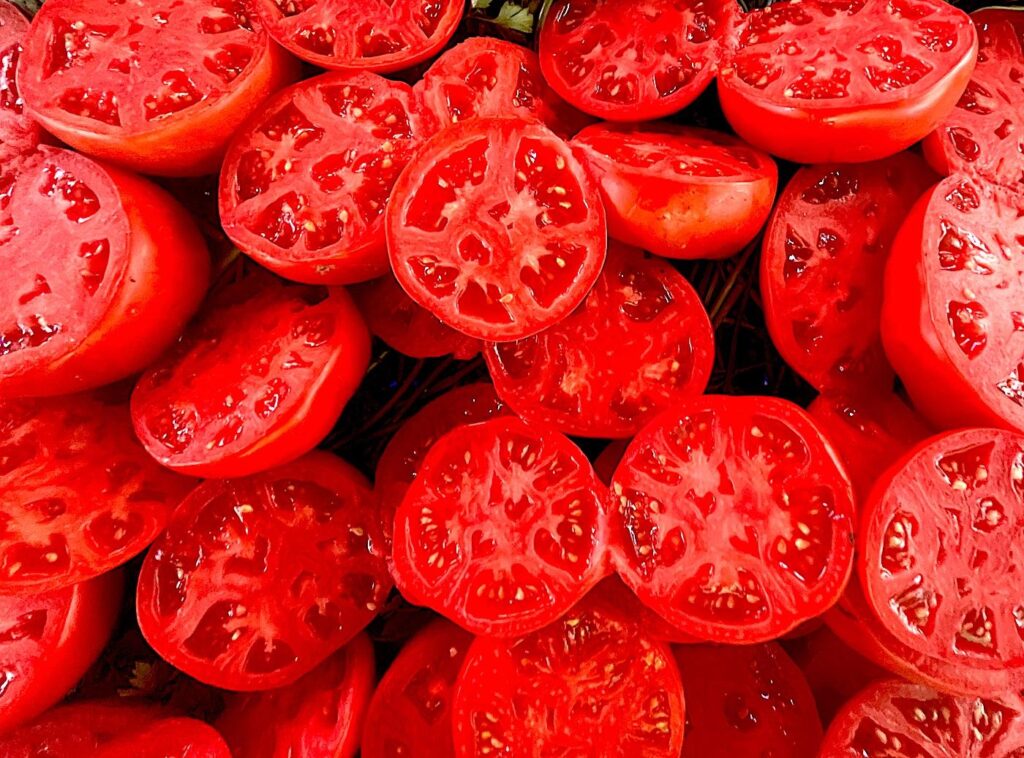
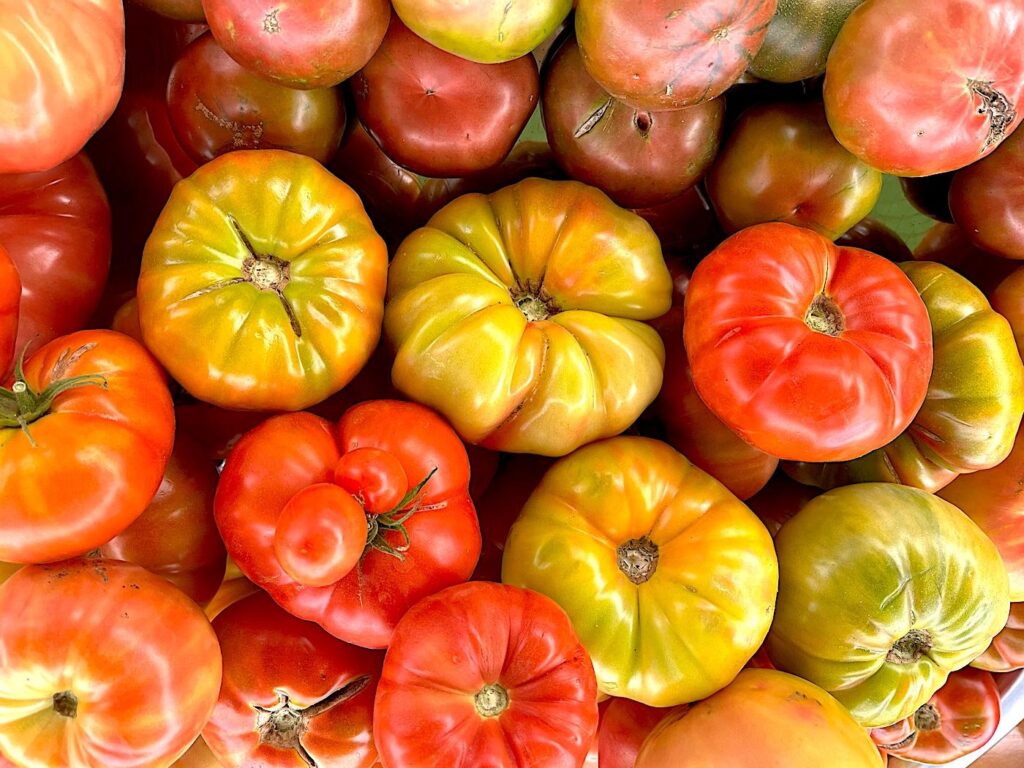
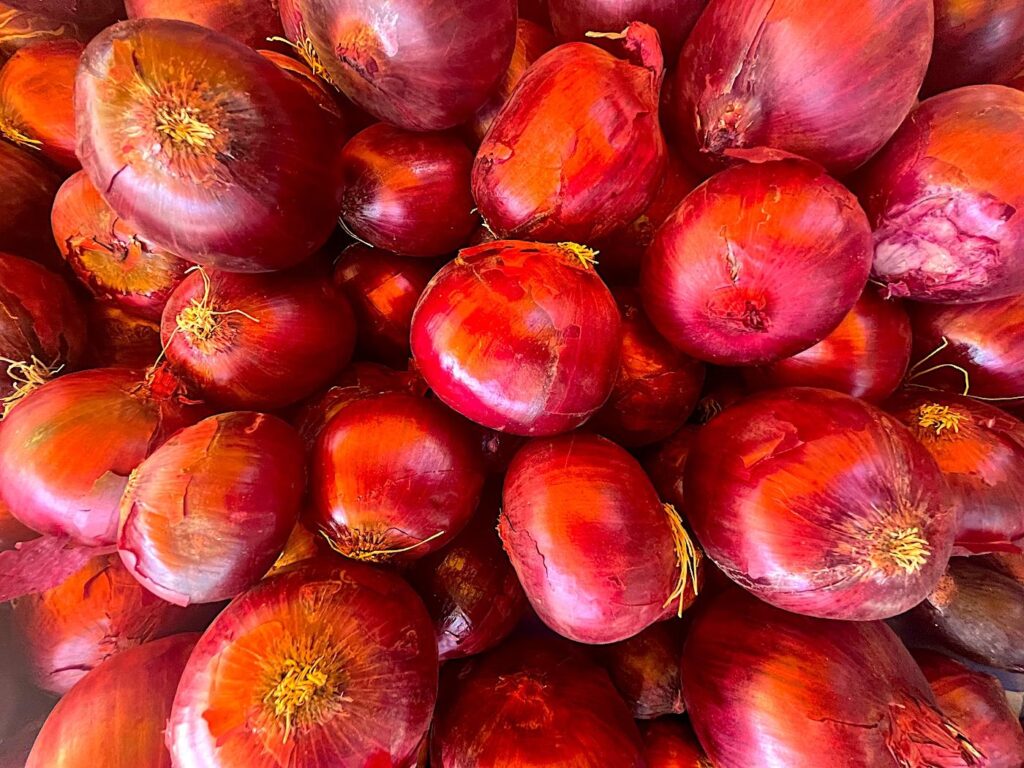
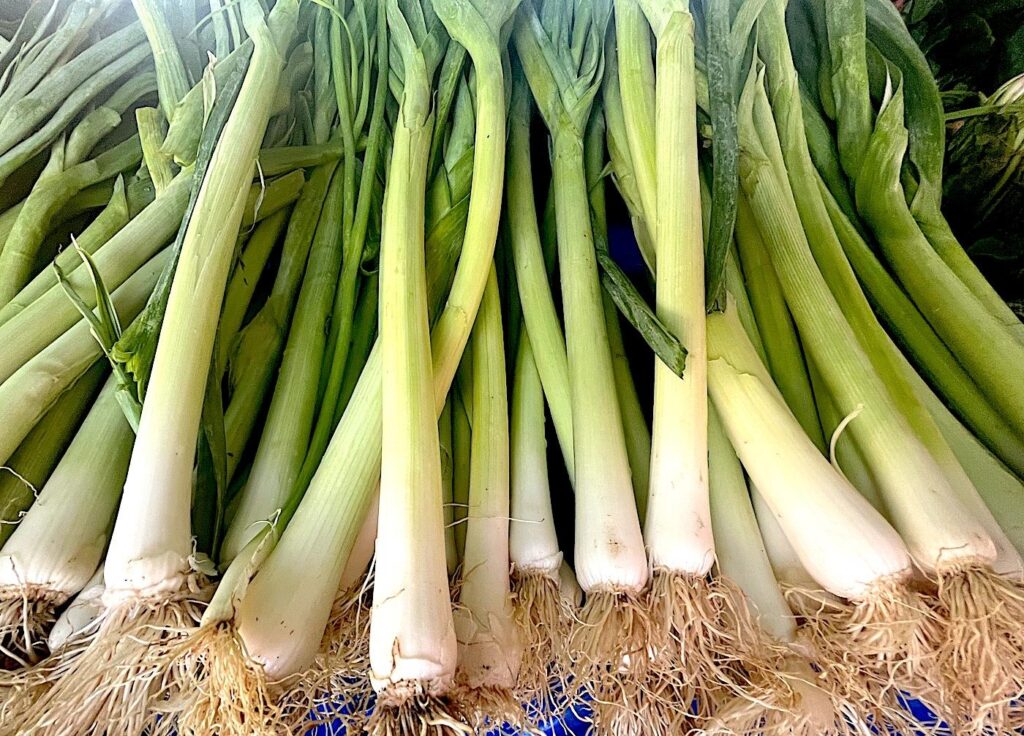
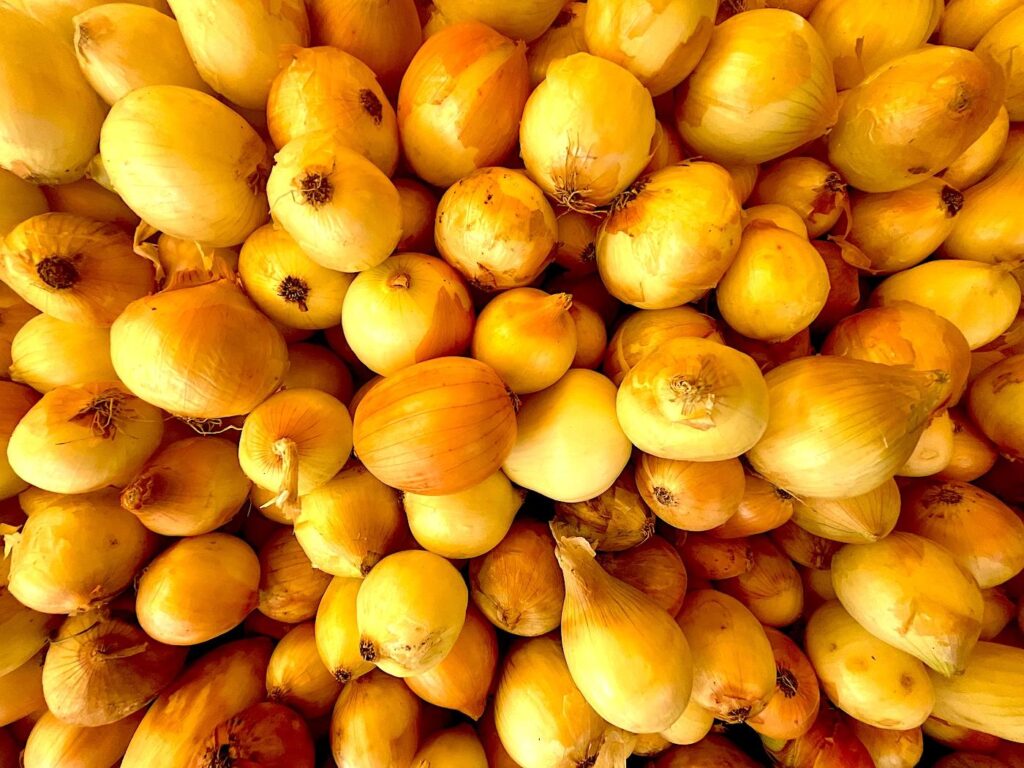
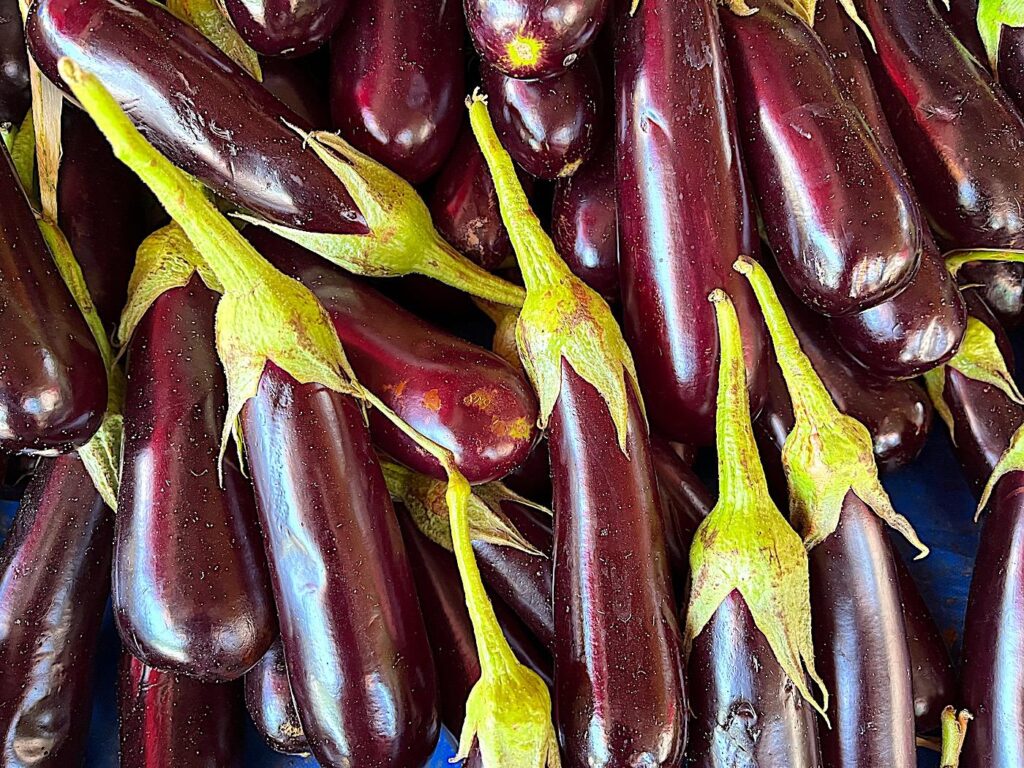
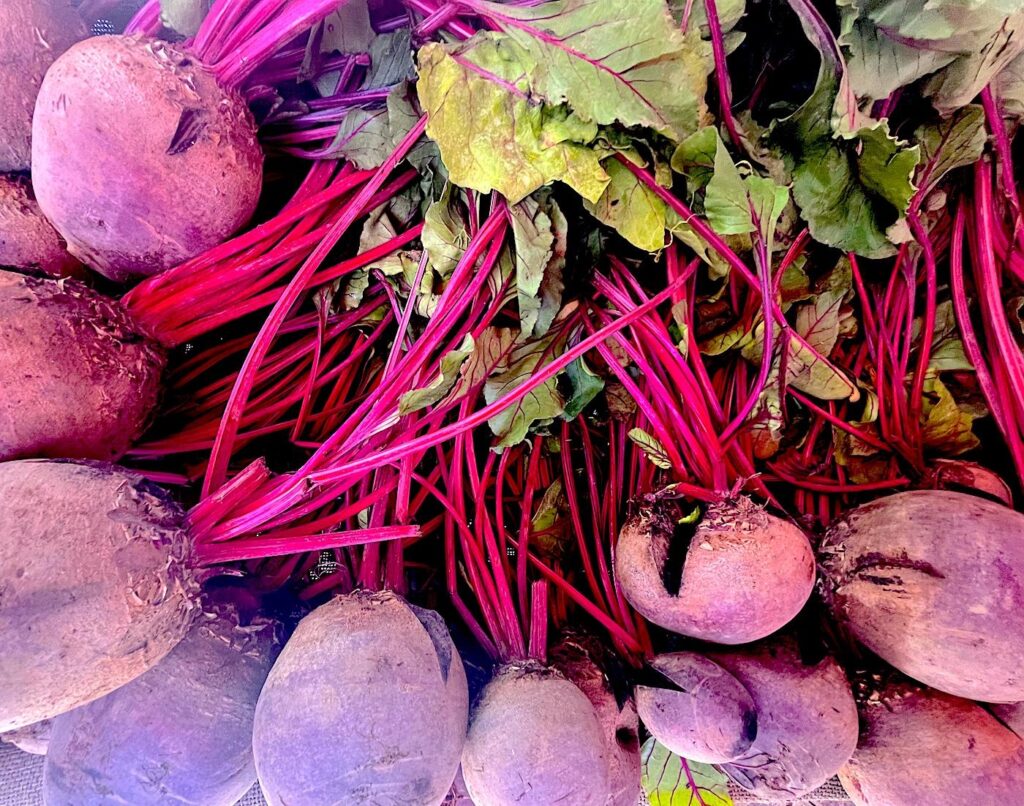
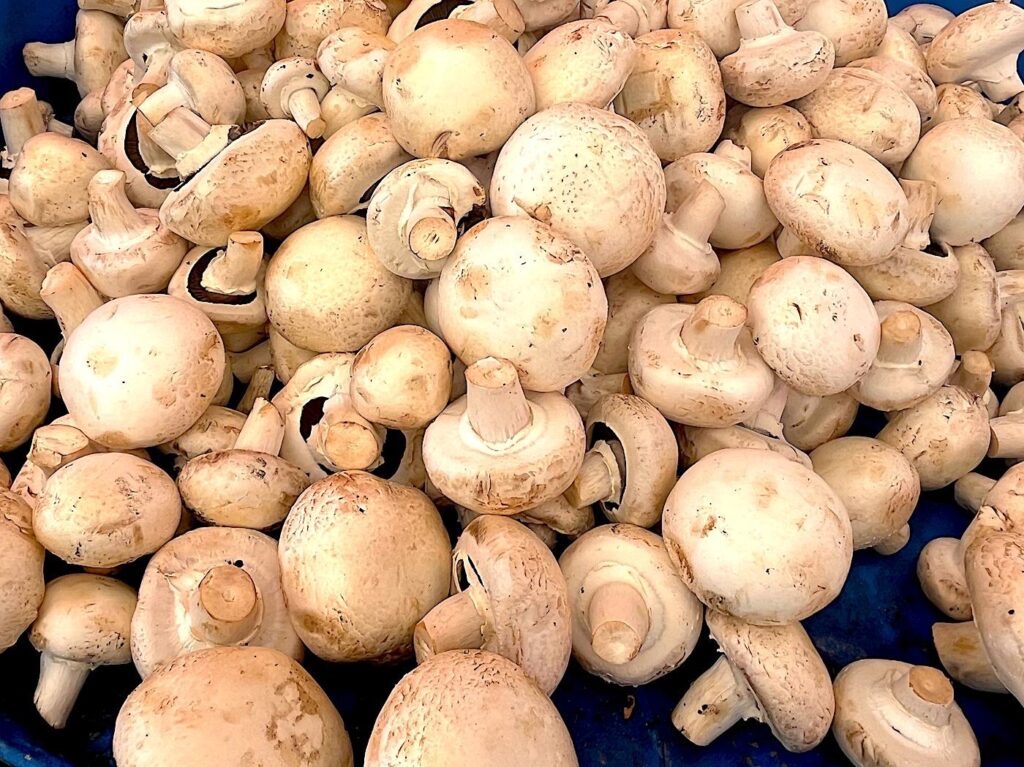
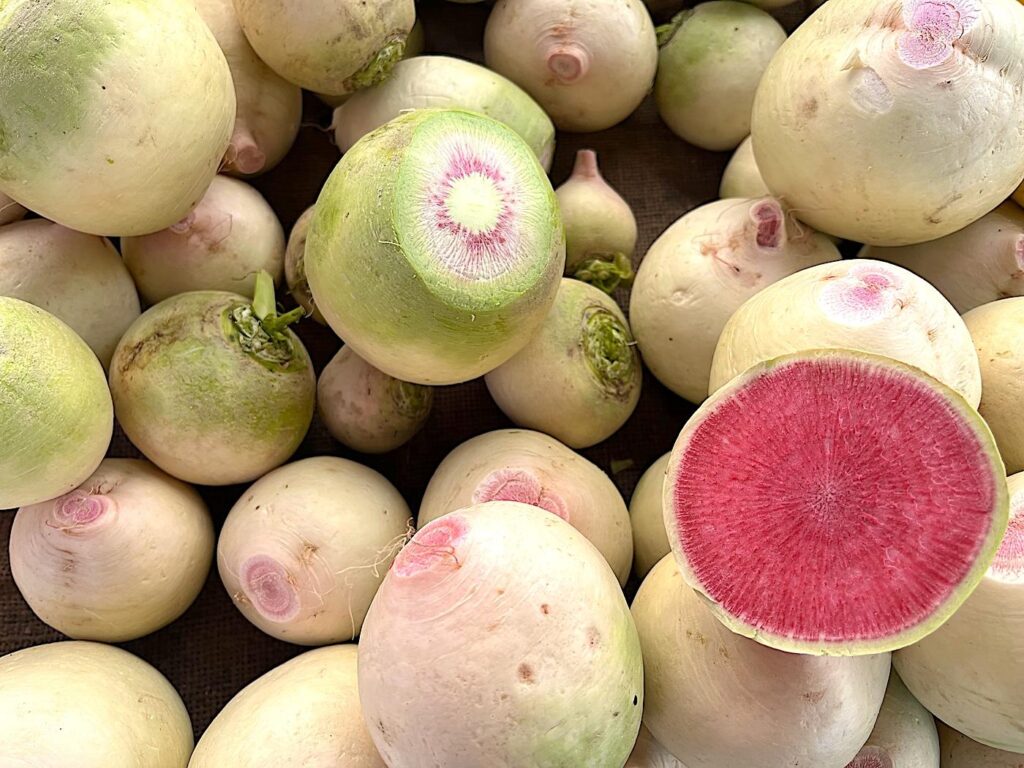
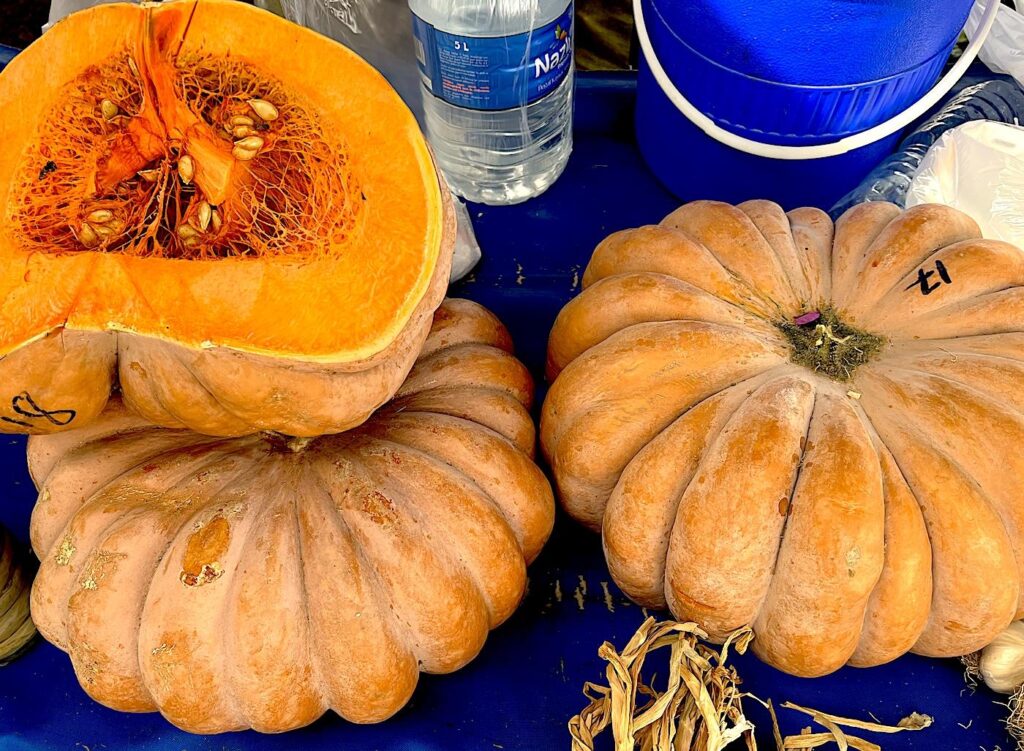
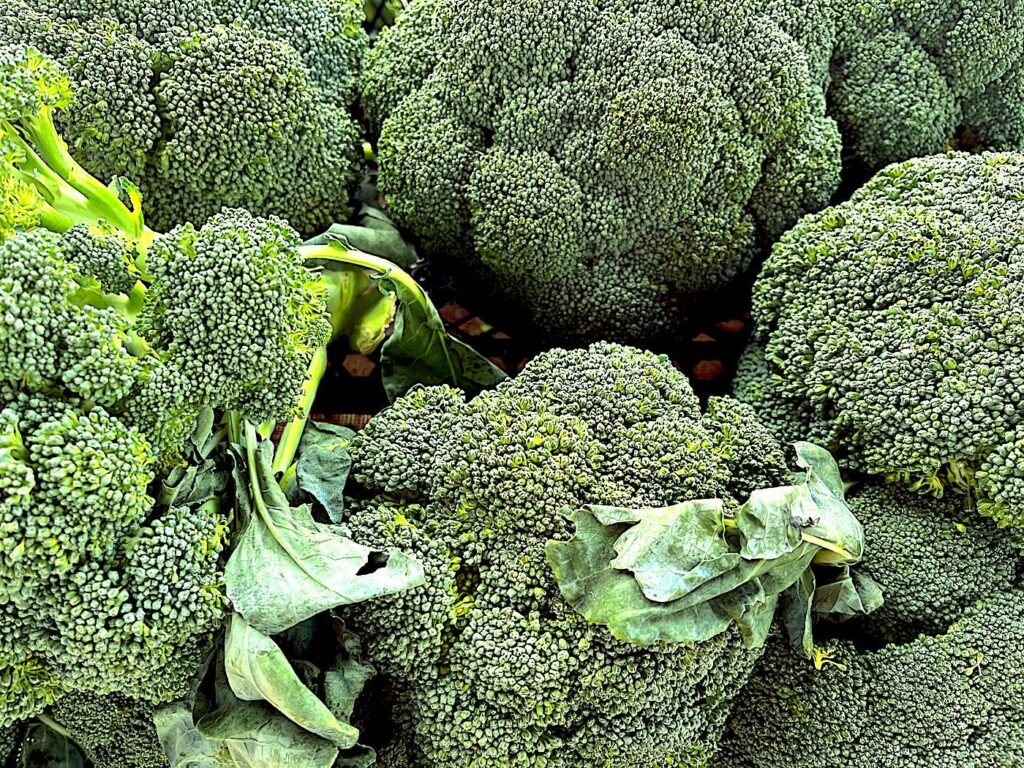
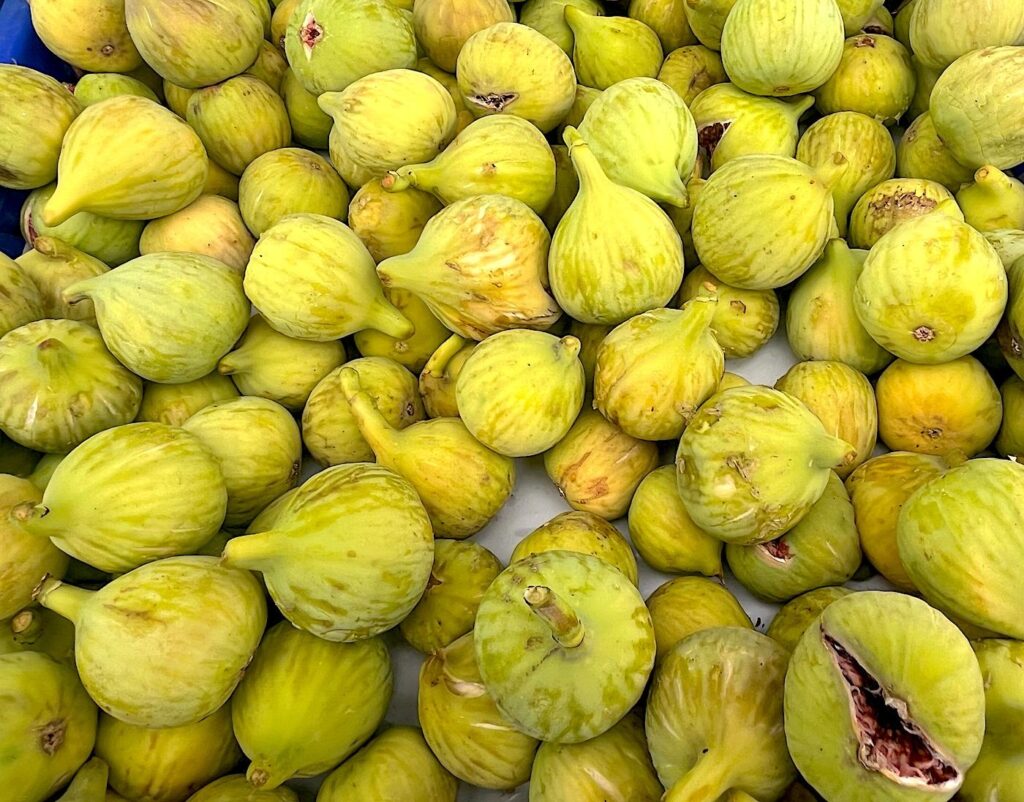
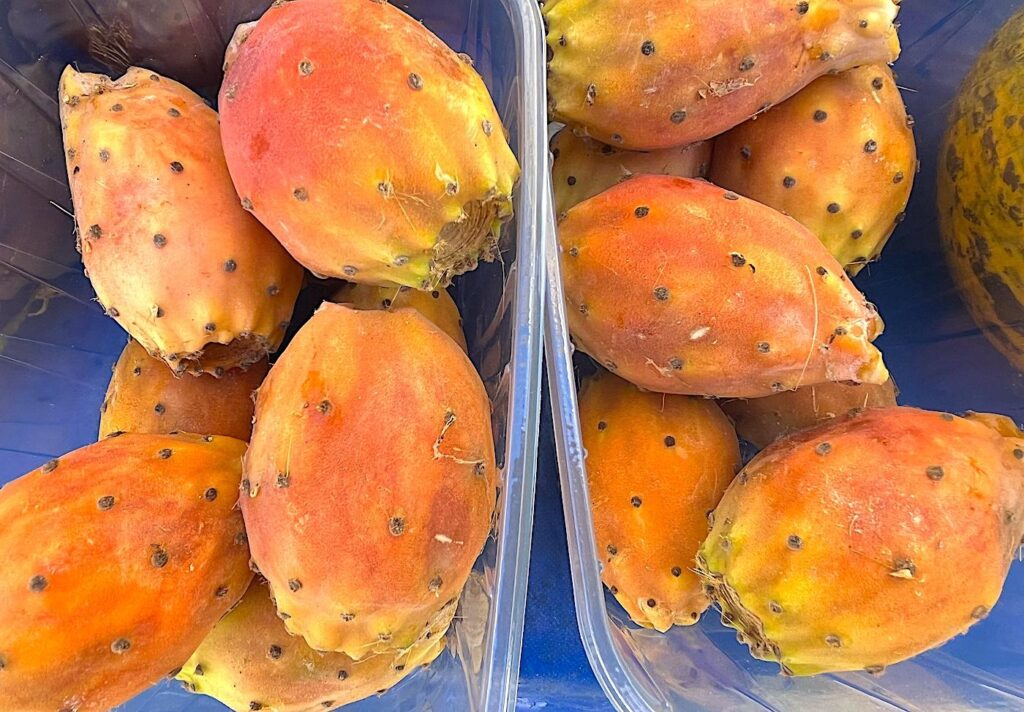
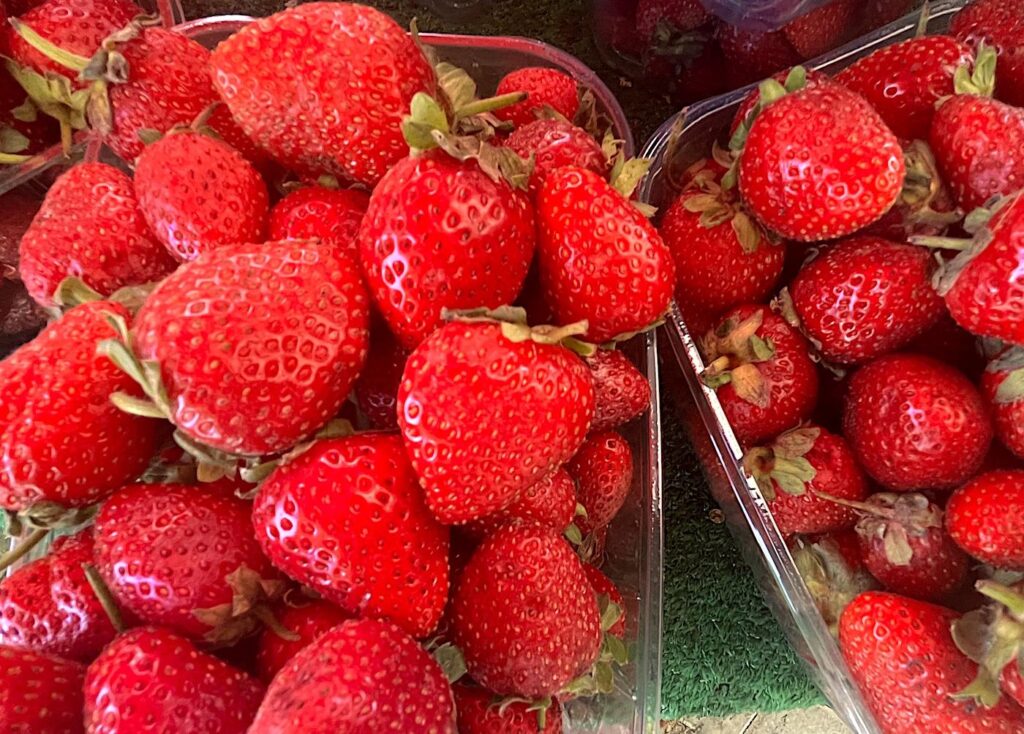
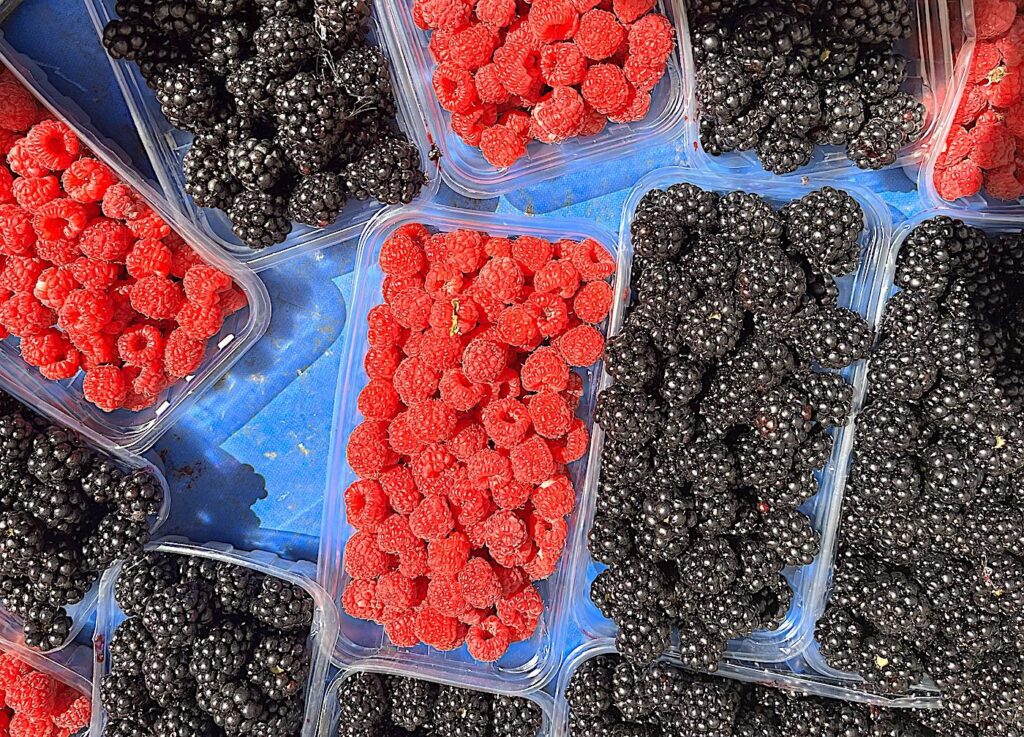
The markets of Çeşme, Alaçatı, and Ilıca overflow with the colours, aromas, and flavours of the Aegean, offering a vivid display of seasonal fruits and vegetables that reflect the region’s rich agricultural heritage. From glossy aubergines, sun-ripened tomatoes, crisp cucumbers, and fragrant herbs to sweet melons, figs, cherries, and citrus, the stalls brim with produce freshly harvested from nearby villages.
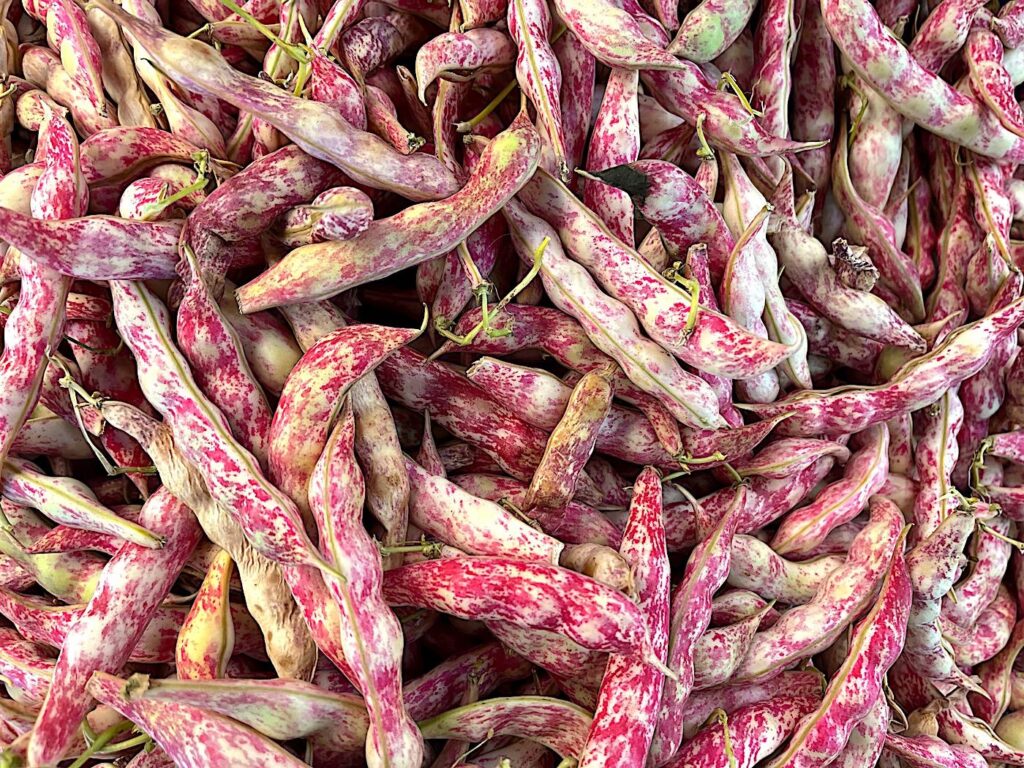
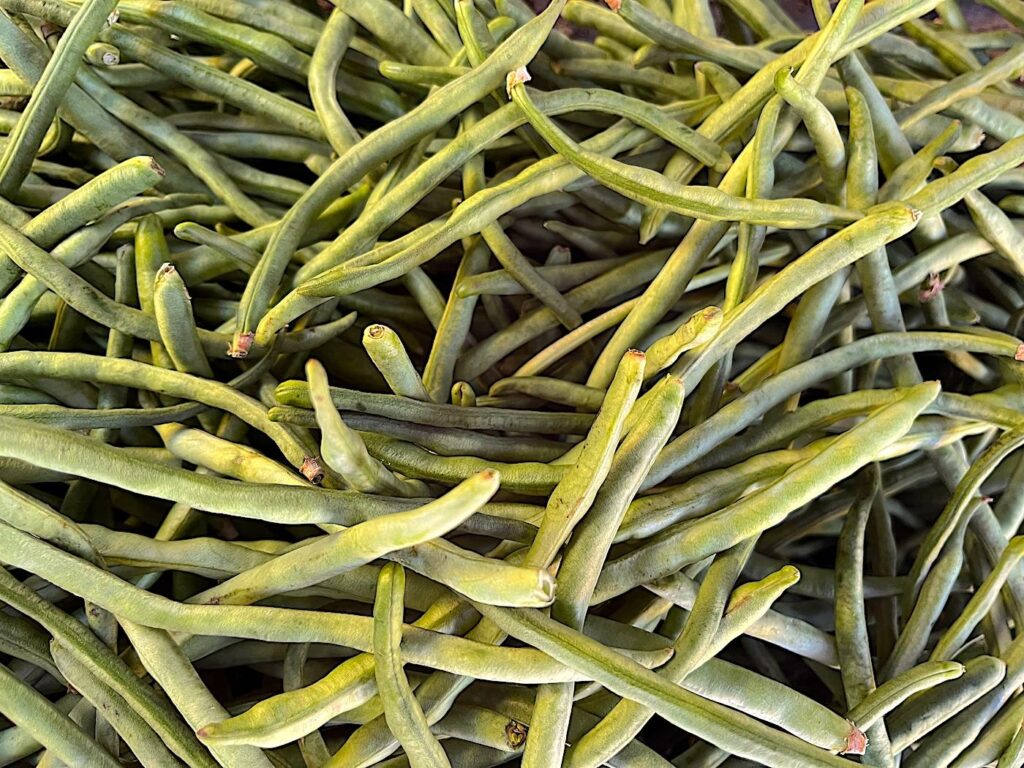
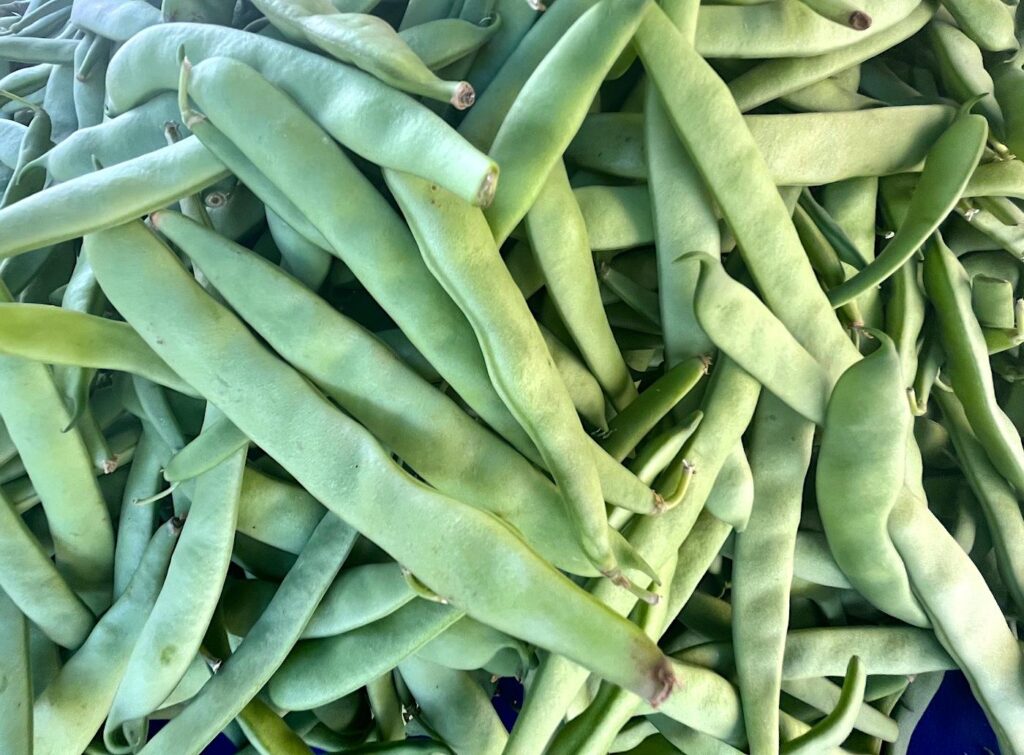
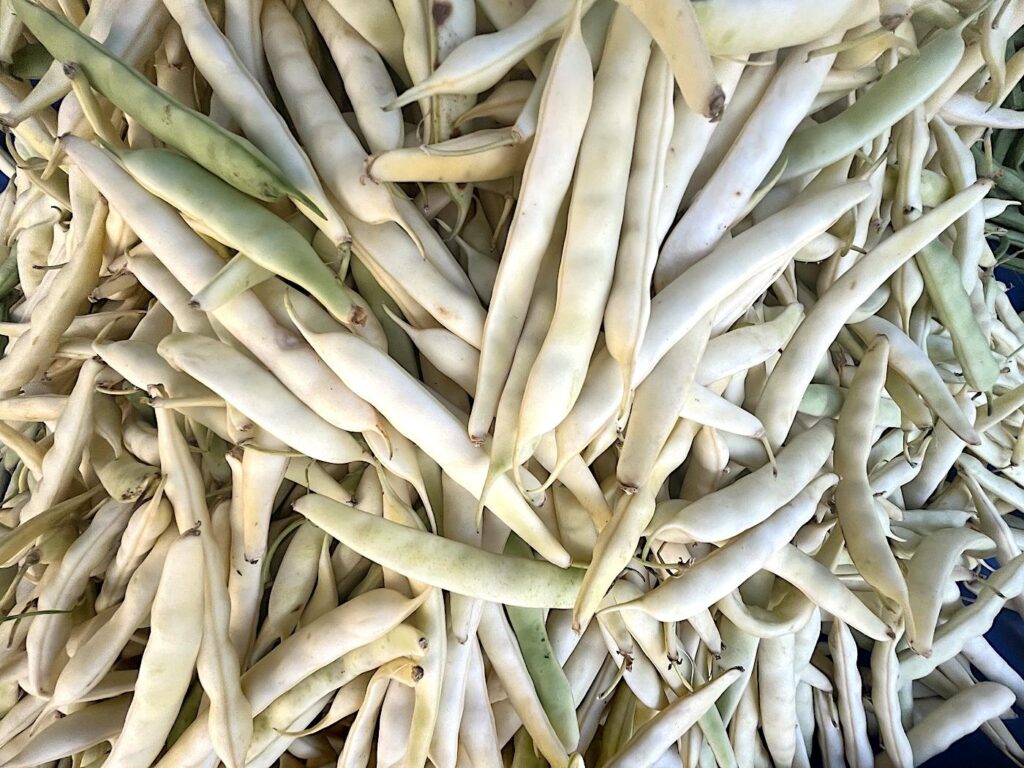
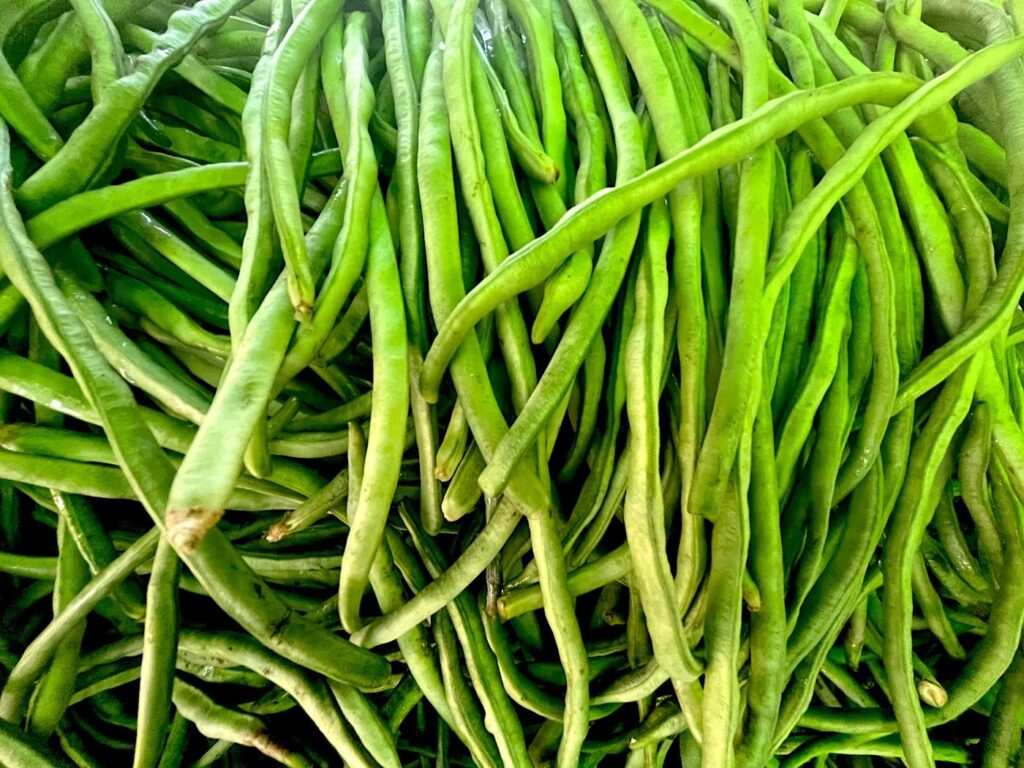
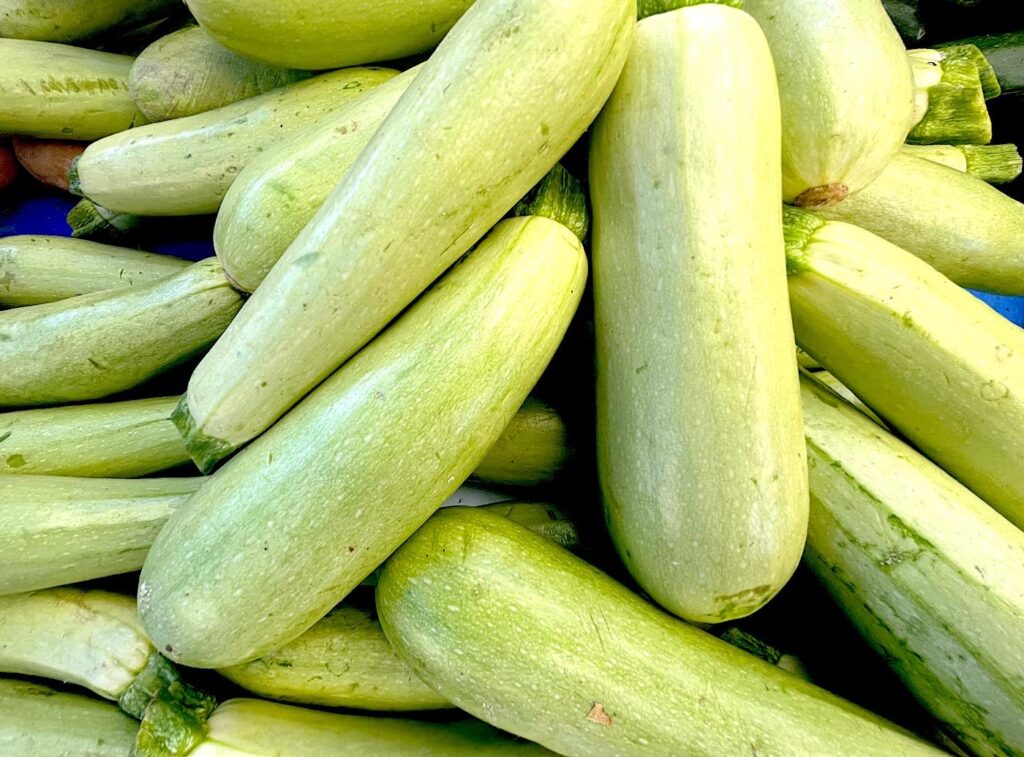
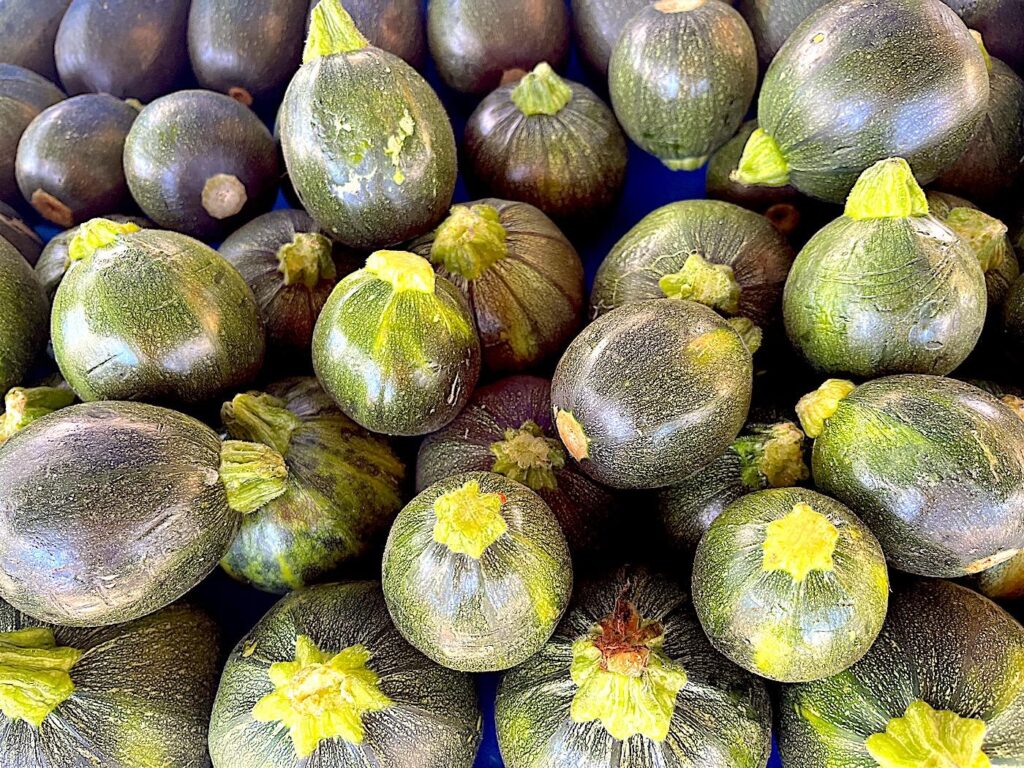
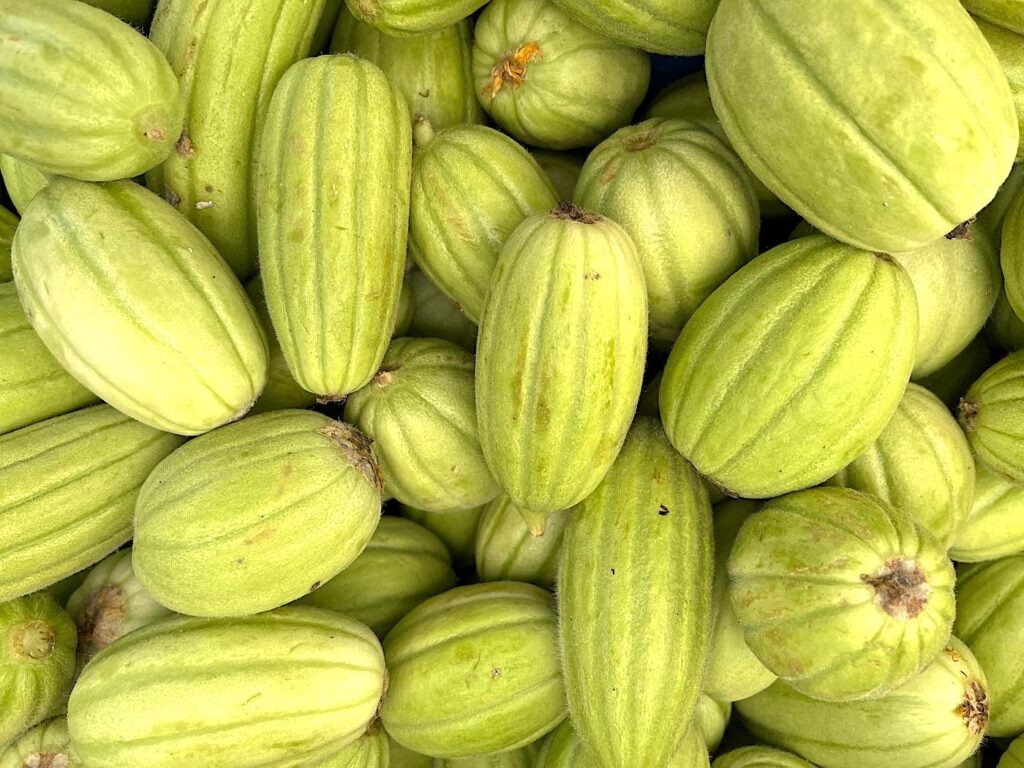
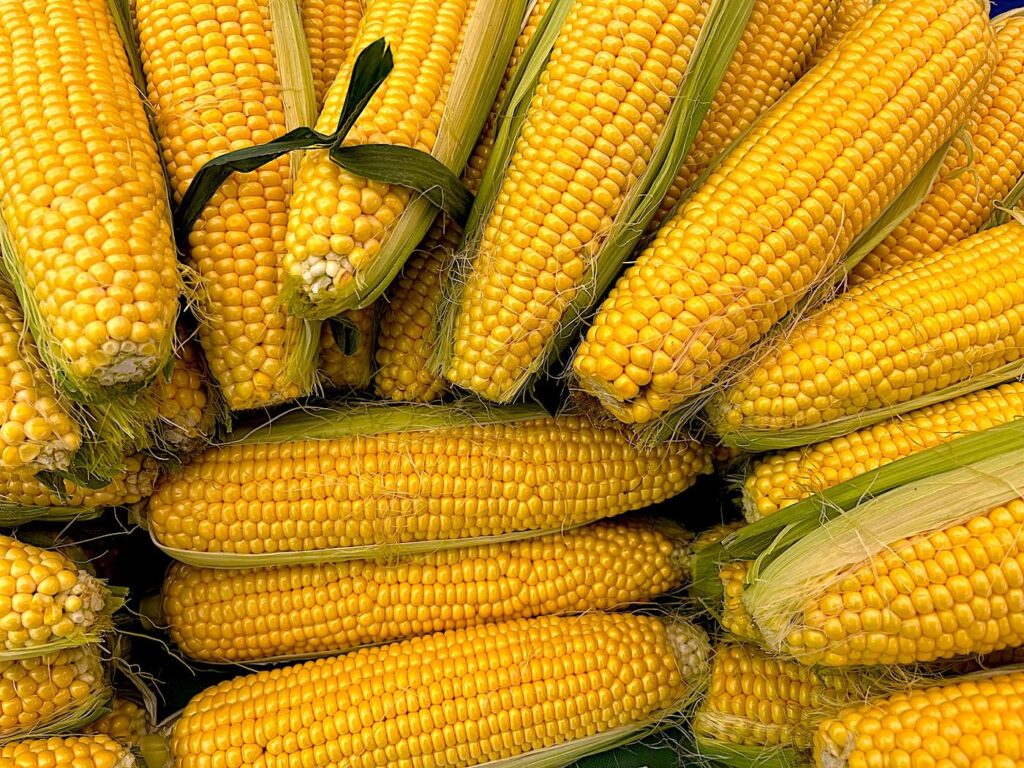
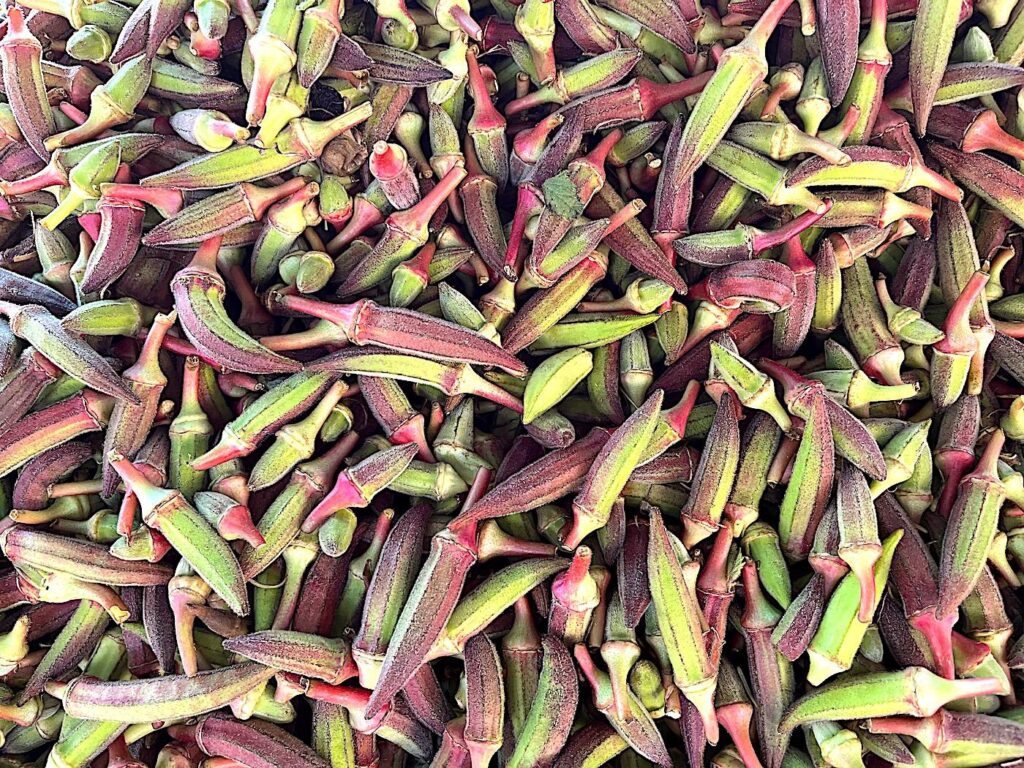
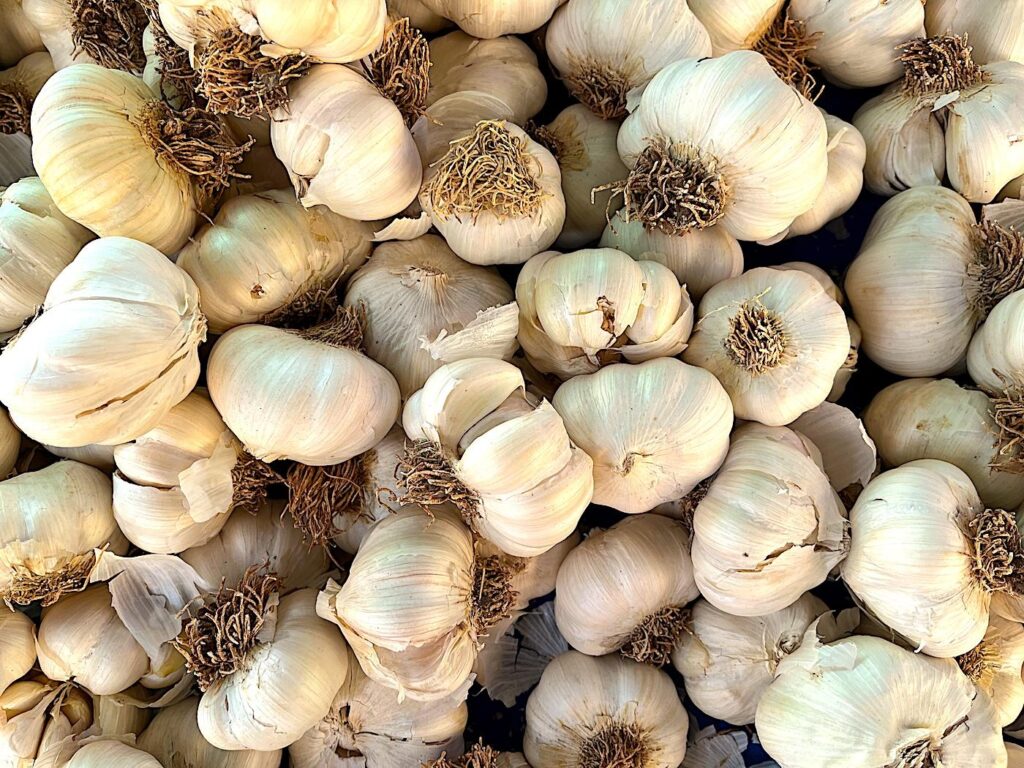
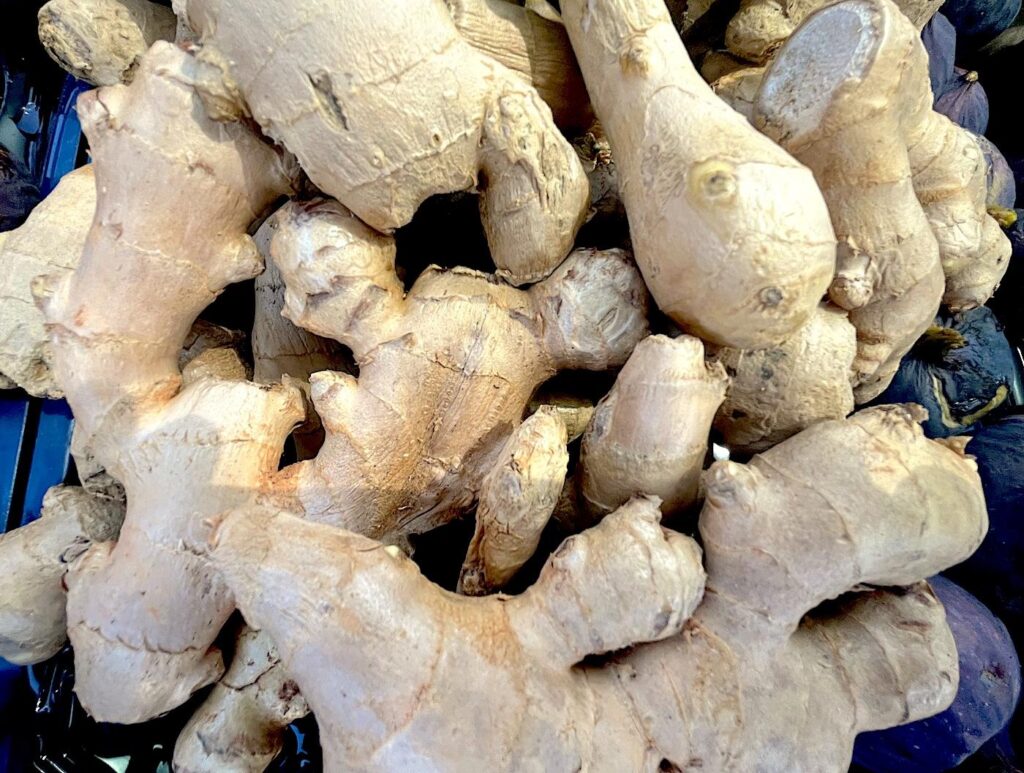
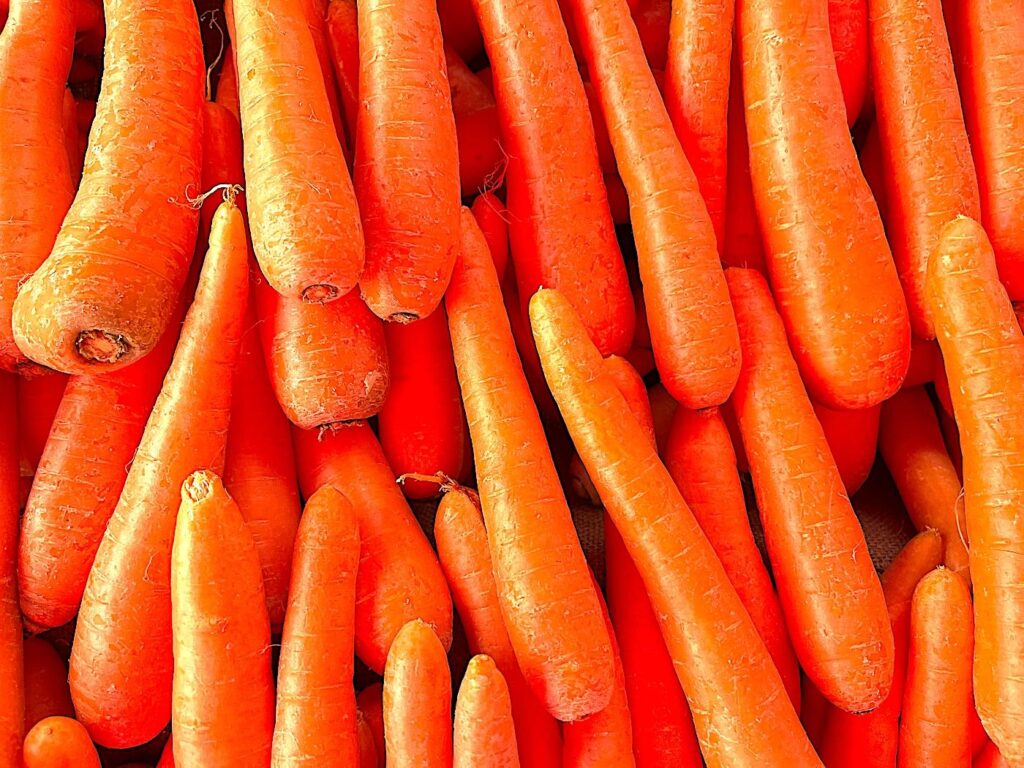
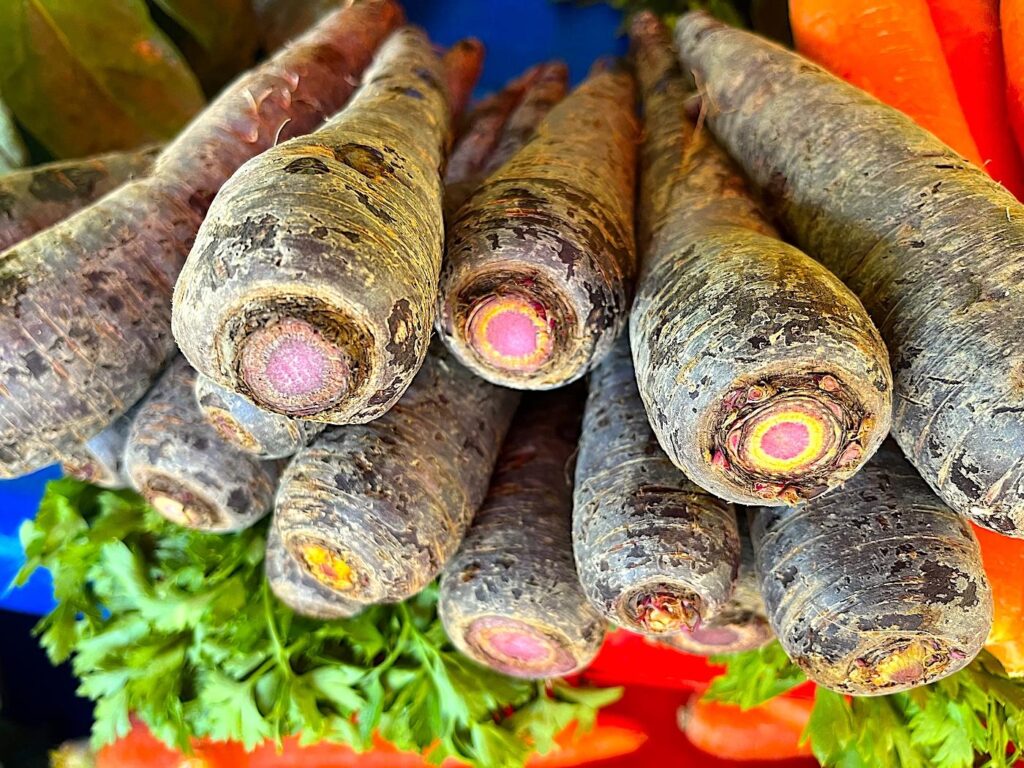
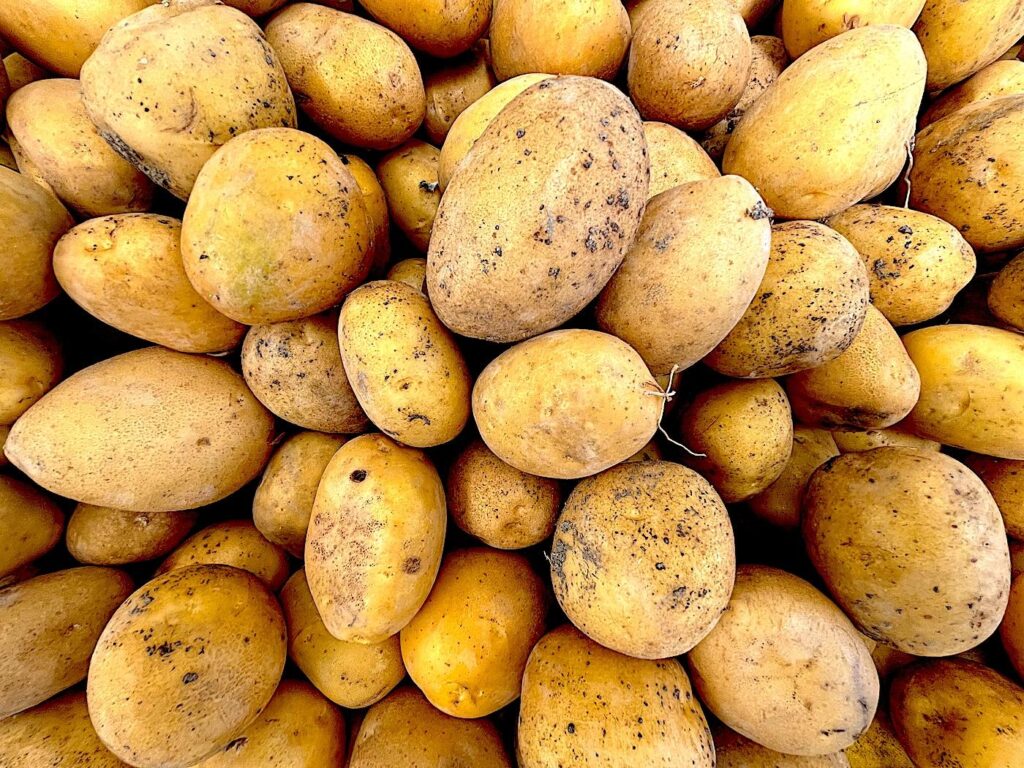
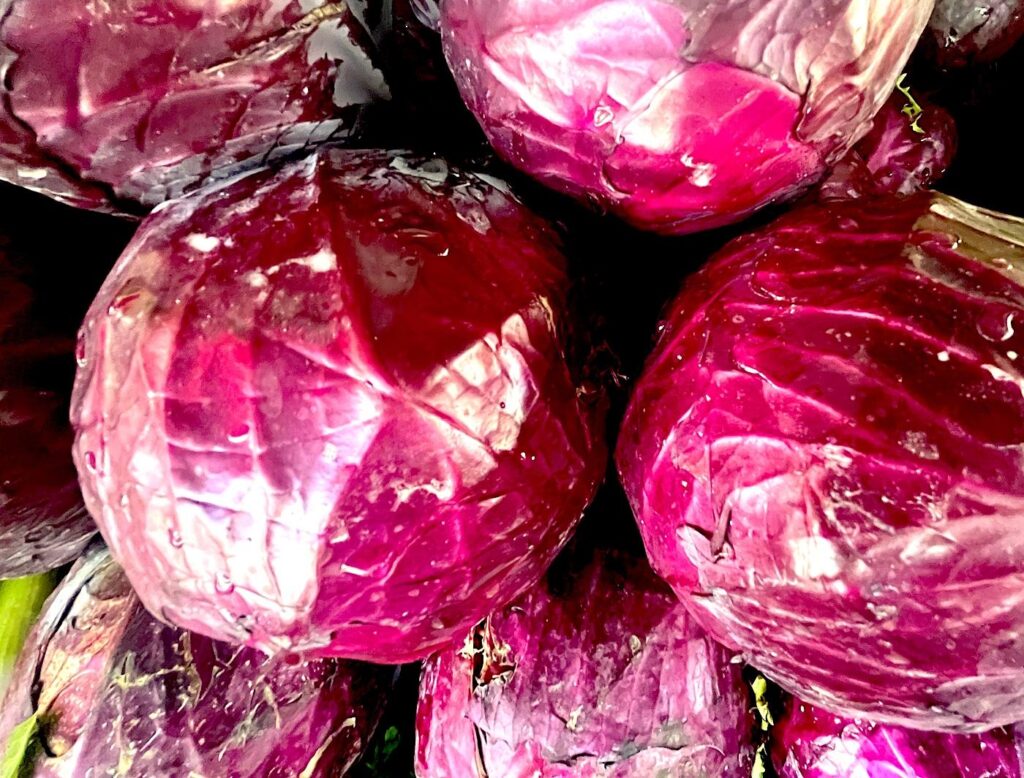
This pictorial guide (pictures all from local Çeşme markets) showcases the most typical ingredients found in these bustling weekly markets, helping visitors not only recognise the staples of local cuisine but also appreciate the natural abundance that defines daily life along the Çeşme Peninsula.
Market Vegetables
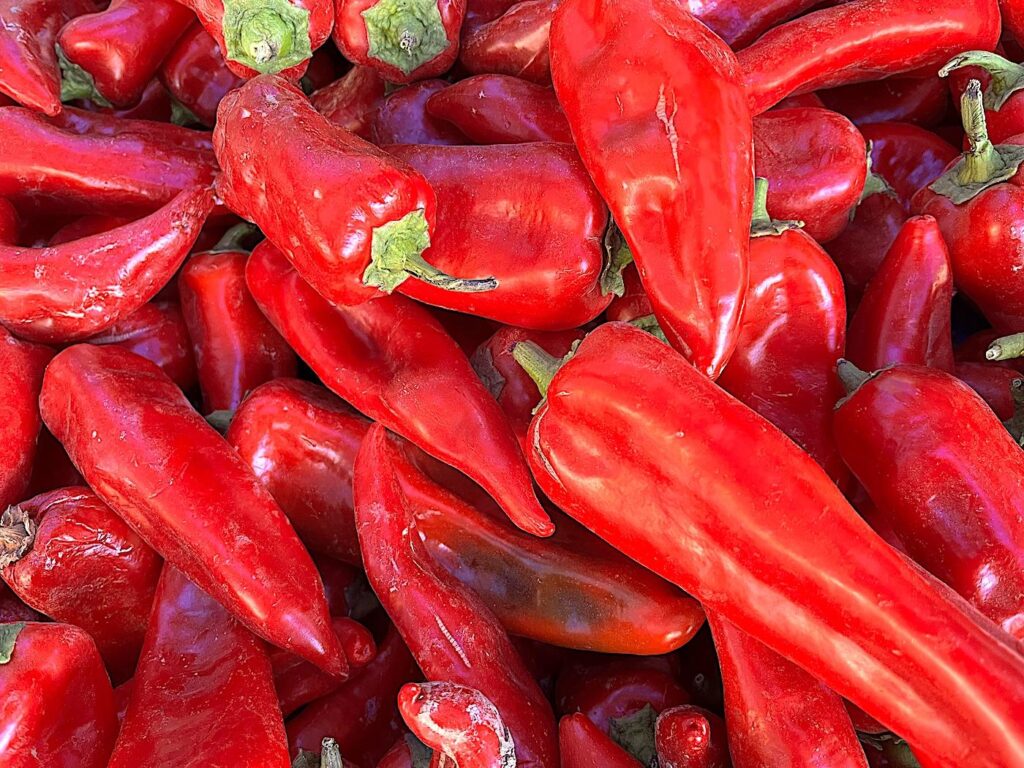
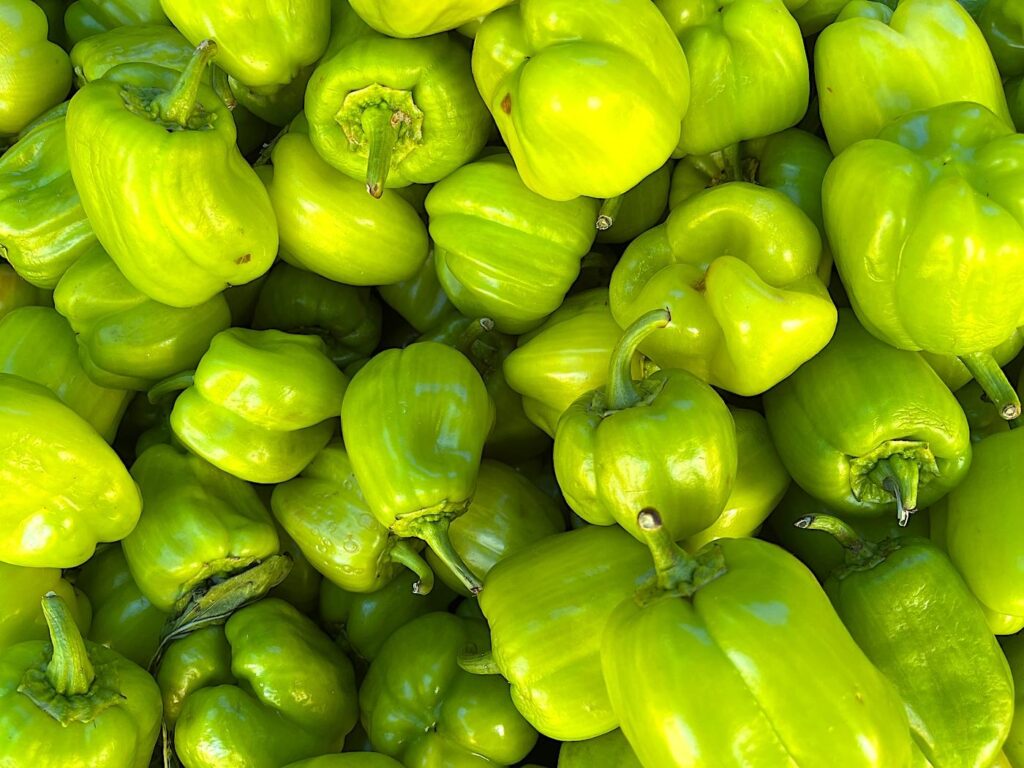
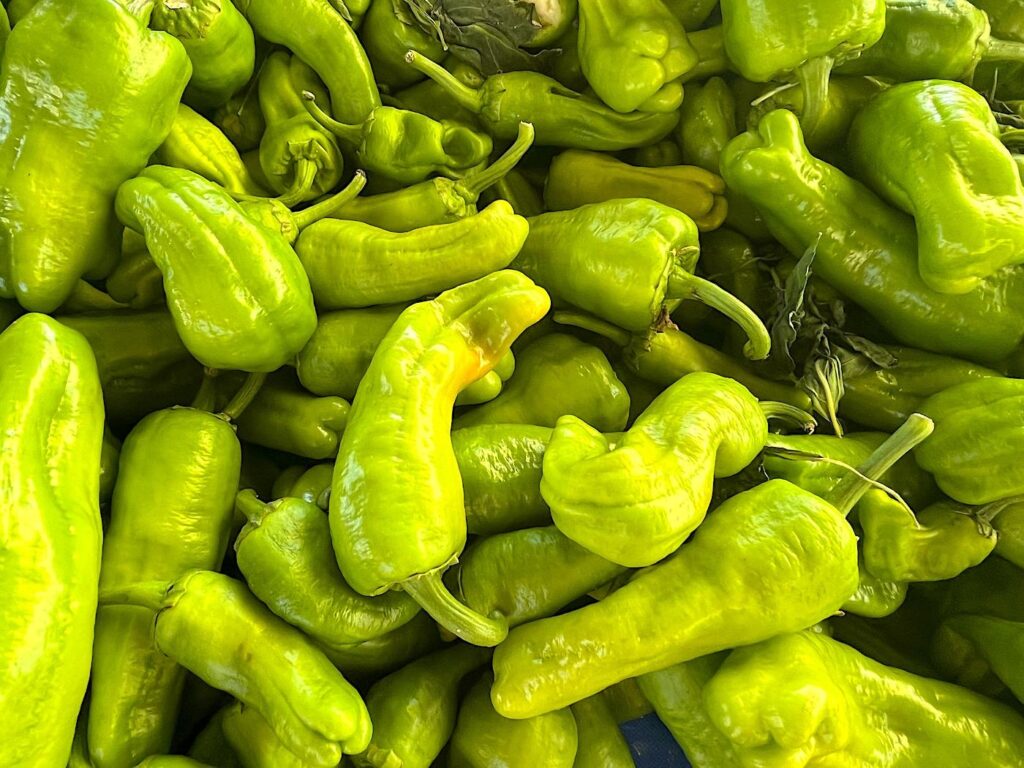
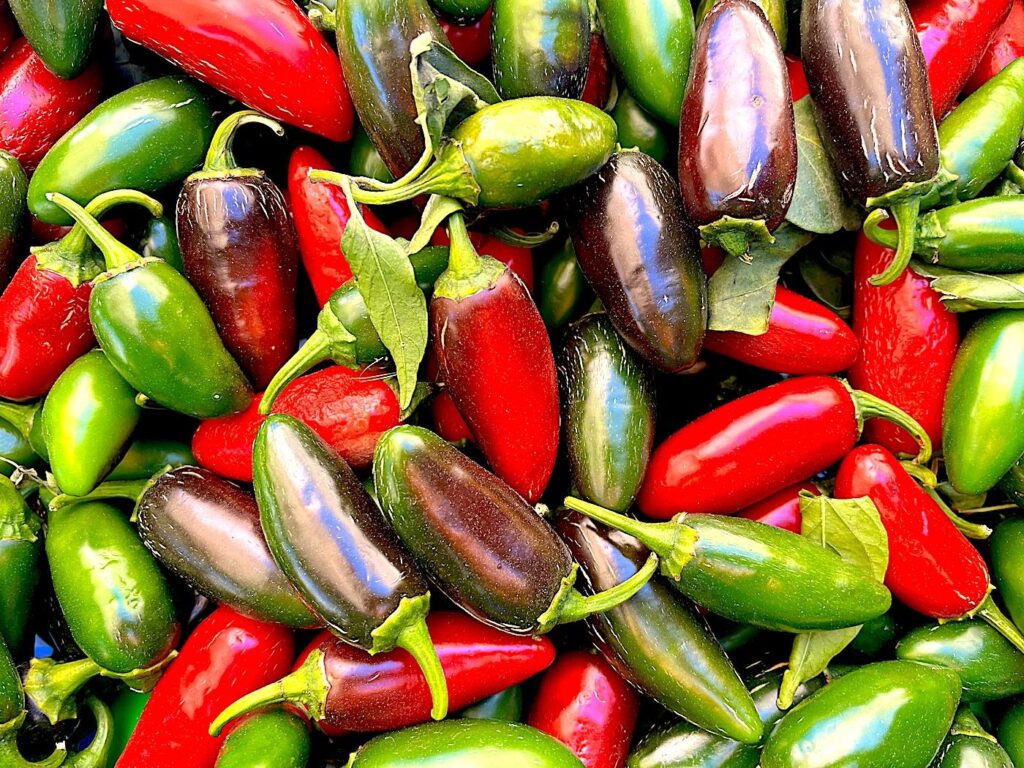
Peppers in Turkish Markets (Biber Çeşitleri)
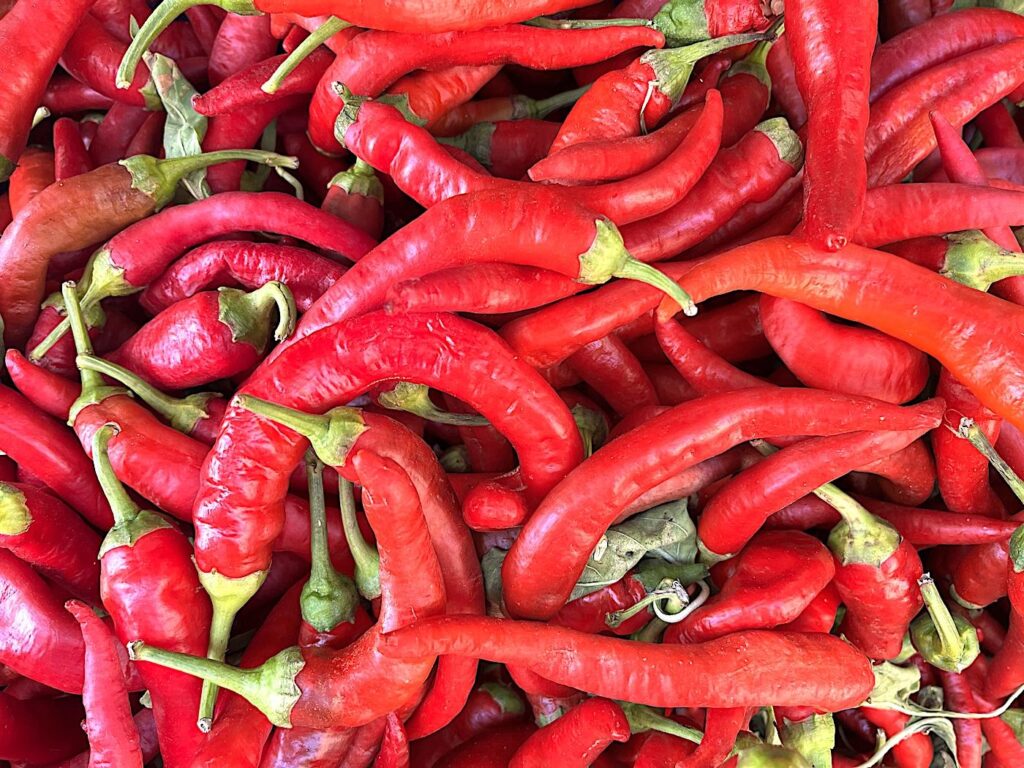
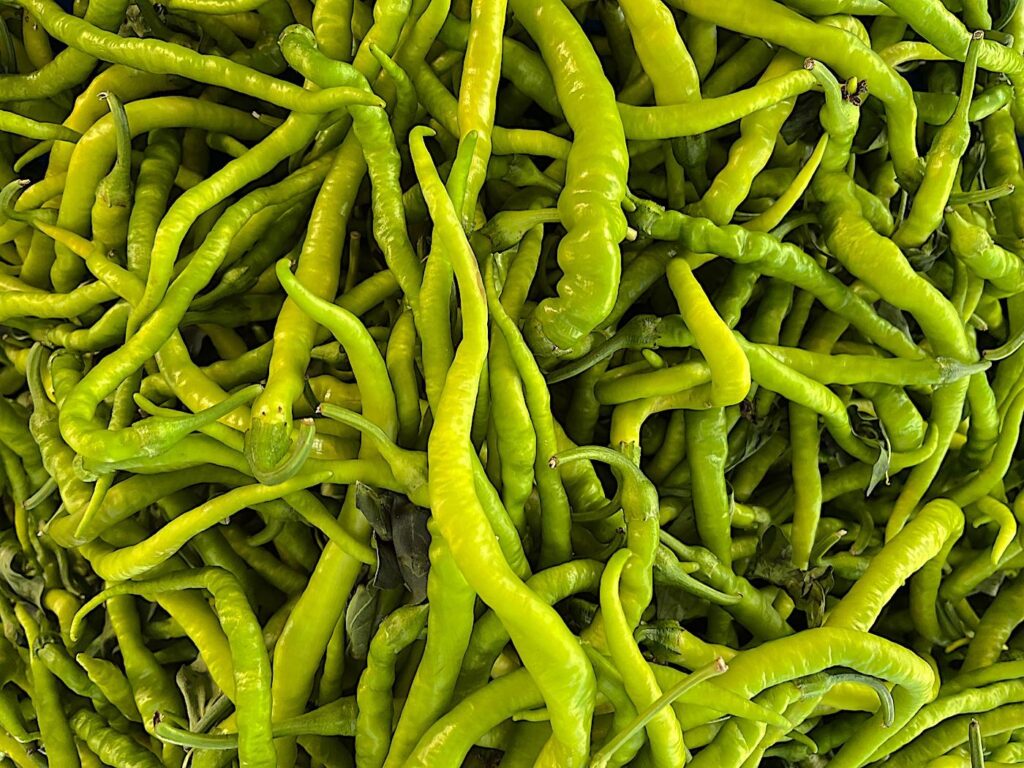
Peppers (biber) are a staple of Turkish cooking, appearing in every market in a wide variety of shapes, colours, and flavours.
Acı Biber (Hot Chilli Peppers): Long, slender, and glossy red or green, these fiery peppers range in heat from mildly spicy to very hot. They are eaten fresh in salads, cooked in mezes, or dried and ground into pul biber (red pepper flakes), one of Türkiye’s most essential spices.
Kapya Biber (Sweet Red Peppers): Broad, triangular, and deep red, kapya peppers are sweet and aromatic. They are often roasted and peeled for mezes, stuffed with rice or meat, or pureed into rich sauces and dips.
Sivri Biber (Green Pointed Peppers): Thin, elongated, and pale green, sivri peppers are usually mild but can sometimes surprise with a bit of heat. They are commonly fried with tomatoes for breakfast, grilled on skewers, or eaten raw with cheese.
Dolmalık Biber (Stuffing Peppers): Short, blocky, and green (sometimes yellow or red), dolmalık peppers are sweet and mild, perfect for stuffing. They are the key ingredient in classic Turkish dolma, which is typically filled with rice, herbs, or minced meat.
Çarliston Biber (Charleston Peppers): Sometimes referred to as Köy Biber (Village Pepper). Smooth, medium-long, and pale green, Charleston peppers are mild and slightly sweet. Extremely popular across Türkiye, they are often roasted, fried, or served alongside grilled meats and köfte.
Market Salads & Greens
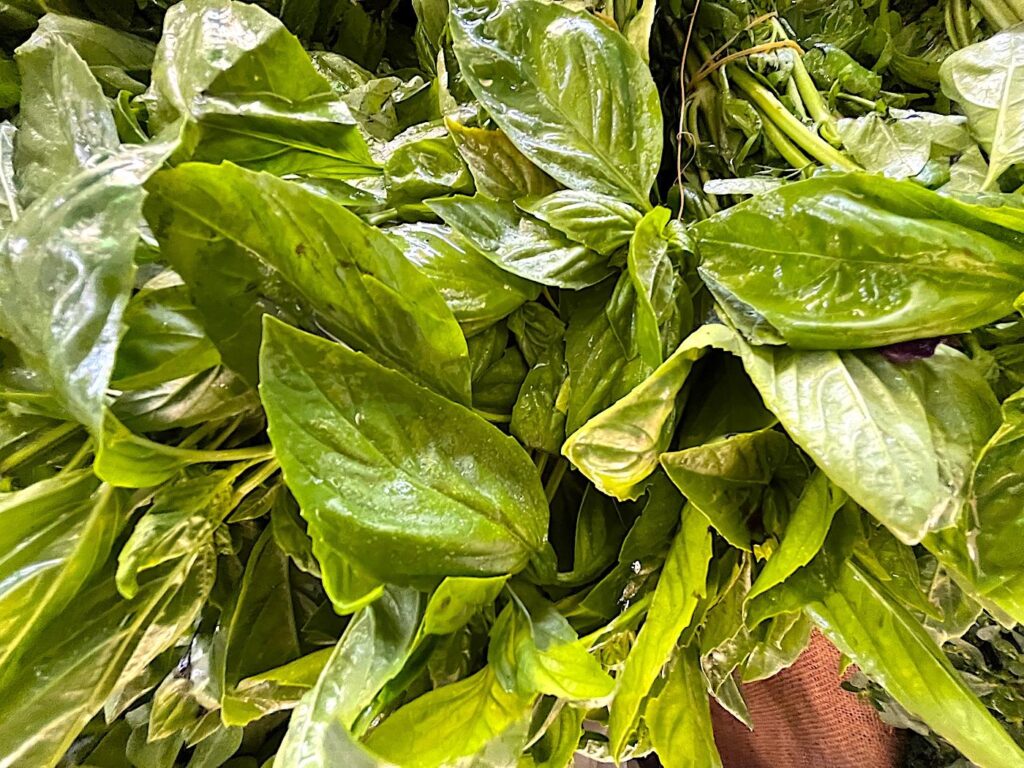
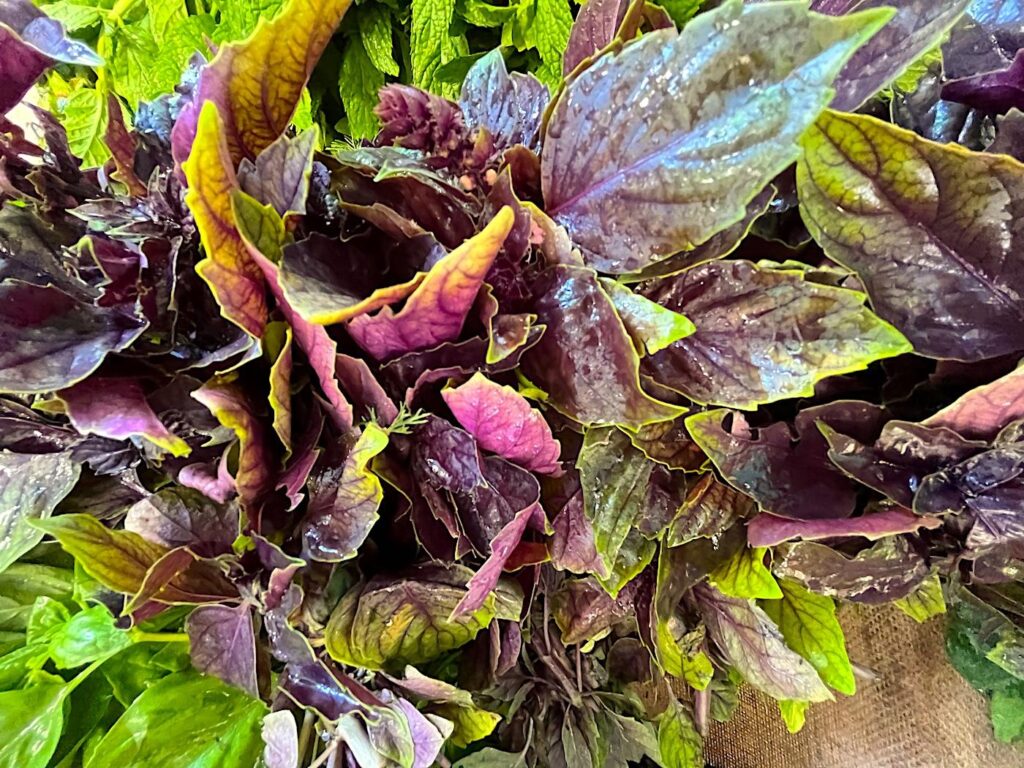
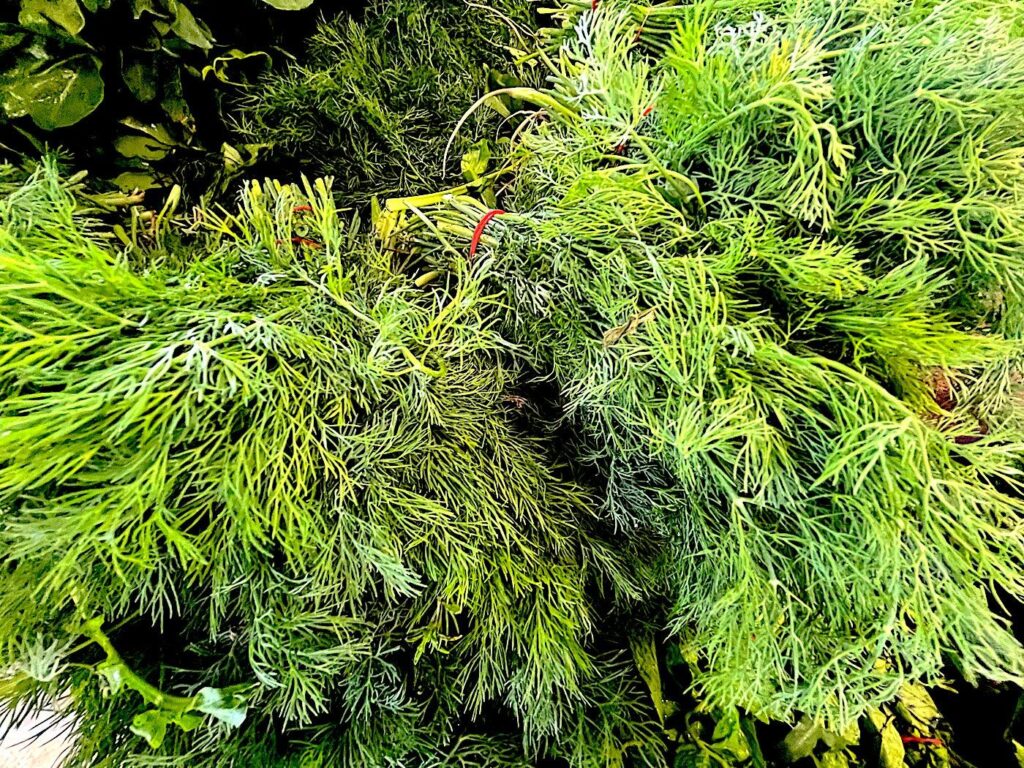
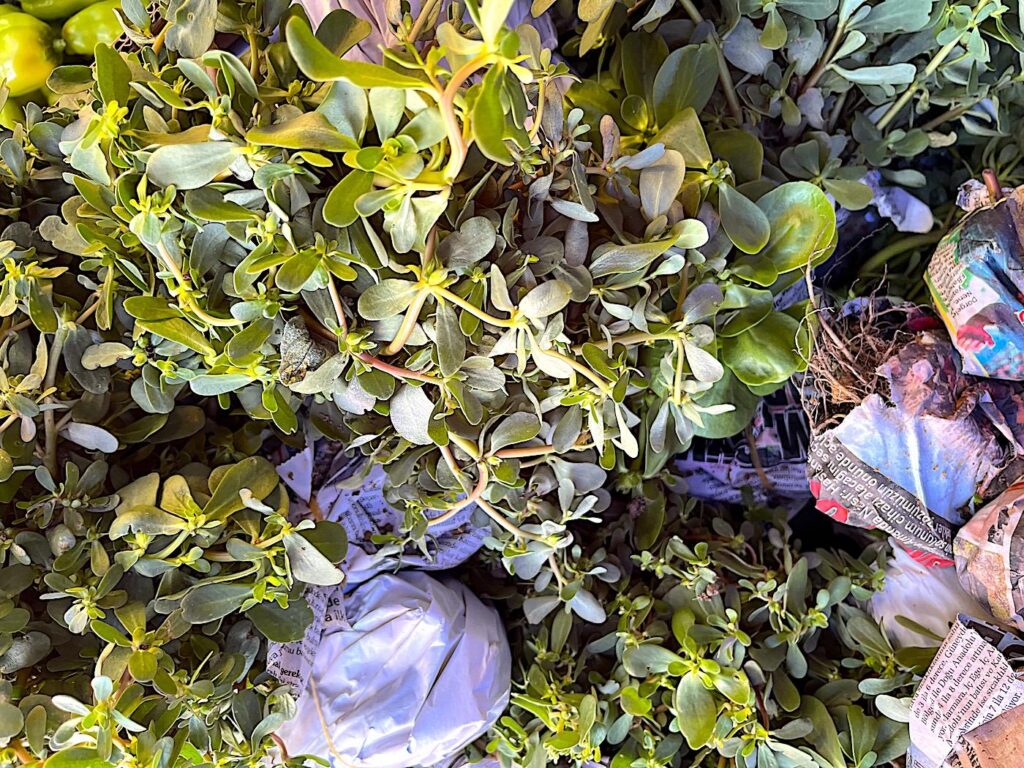
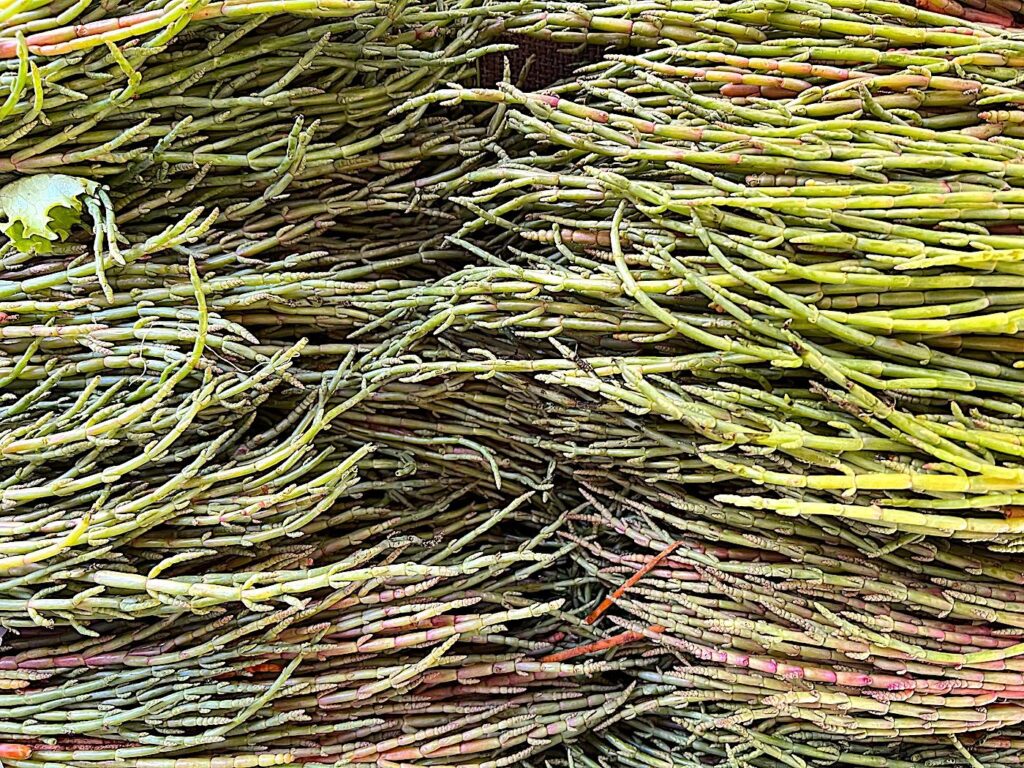
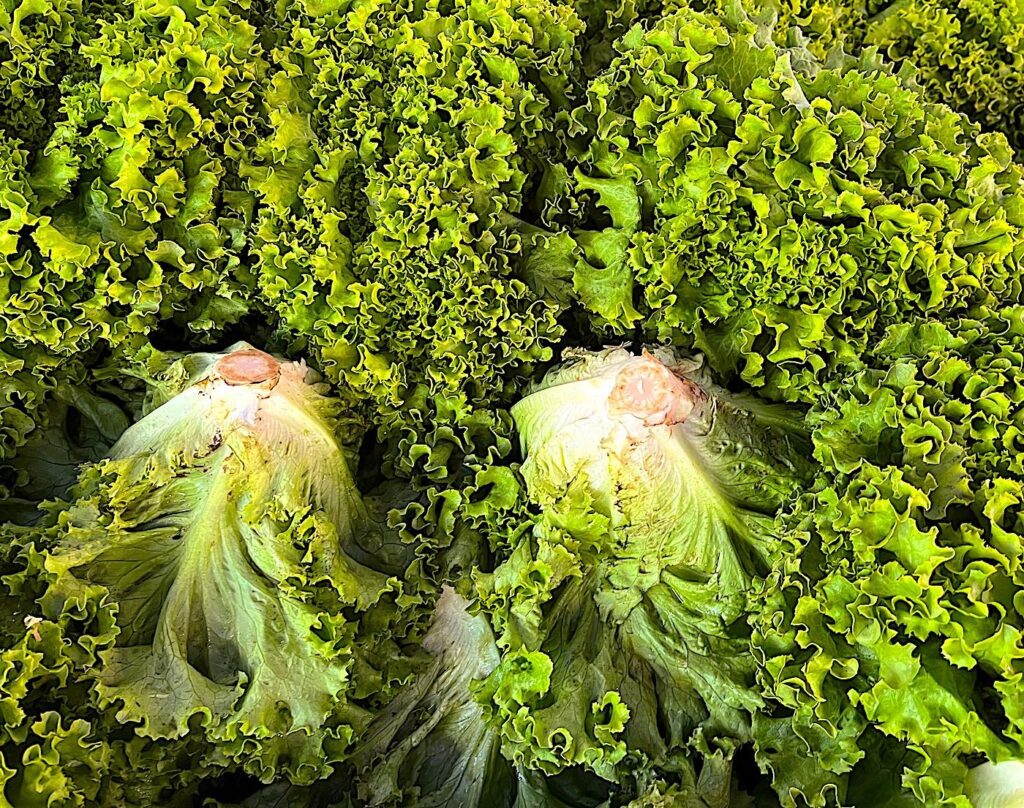
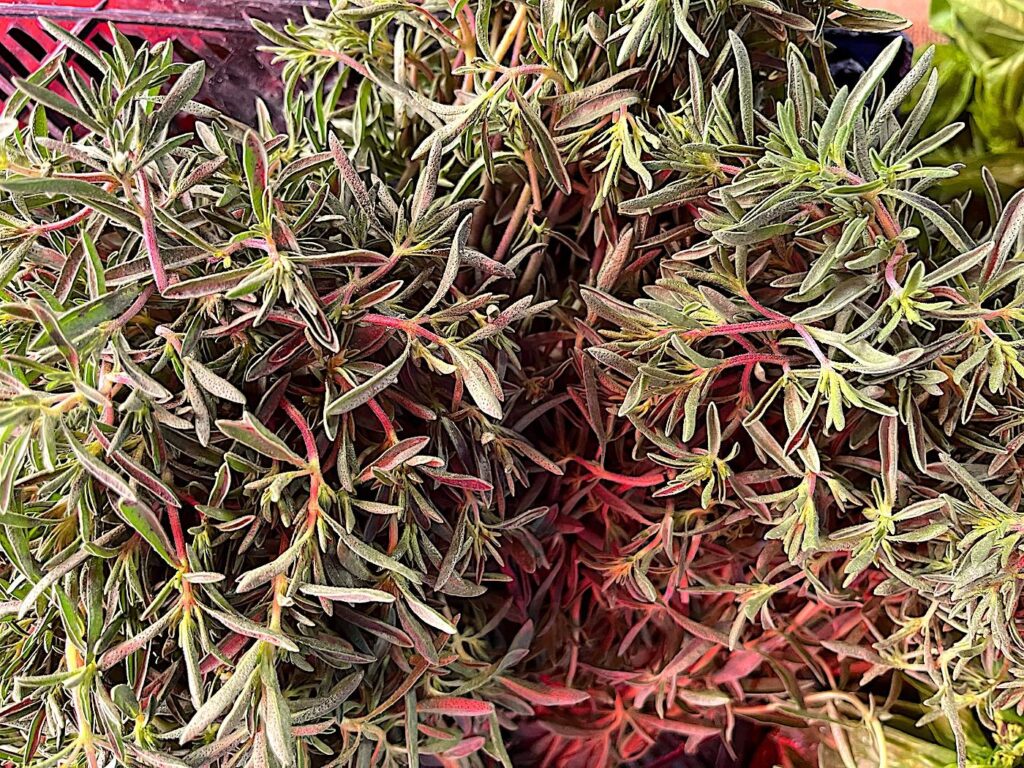
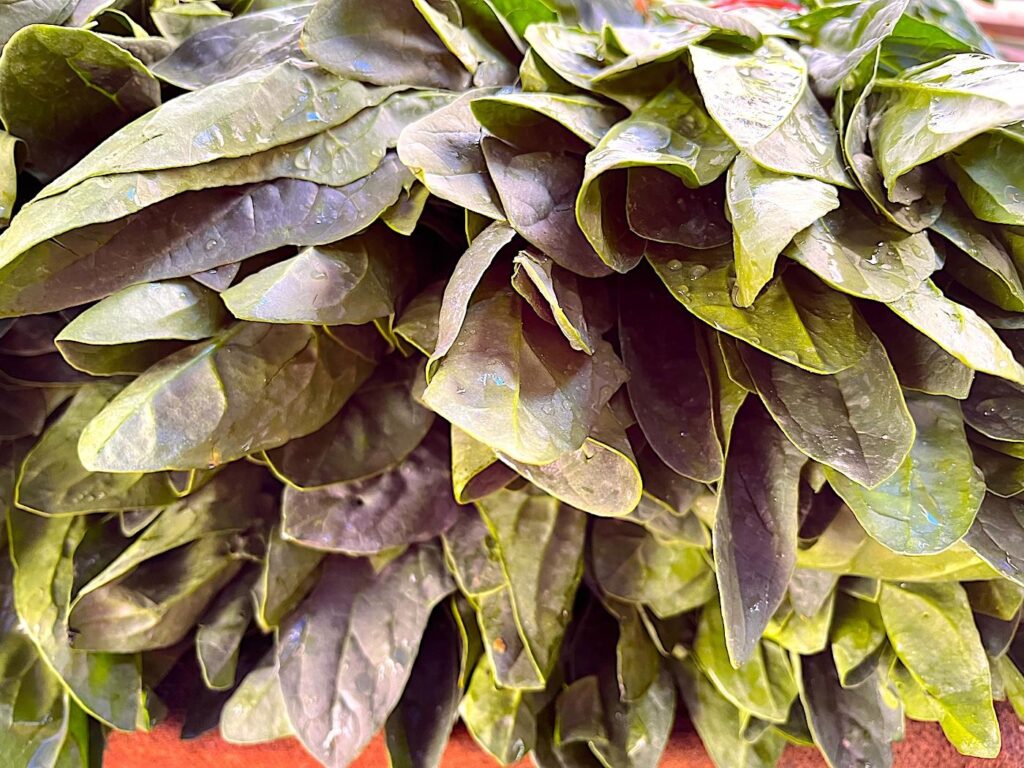
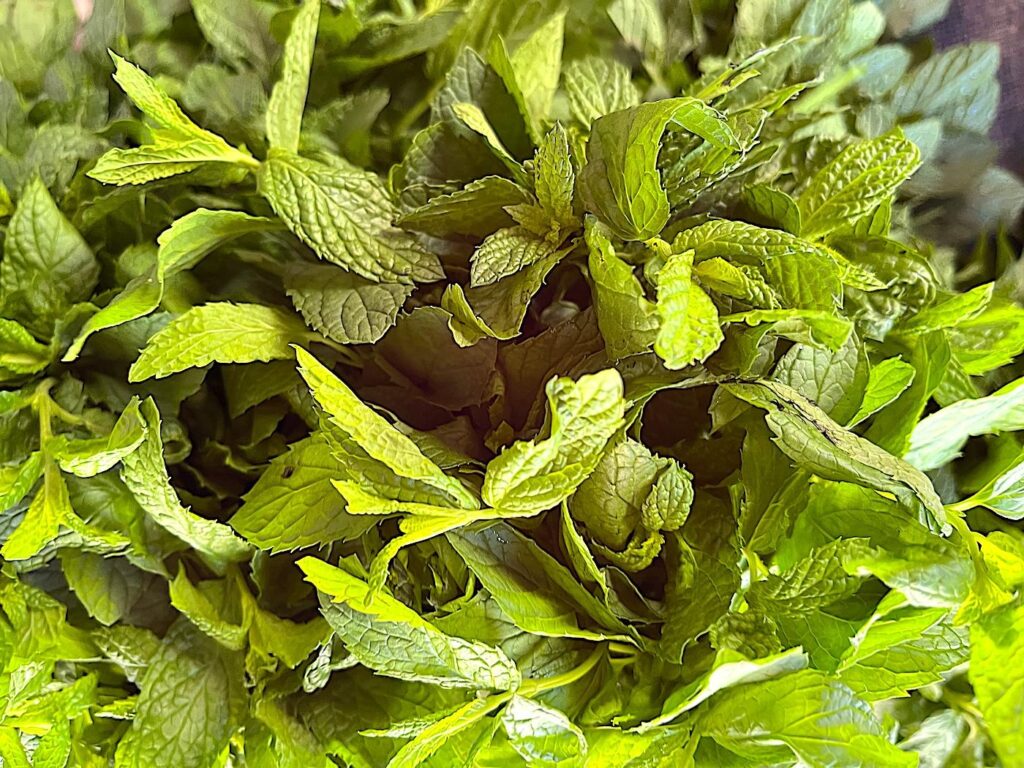
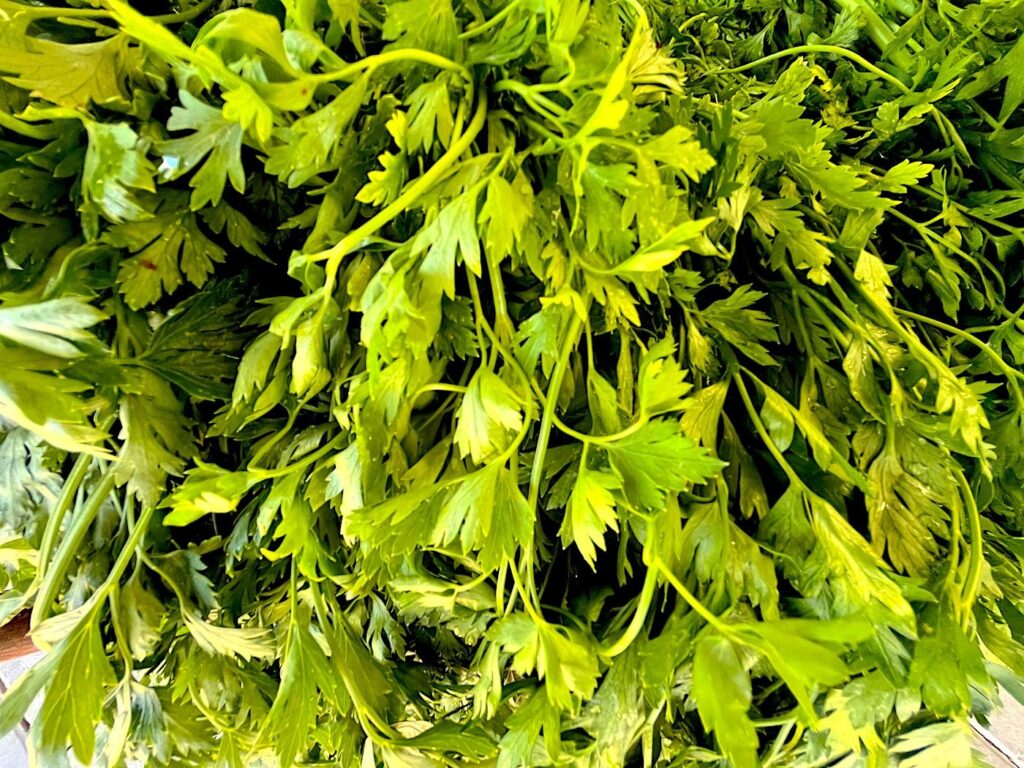
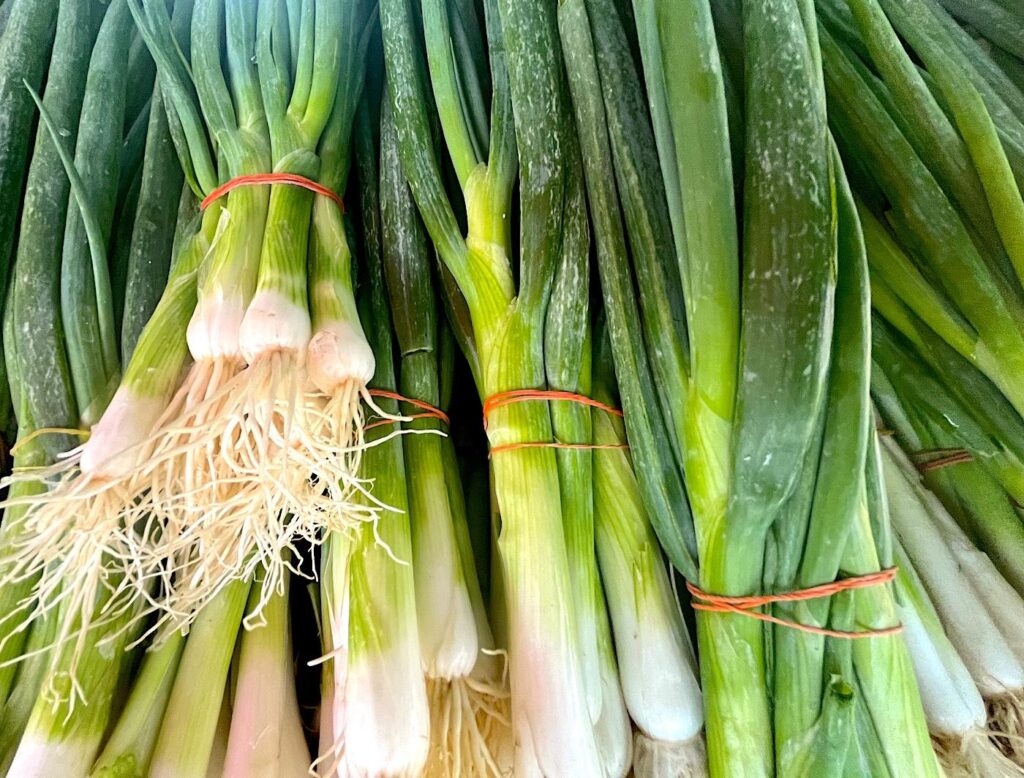
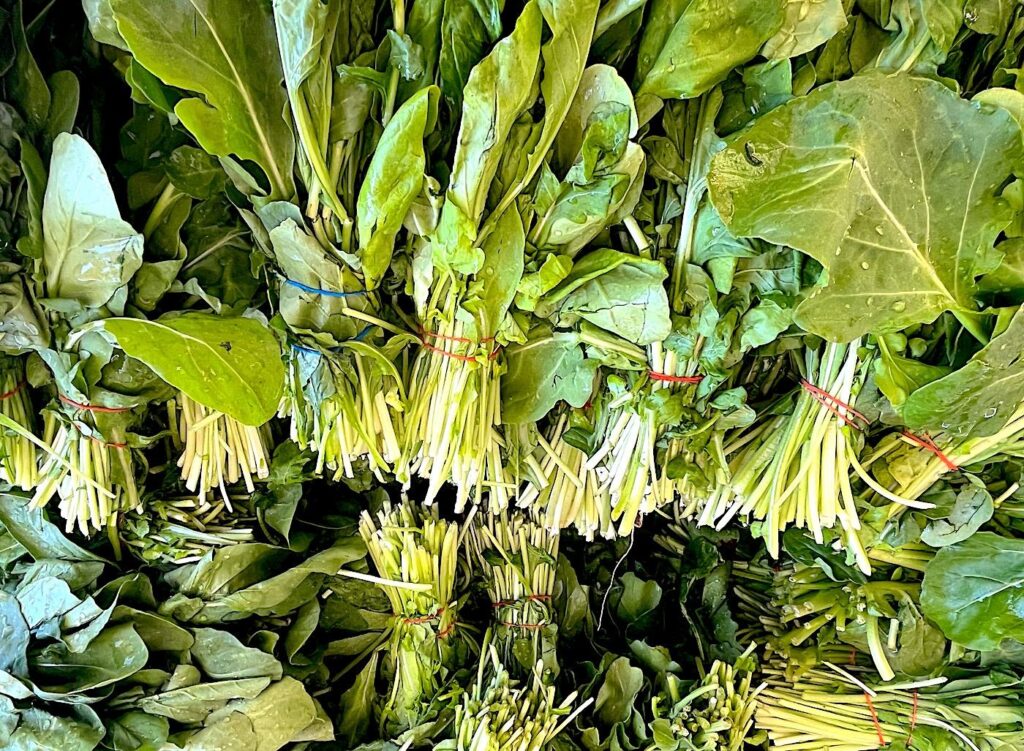
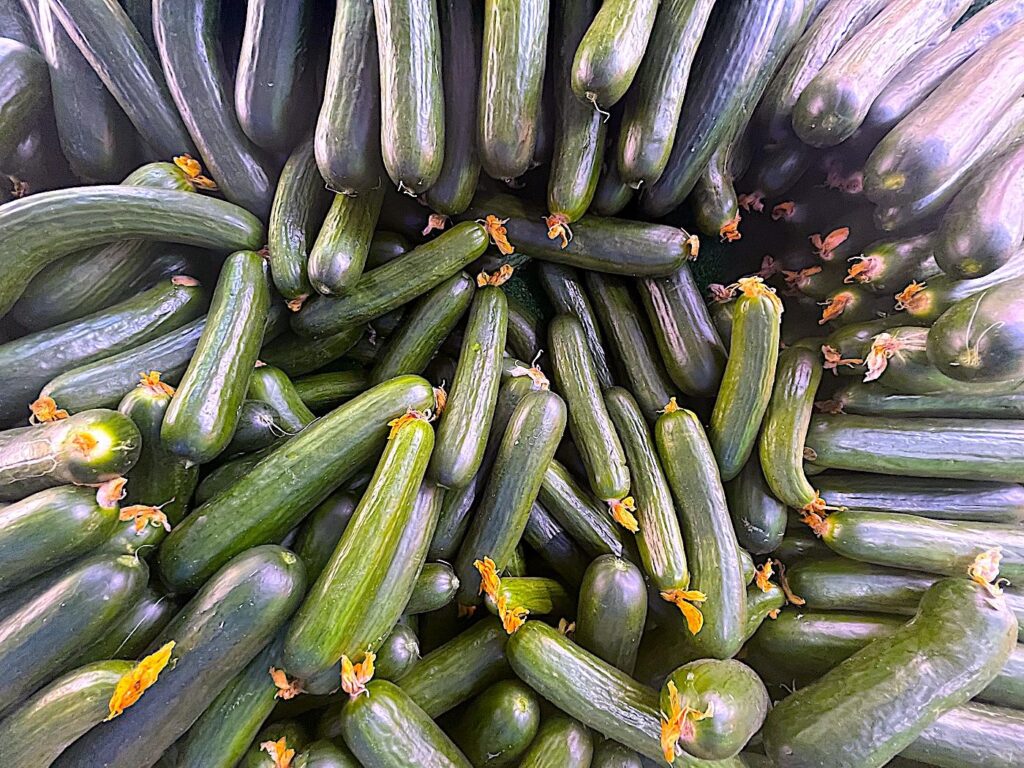
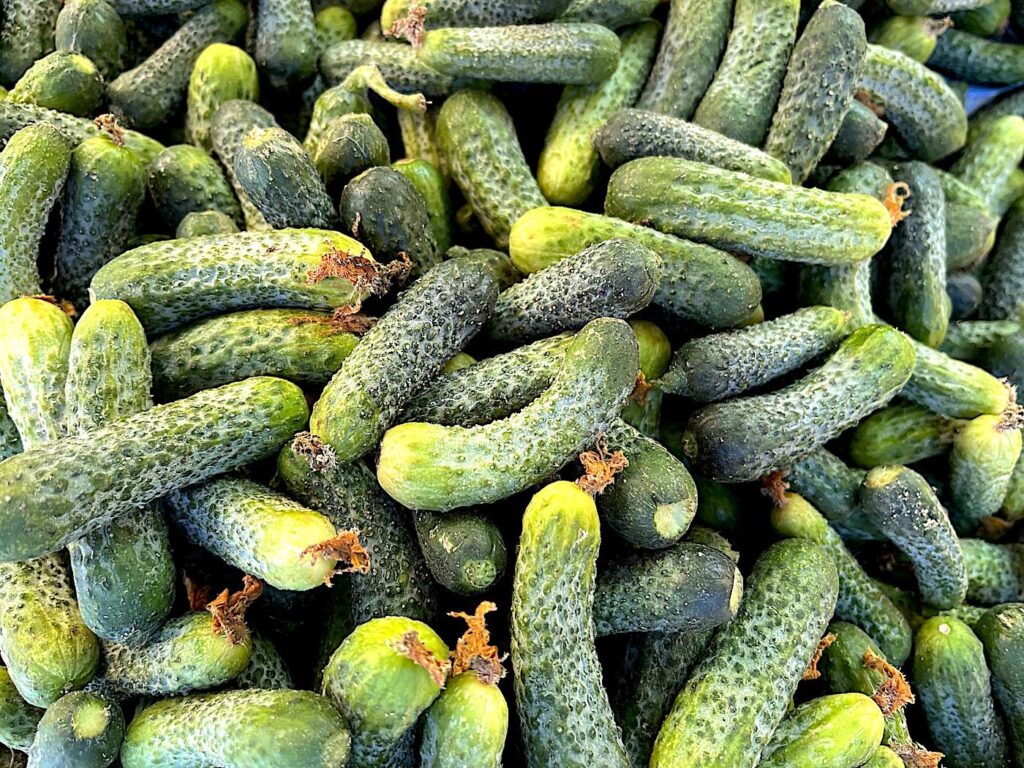
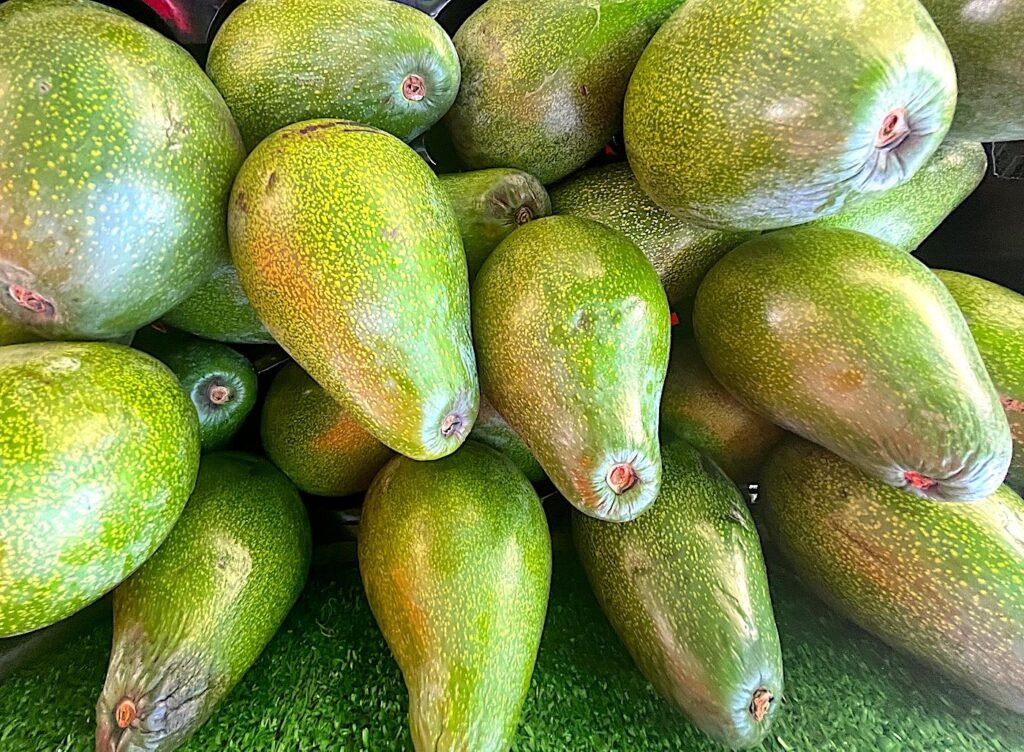
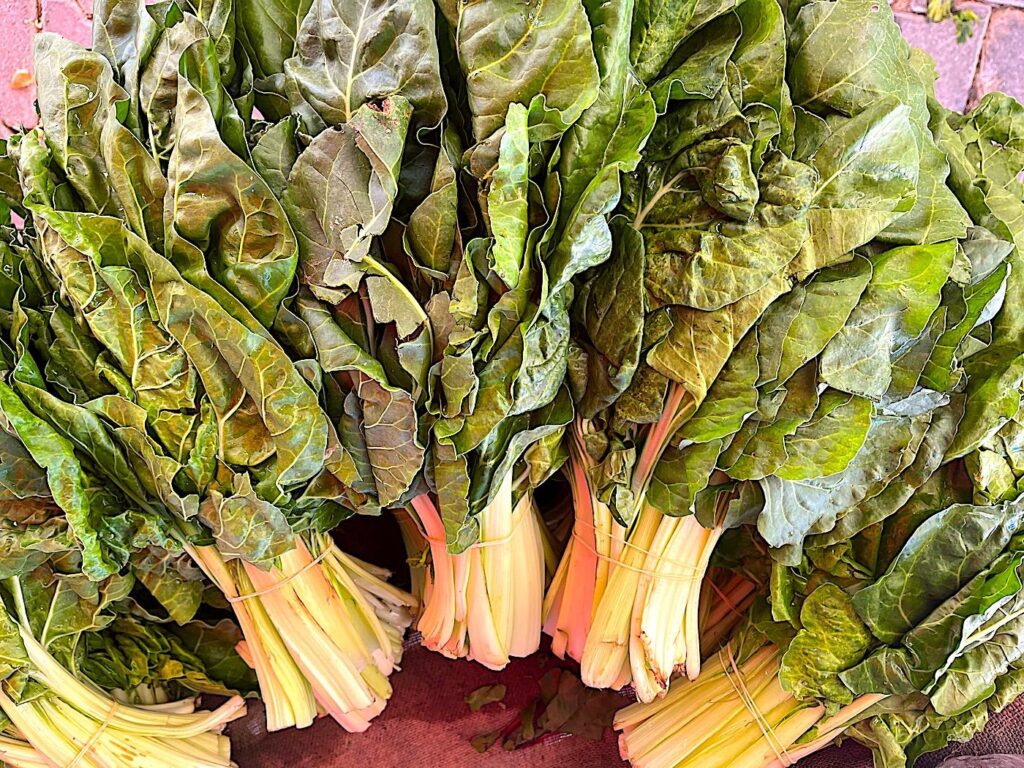
Herbs & Greens of the Aegean (Ege Otları)
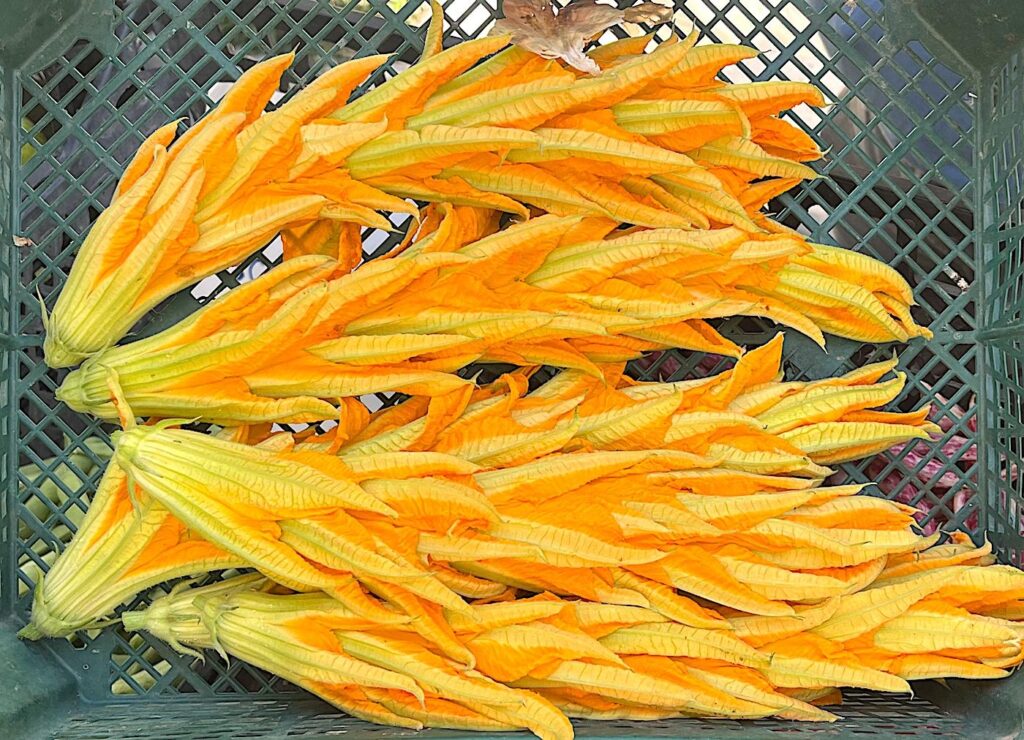
In the İzmir region, herbs and wild greens (otlar) are at the heart of Aegean cuisine, reflecting a tradition that values freshness, seasonality, and the healing qualities of nature. The mild coastal climate allows a wide variety of edible plants to flourish, many of which are foraged from fields and hillsides rather than cultivated. Locals prize these greens not only for their unique flavours, ranging from bitter to aromatic, but also for their health benefits. They prepare them simply with olive oil and lemon or incorporate them into stews, mezes, and pastries.
Şevketibostan: A spiky thistle prized in İzmir markets, şevketibostan is cleaned and stewed, most famously with lamb, producing a hearty dish with a slightly bitter, earthy flavour that is both a delicacy and a traditional digestive aid.
Radika (Wild Chicory): Bitter wild chicory leaves gathered from fields and hillsides, radika is boiled and dressed simply with olive oil and lemon, making it a classic Aegean side dish that pairs perfectly with grilled fish.
Ebegümeci (Mallow): With soft, rounded leaves, ebegümeci is sautéed with onions, folded into börek, or stuffed like vine leaves; it has long been valued in village kitchens both as food and as a soothing medicinal herb.
Turp Otu (Radish Greens): Peppery radish leaves are not discarded but celebrated in İzmir cuisine; they are lightly blanched and served with lemon and olive oil in winter and spring, adding a sharp freshness to the table.
Arapsaçı (Wild Fennel): Distinctively aromatic with its strong aniseed taste, arapsaçı is cooked gently in olive oil or stewed with eggs and yoghurt, giving Aegean dishes their unmistakable fragrance and flavour.
Note: The Alaçatı Herb Festival (Alaçatı Ot Festivali) is held annually in the town of Alaçatı, celebrating the rich tradition of Aegean wild herbs and greens. For several days, the narrow streets fill with colourful market stalls selling freshly gathered plants, local dishes, olive oil products, and handmade crafts, while chefs give cooking demonstrations, parades, concerts, and workshops bring a lively carnival atmosphere. It has become one of the most popular cultural events in the İzmir region, drawing both locals and international visitors eager to taste and learn about the Aegean’s unique culinary heritage. See also LikeCesme.com – Çeşme Festivals & Competitions.
Market Fruits
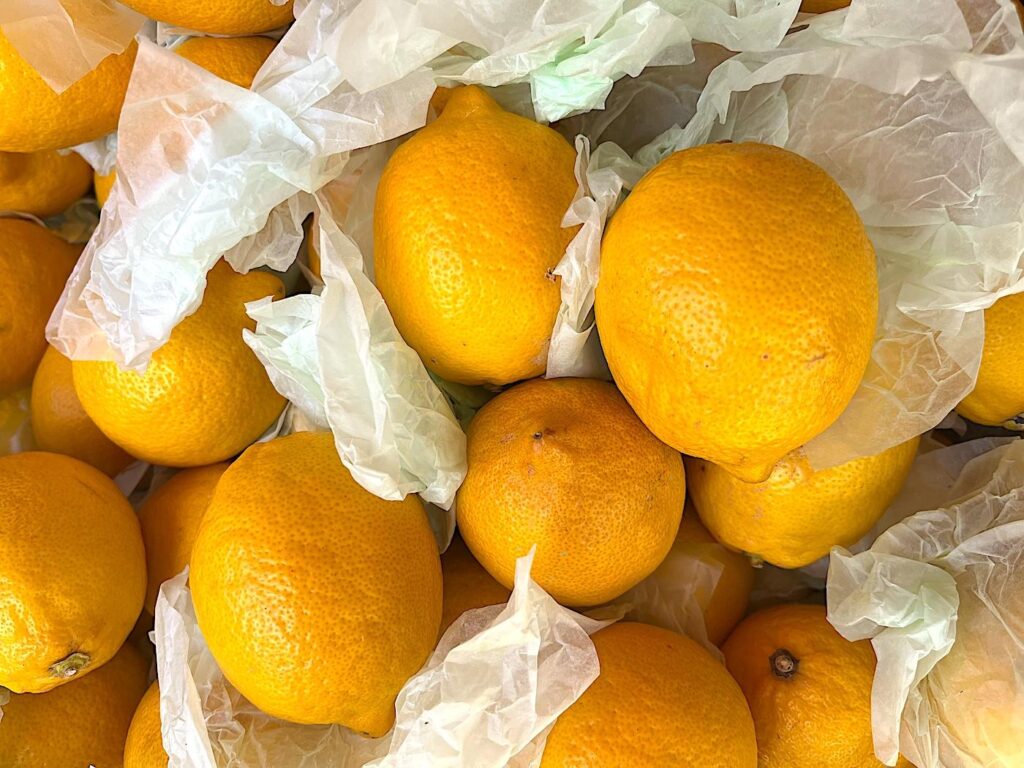
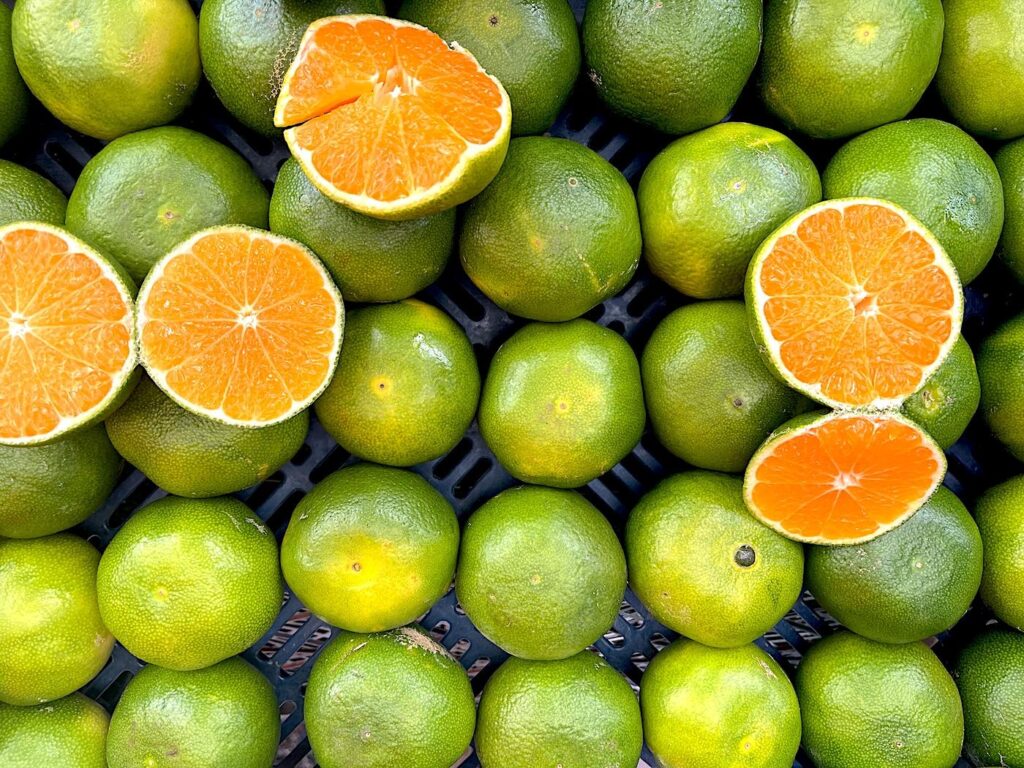
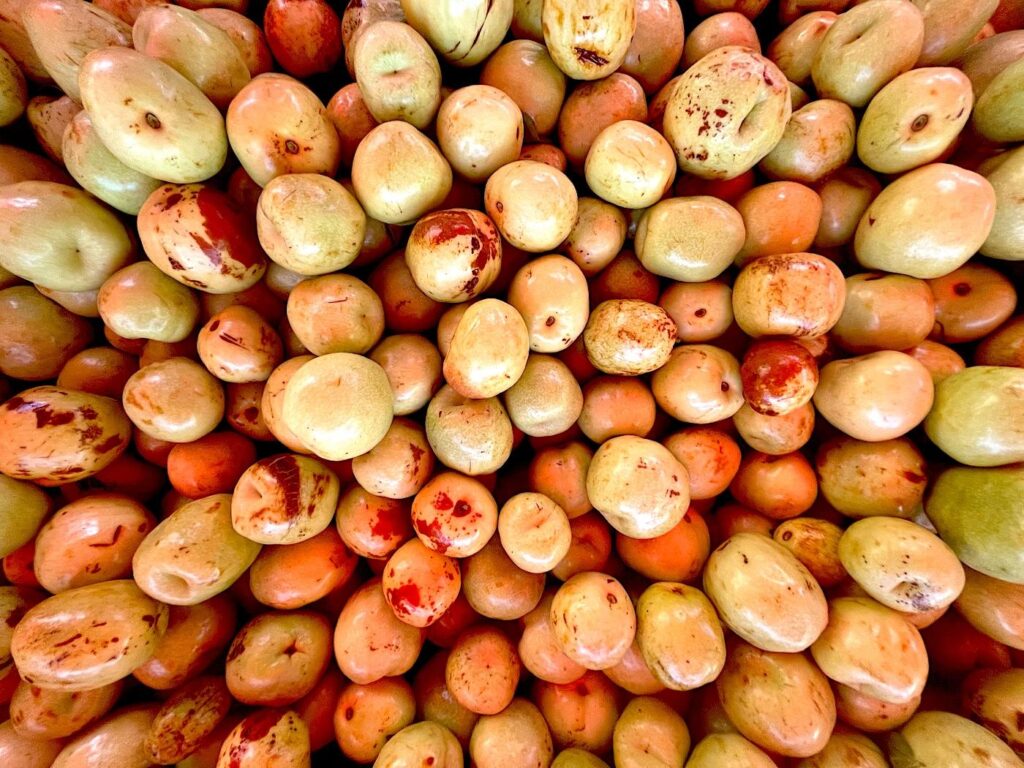
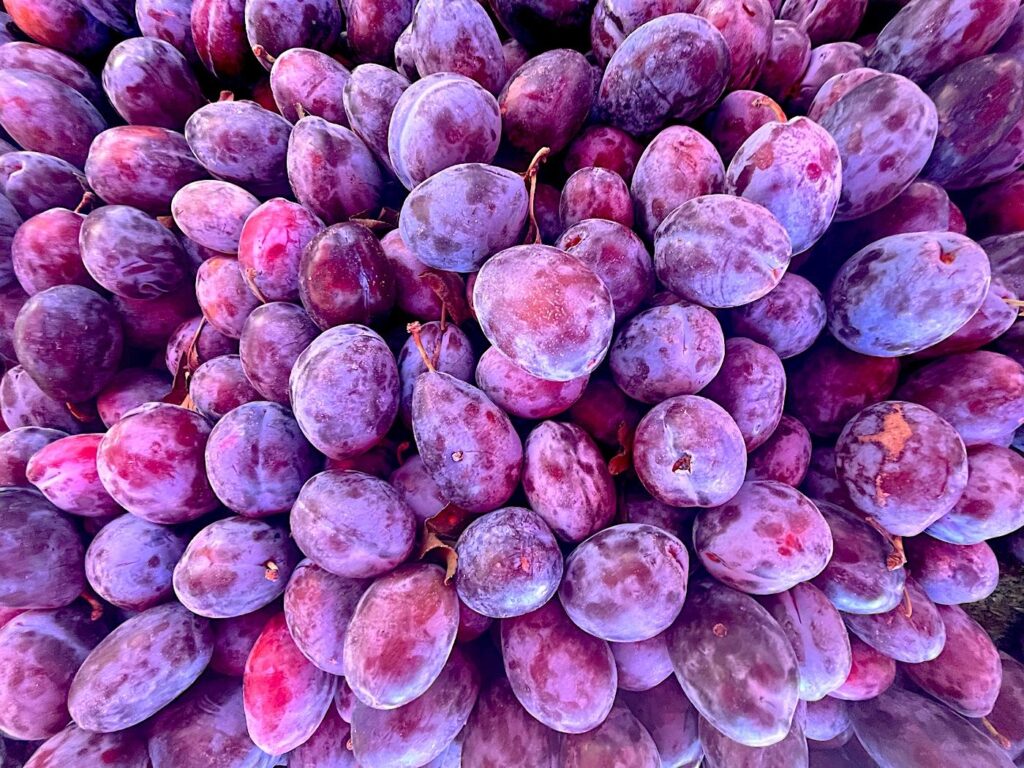
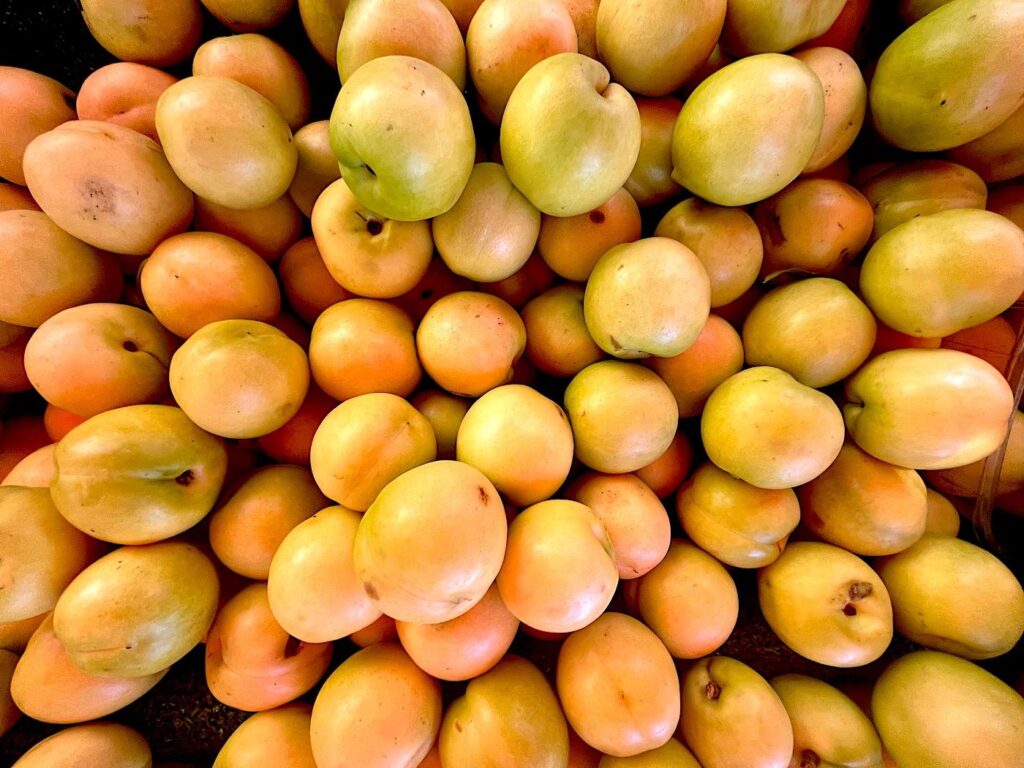
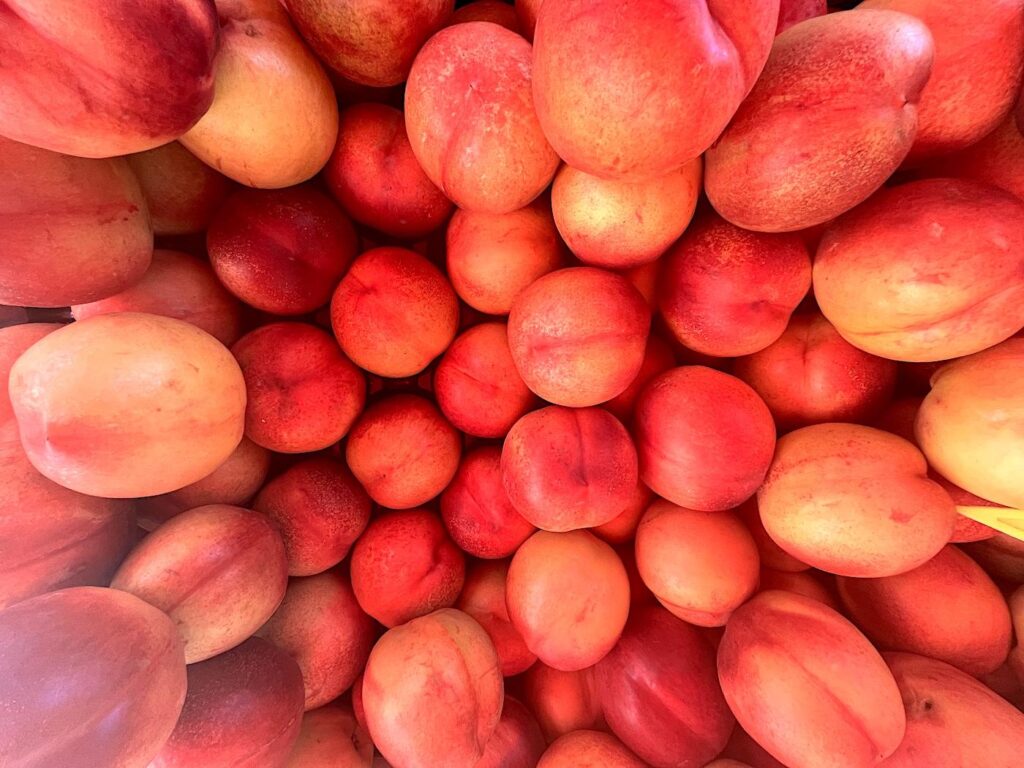
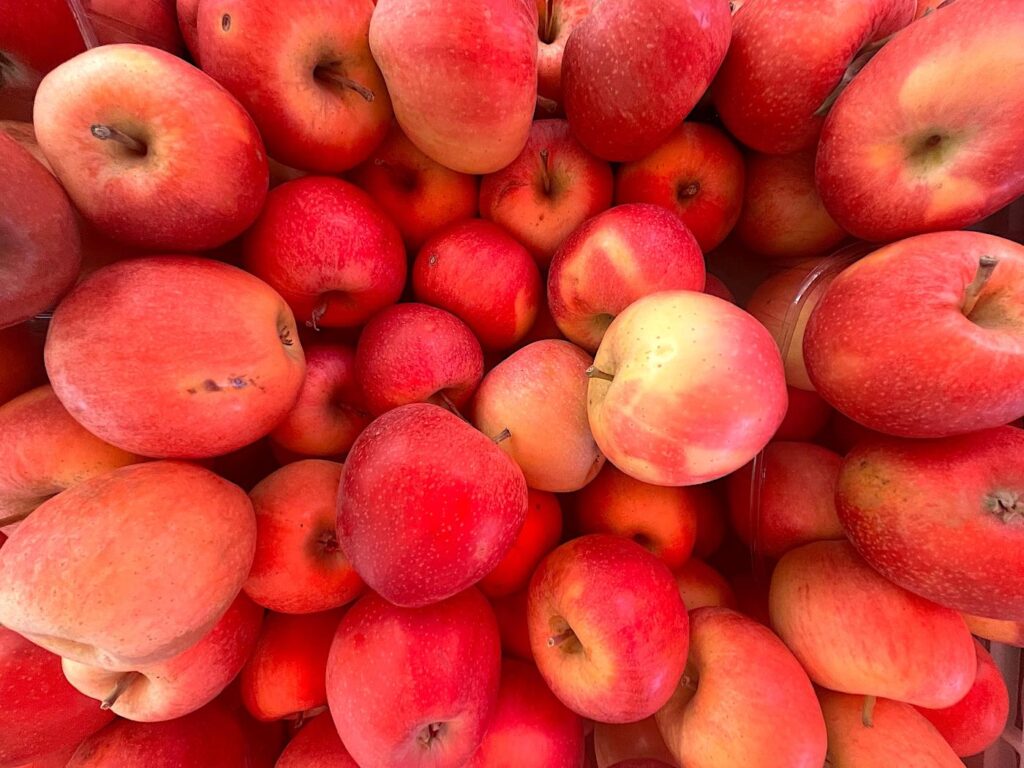
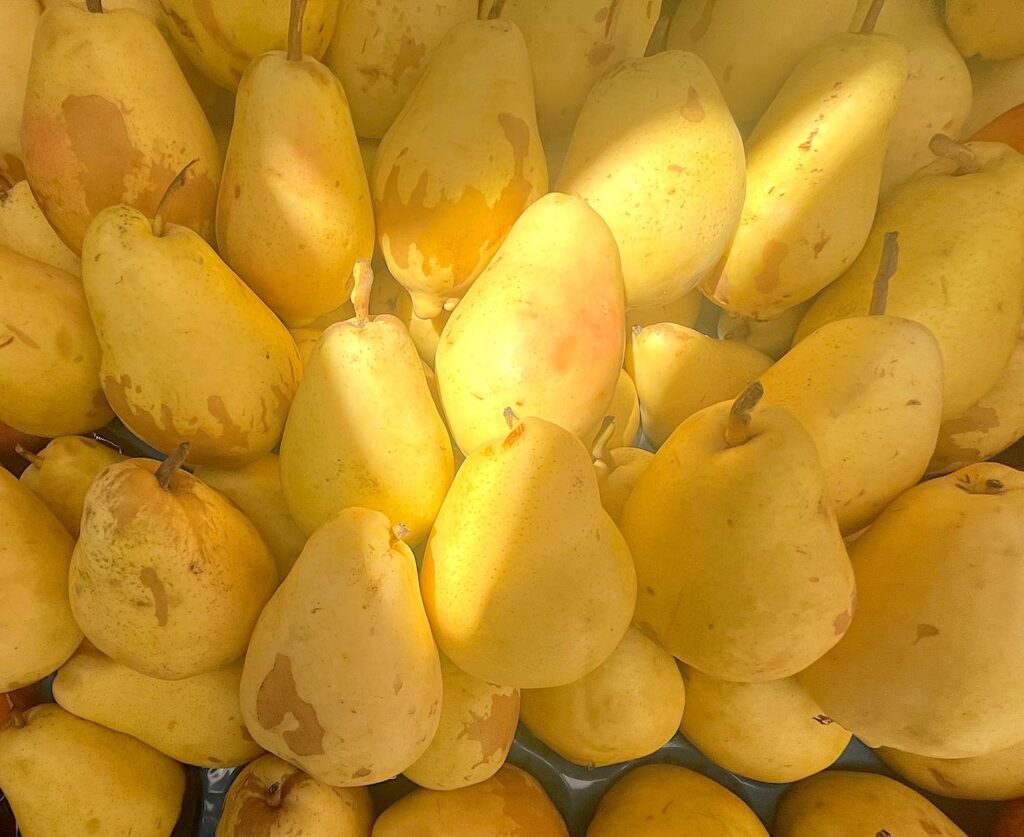
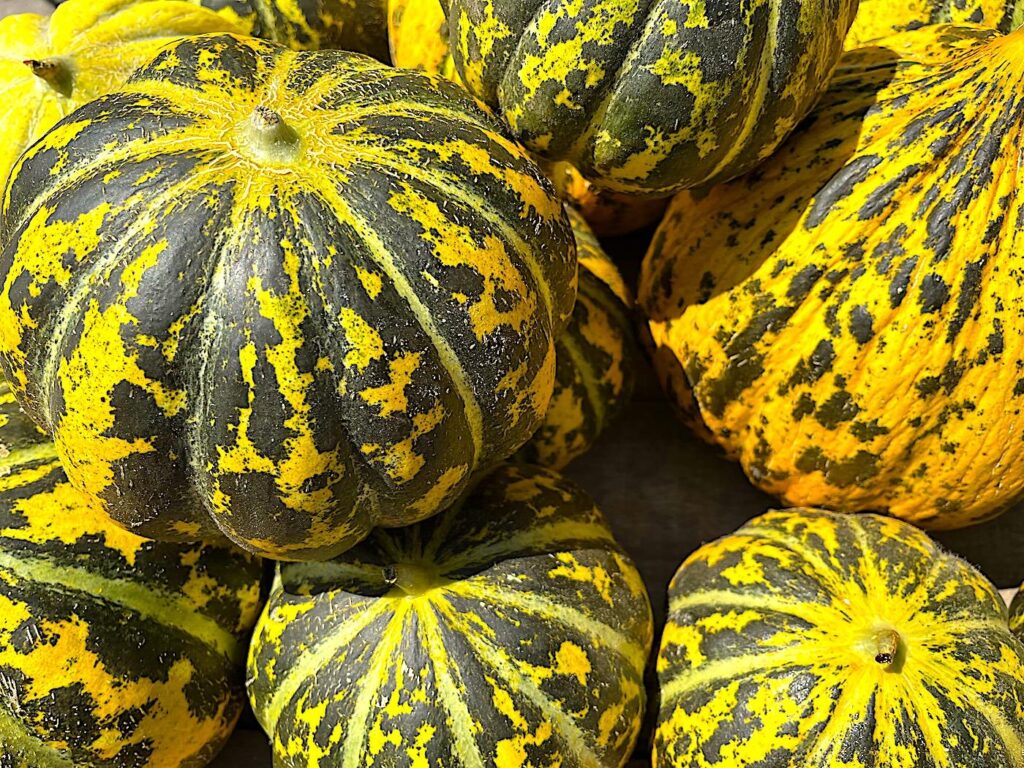
Çeşme Melon –
Çeşme Kavunu
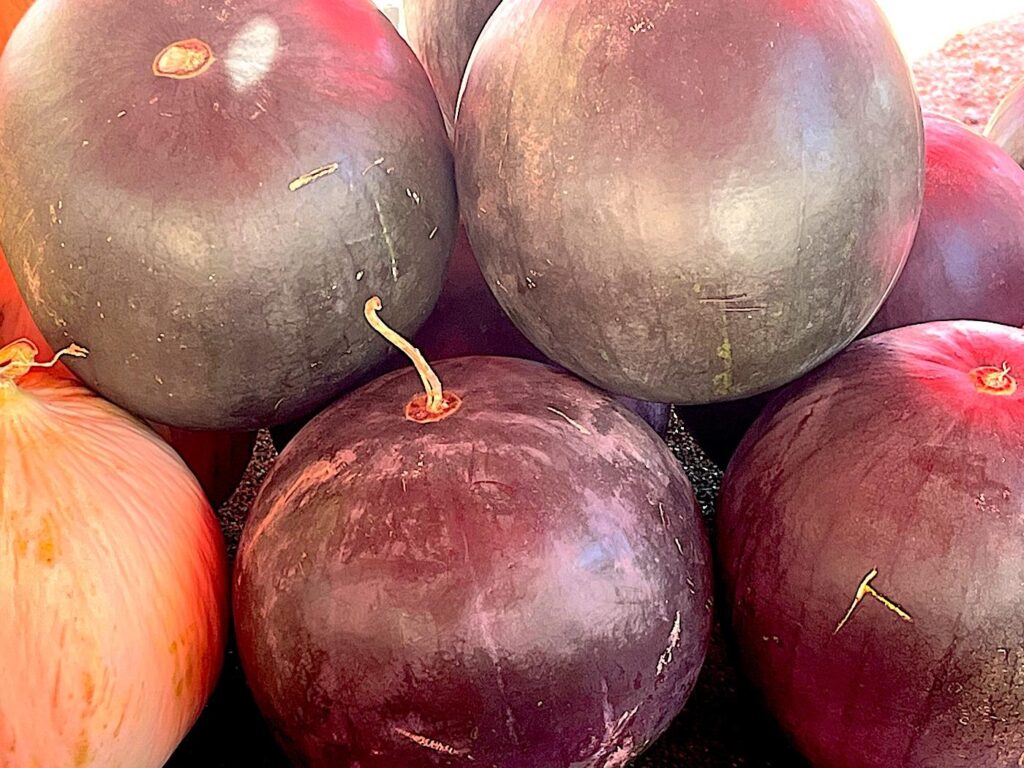
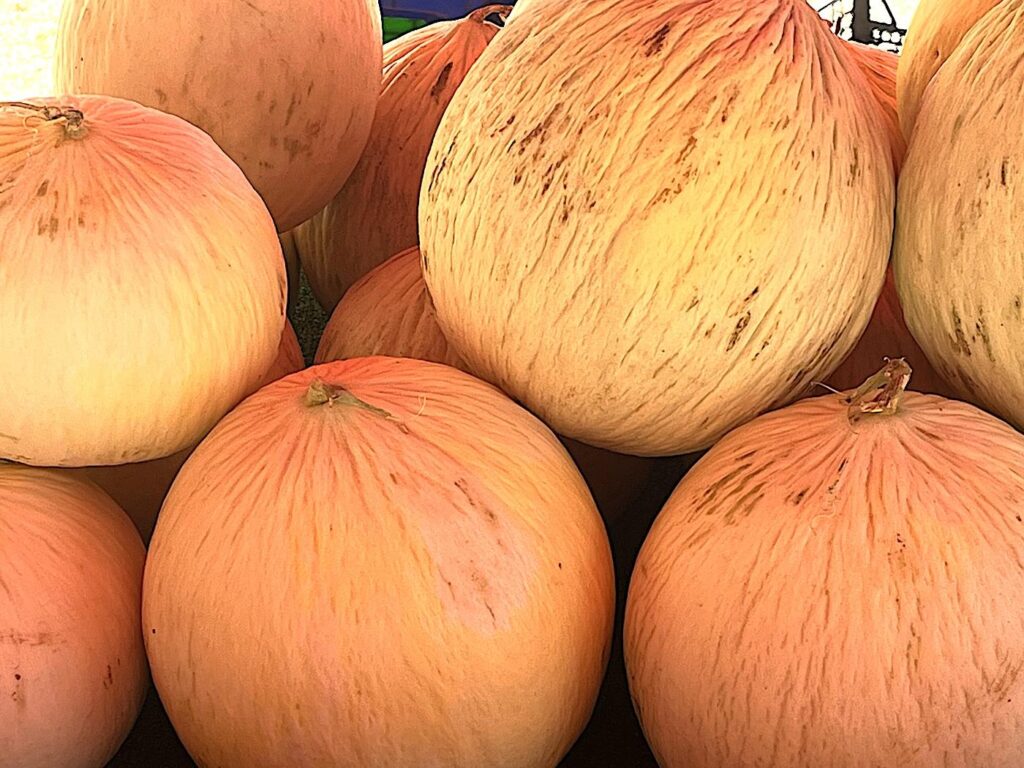
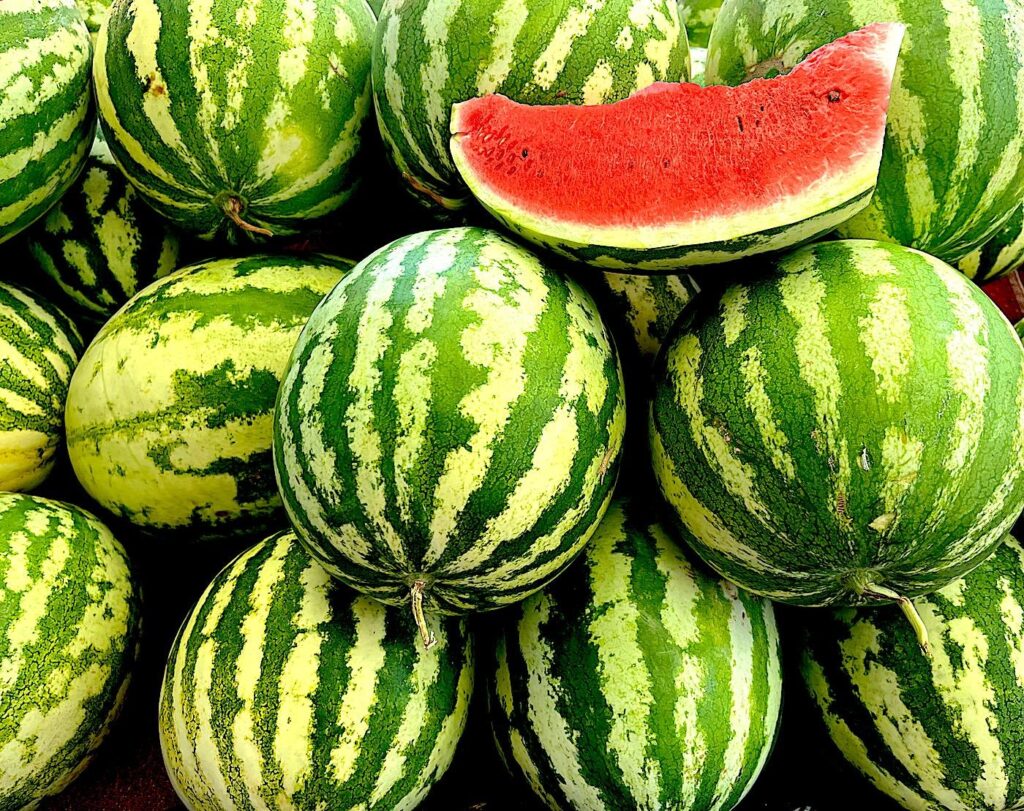
Melons and Watermelons of the Çeşme Region
Melons and watermelons are more than just fruit in the Çeşme region; they are part of summer life. Families often chill them in the sea before slicing them on the beach, and they are a favourite ending to long Aegean dinners. The abundance of sunshine and sandy soils around Ovacık, Germiyan, and Ildır contribute to the rich sweetness of these melons, making them an authentic taste of the Aegean summer.
Kavun (Melons)
Çeşme Kavunu: The most famous local variety, with a golden-yellow skin mottled with green markings and an intensely sweet, fragrant flesh. Grown in small plots around Ovacık and Ildır, it is prized for its aroma and eaten fresh, often served chilled at summer tables.
Altınbaş Kavun (Golden-Head Melon): This round to oval melon with pale yellow skin and faint striations is known for its fragrant, juicy flesh and refreshing floral sweetness. Lighter in flavour than the famous Çeşme Kavunu but highly aromatic, altınbaş is enjoyed fresh in summer and often paired with salty cheese as part of a traditional Aegean table.
Kırkağaç Kavunu: Originating from nearby Manisa but sold widely in İzmir and Çeşme markets, this melon has a rough, netted skin and firm, sweet flesh. It is known for its long shelf life and ability to stay fresh well into autumn.
Yuvarlak Beyaz Kavun: A round, pale-skinned melon with very juicy, delicate flesh. It is more fragile than other varieties, typically eaten quickly after harvest.
Çizgili Kavun (Striped Melon): Recognisable by its green stripes on yellow skin, this variety has a refreshing flavour and is popular in summer salads.
Karpuz (Watermelons)
Ovacık Karpuzu: Locally grown watermelons from Ovacık are famous for their deep red, sweet, and juicy flesh, often with a thin rind. They are a highlight of summer markets and sometimes are sold by the slice as a refreshing treat.
Karakış Karpuzu (Black Winter Watermelon): Recognisable by its smooth, dark green to nearly black rind, karakış karpuzu is prized for its dense, sweet, deep-red flesh. Unlike standard striped watermelons, this variety keeps exceptionally well and can be stored into the colder months, hence its name meaning “harsh winter.”
Karadul Karpuzu (Black Widow Watermelon): With a dark green rind and extra-sweet flesh, this traditional variety is popular in Aegean villages and has a more rustic, old-fashioned flavour profile.
Çekirdeksiz Karpuz (Seedless Watermelon): Increasingly common in local fields, these watermelons are medium-sized, crisp, and convenient for families, especially popular with younger consumers.