Çeşme statues are an important part of the town’s public landscape, reflecting its Republican values, naval history, and long-standing strategic importance in the Aegean. From statues of modern political figures to Ottoman naval commanders and memorials commemorating historic battles, Çeşme’s statues and monuments tell the story of a town shaped by both ideology and maritime power.
Republican Leaders & Political Figures
Çeşme is widely regarded as one of the Aegean’s most outward-looking and secular towns, and this is reflected in the prominence of statues dedicated to Republican leaders, intellectuals, and social reformers. These monuments are not only historical markers but also symbols of civic values, education, and freedom of expression.
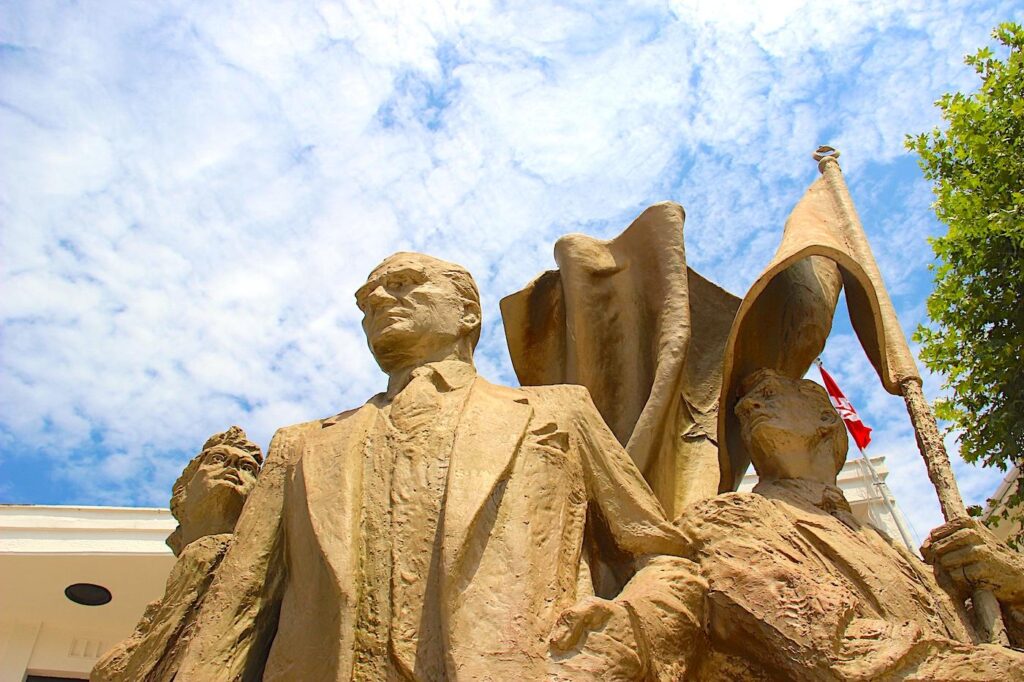
Mustafa Kemal Atatürk Monument (1881 – 10 November 1938)
Location: Cumhuriyet Meydanı, 16 Eylül, 3052. Sk., 35930 Çeşme, in front of Ziraat Bank.
The Atatürk Monument in Cumhuriyet Meydanı (Republic Square) stands at the symbolic heart of Çeşme, directly in front of Ziraat Bank, anchoring the town’s civic and ceremonial space. Erected in the early Republican period (mid-20th century, as with many town-centre Atatürk monuments across Türkiye), the statue presents Atatürk in a dignified, forward-looking stance, embodying modernity, secularism, and national sovereignty. Its placement in Republic Square is deliberate and deeply symbolic: Cumhuriyet Meydanı functions as Çeşme’s primary public forum, hosting national day ceremonies, commemorations, and gatherings. By situating the monument here, the town physically and visually aligns its daily public life with the founding values of the Turkish Republic.
Mustafa Kemal Atatürk was the founder and first President of the Republic of Turkey, leading the country from the collapse of the Ottoman Empire into a modern, secular nation-state. Like much of the Aegean coast, Çeşme was deeply shaped by the War of Independence and the reforms that followed. Çeşme’s strong Republican identity, outward-looking culture, and emphasis on secular civic life reflect the broader impact of Atatürk’s reforms, making the monument not only a memorial to the man himself but also a statement of the town’s enduring commitment to the principles he established.
İsmet İnönü (24 September 1884 – 25 December 1973)
Location: İsmet İnönü Anıtı, 16 Eylül, 3048. Sk. 5a, 35930 Çeşme, on the waterfront promenade.
Mustafa İsmet İnönü was a Turkish general and statesman who served as the second President of Turkey from 11 November 1938 to 22 May 1950. He was born in İzmir (Smyrna) and educated in Sivas, central Turkey. He joined the Ottoman Army in 1903 and served in the Balkans and Yemen. During World War I, he served as a Senior Colonel under Mustafa Kemal Pasha (Atatürk) on the Caucasus and Palestine fronts. Following victory in the War of Independence, he was appointed as the chief negotiator for the Turkish delegation.
On 11th November 1938, following Atatürk’s death, he was elected the second President of the Republic of Turkey, serving until 22nd May 1950. Despite pressure from the Allies & Axis, his diplomacy kept Turkey neutral during World War II. After defeat to the Democratic Party in the 1950 elections, he served as the leader of the opposition until 1961, when he returned to power as Prime Minister under short-term coalition governments until 1965.
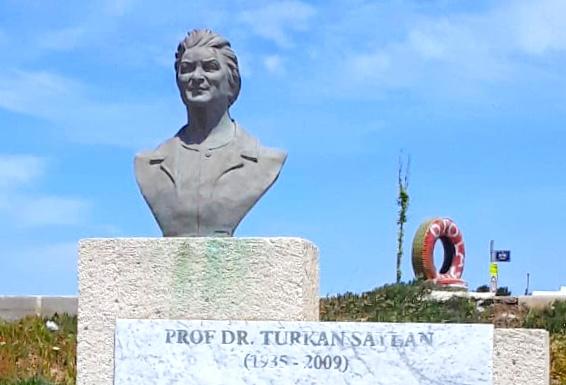
Prof. Dr Türkan Saylan (13 December 1935 – 18 May 2009)
Location: Türkan Saylan Parkı 3118 Sk., 35930 Çeşme, adjacent to the CADDE Plus shopping mall.
Türkan Saylan was one of the most influential public intellectuals and social reformers in modern Türkiye, combining a distinguished medical career with a lifelong commitment to education, equality, and public service. As a professor of dermatology, she became internationally respected for her work combating leprosy at a time when the disease was both medically challenging and socially stigmatised. Beyond clinical practice, she played a central role in public health education, helping to change perceptions of leprosy through scientific research, outreach, and patient advocacy. Her work extended beyond medicine into academia, authorship, and civic engagement, making her a rare figure who bridged science and society with lasting impact.
Dr Saylan is perhaps best remembered as the founder of Çağdaş Yaşamı Destekleme Derneği (ÇYDD), the Association for the Support of Contemporary Living, through which she championed access to education, particularly for girls from economically disadvantaged or rural backgrounds.
Under her leadership, thousands of students received scholarships, mentorship, and educational support, significantly increasing female school attendance and participation in higher education across Türkiye. In recognition of her humanitarian work, she was awarded the International Gandhi Award in 1986 and later served as a consultant on leprosy for the World Health Organisation until 2006. The statue erected in December 2009 in the small park bearing her name in Çeşme honours not only her medical achievements but also her enduring legacy as a defender of secular values, gender equality, and social progress.
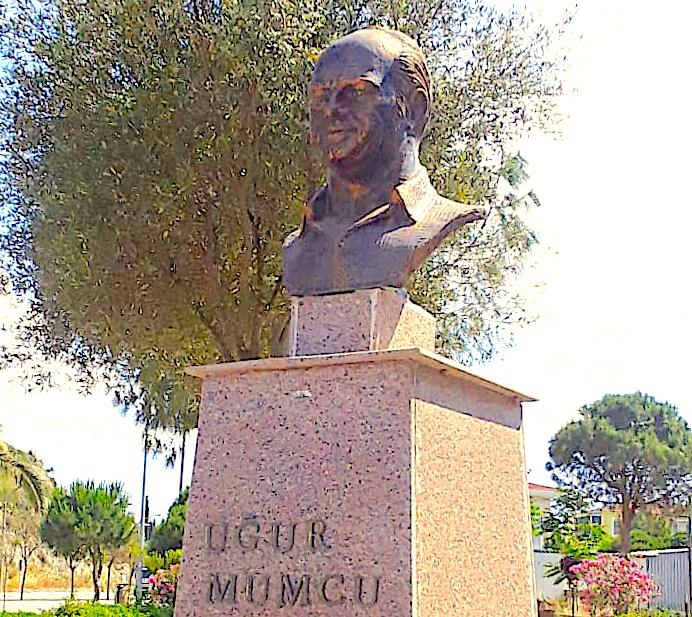
Uğur Mumcu (22 August 1942 – 24 January 1993)
Location: Uğur Mumcu Parkı İsmet İnönü, 35937 Çeşme, on the Atatürk Bulvarı / 2122 Sk. roundabout near the entrance to Çeşme centre.
Uğur Mumcu was one of Türkiye’s most respected and fearless investigative journalists, widely known for his meticulous research, clarity of argument, and uncompromising defence of secular democracy. Writing primarily for Cumhuriyet from 1975 until his death, Mumcu specialised in exposing the hidden links between politics, organised crime, foreign intelligence, and extremist networks. His work was characterised by a rigorous, document-based approach; he believed that journalism was not a matter of opinion but of evidence. Through his columns and books, he became a central public voice warning of the dangers posed by corruption, political violence, and the erosion of the rule of law in Turkey.
Mumcu’s assassination on 24 January 1993, when a bomb planted under his car was detonated outside his home in Ankara, sent shockwaves through the country and remains one of the most traumatic moments in modern Turkish media history. His death came to symbolise the risks faced by journalists who challenge powerful interests and entrenched networks. The statue, erected in January 2021 in Çeşme to mark the 28th anniversary of his assassination, stands in a park dedicated to his memory and reflects the town’s strong identification with freedom of expression, secular values, and civic courage.
Ottoman Naval Commanders & Military Figures
Due to its strategic harbour and proximity to major naval routes, Çeşme played a significant role in Ottoman maritime history. Several statues in and around the castle commemorate admirals, commanders, and rulers whose lives were shaped by naval warfare in the Aegean and Mediterranean.
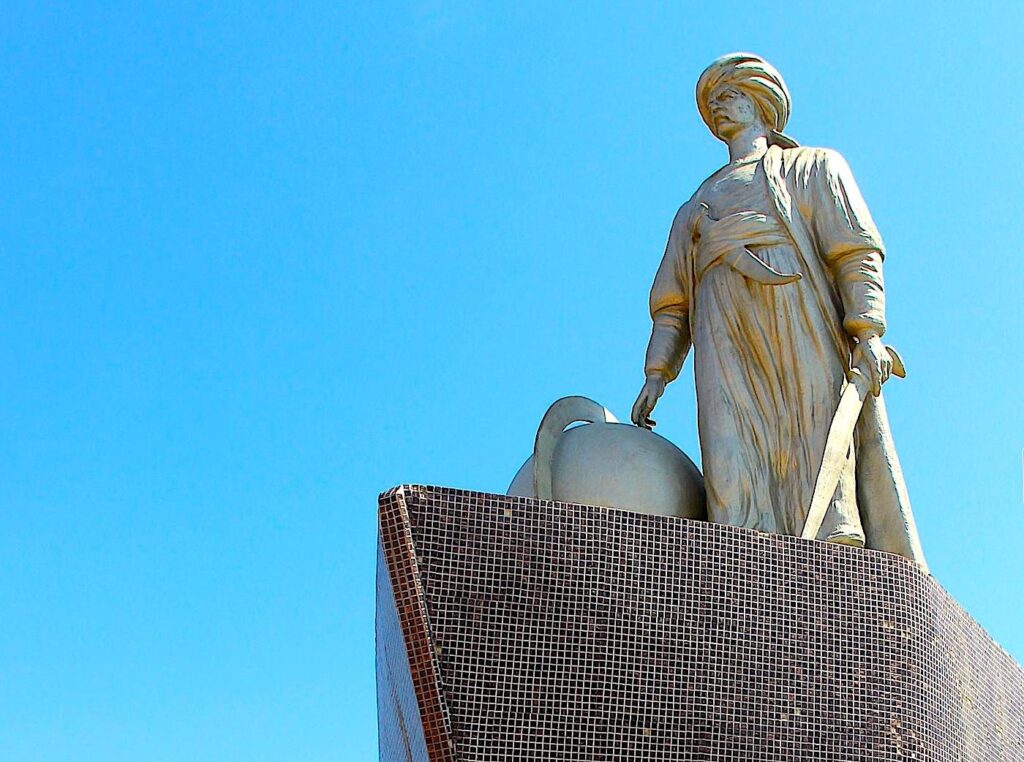
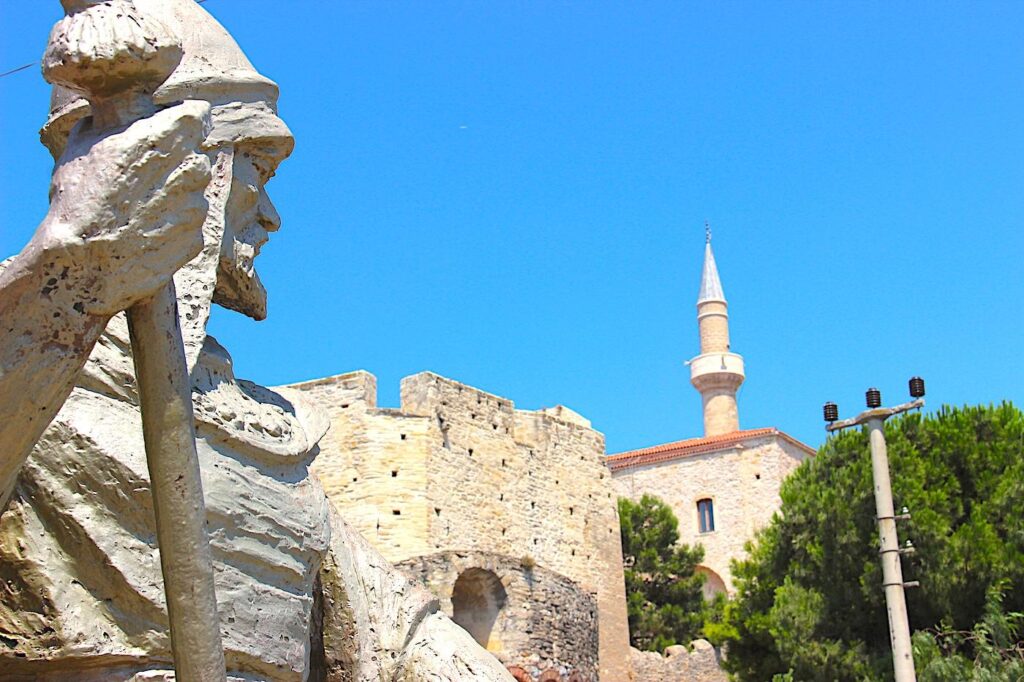
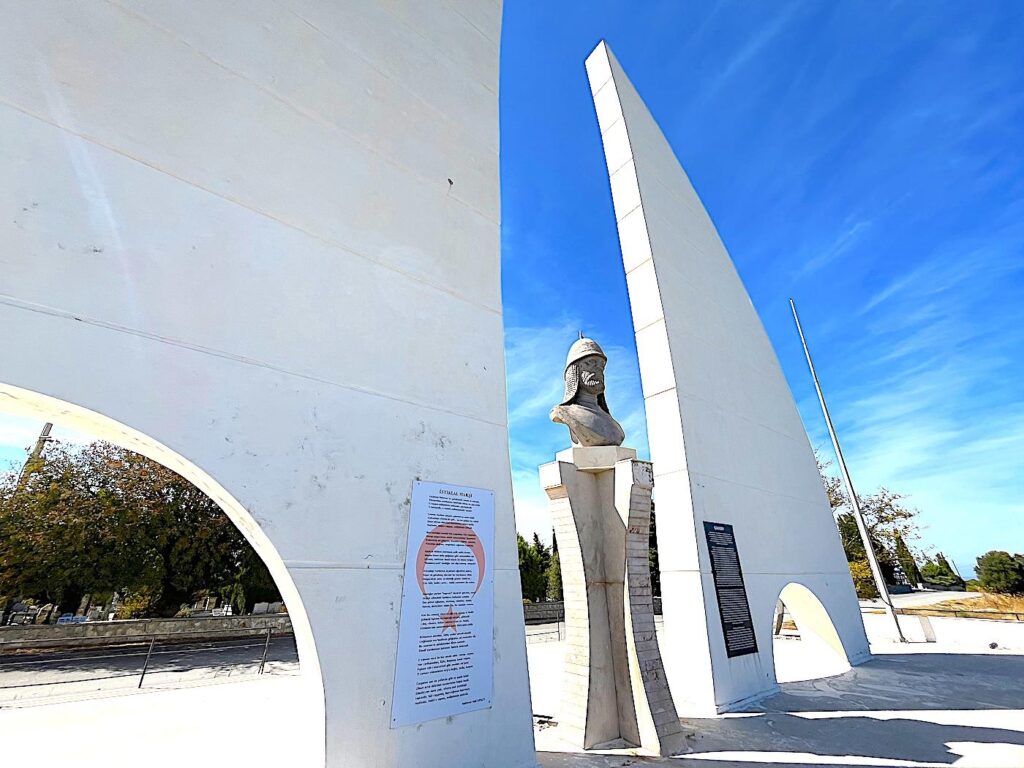
Çaka Bey (c. 1040 – 1092)
Location: Fahrettinpaşa, 2208. Sk., 35930 Çeşme/İzmir. Atop the hill above Altın Yunus/the hospital in the İnönü/Çakabey area of Çeşme.
The Çakabey Monument (Anıtı) in Çeşme is a modern monument erected in 2008 by Çeşme Belediyesi together with the Turkish Naval Forces to honour Çaka Bey, an 11th-century Turkish naval commander and ruler considered one of the earliest figures in Turkish maritime history. The monument itself comprises a 2-metre-tall bust of Çaka Bey set on a 3.5-metre pedestal, flanked by two stylised sail figures, reaching 20 metres and 17 metres in height, symbolising his seafaring achievements and the importance of maritime power in his legacy.
Çaka Bey established a strong naval presence in the Aegean after the Seljuk expansion into western Anatolia and is often credited with creating one of the first Turkish fleets, challenging Byzantine naval dominance in the region. He is often regarded as the founder of the first Turkish fleet, who established control over Smyrna (İzmir) and challenged Byzantine naval power across the Aegean. He was assassinated in 1092, reportedly in İznik (Nicaea), following rising tensions with the Seljuks, yet his legacy endures as a pioneering figure in Turkish maritime history.
Dragut – Turgut Reis (1485 -23 June 1565)
Location: Dalyan, 4266. Sk. No:45, 35930 Alev Ada/Çeşme/İzmir, Türkiye. On the pier of Dalyan Harbour.
Known respectfully as “The Drawn Sword of Islam,” Dragut was an Ottoman naval commander-in-chief and governor in the time of Suleiman the Magnificent. He commanded the Ottoman navy as the Admiral and Corsair, and with his many victories in the Mediterranean extended the empire to cover North Africa. He was appointed Bey of Algiers and Pasha of Tripoli. He was mortally injured at the Seige of Malta and was buried in Tripoli.
To avoid a sudden attack on the fleet during the winter months, the ships of the Ottoman Navy usually separated for maintenance in protected bays of the Aegean Sea. In the winter of 1525, a galley under the command of Dragut anchored in Dalyanköy. The bold and contemporary statue of Dragut and the world globe sits on the quayside pier at the entrance to Dalyanköy Harbour.
Kaplan (Qaplan) Giray Khan I (July 1680 – November 1737)
Location: Musalla, 1015. Sk. No:1, 35930 Çeşme/İzmir. In the park opposite to Çeşme Castle near the waterfront.
Born on the Island of Rhodes, he rose to Khan of the Crimean Khanate in April 1707; however, a year later, he suffered a major defeat when he lost an expedition against the Kabardian Circassians and was deposed in November 1708, exiled to Rhodes. He rose to Khan of Crimea twice more, between April 1713 and November 1716 (deposed due to revolts by the Circassians & Nogais), and between November 1730 and August 1736, when he repelled the Russians, who had reached as far as Ak Mejid (White Mosque), modern-day Simferopol.
With health issues, he was exiled and died on the Island of Chios in November 1738 and was buried at his own request in Çeşme, in the courtyard of Muallime-i Sibyan just south of the castle. His tombstone was uncovered in 1990 and is displayed in the castle.
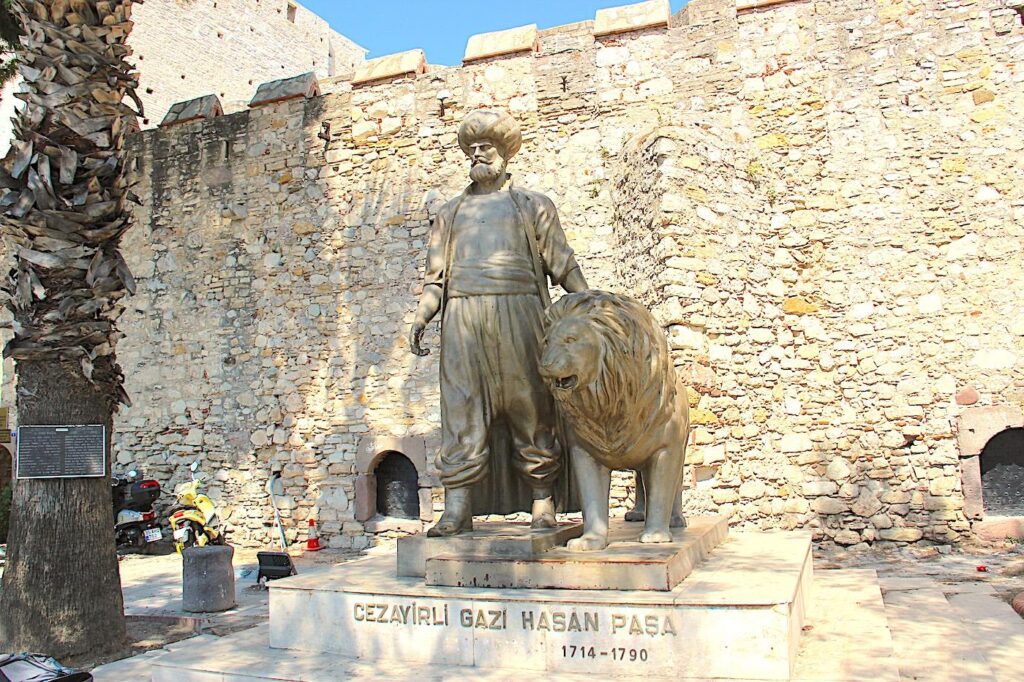
Cezayirli Gazi Hasan Paşa (1714 – 19 March 1790)
Location: Musalla, 1015. Sk. No. 1, 35930 Çeşme, directly in front of Çeşme castle.
Hasan Pasha of Algiers was an Ottoman Grand Admiral, Grand Vizier, and naval general. Originally from Georgia, he was captured at a young age and sold into slavery. He was later set free and, after proving himself, married the daughter of his former owner. He joined the navy in 1761 and rose through the ranks, from galleon captain to full captain, by the outbreak of the Ottoman-Russian War (1768-1774). He was injured and lost his ship on 6th July 1770 at the disastrous ‘Battle of Chesme’, where much of the Ottoman fleet was destroyed inside Çeşme harbour.
Following the crushing defeat by the Russians, four days later, he distinguished himself by recapturing Chios. For his heroics, he was awarded the title of Vizier. He established the Naval Academy in 1773, rebuilt the Ottoman navy, and led successful campaigns in Palestine in 1775, Syria in 1776, Albania in 1779, and Egypt in 1786. On 3rd December 1789, he lifted the siege and defeated the Russians in front of Izmir Castle, for which he was appointed Grand Vizier. The statue depicts Hasan Paşa with his domesticated lion named ‘Palabıyık’ (Moustache) that he bought while in Algiers and kept as a long-time companion. The statue was made by Haluk Tesonar (1942-1995) and erected in May 1975.
War Memorials & Battle Monuments
Not all monuments in Çeşme commemorate individuals. Some honour collective sacrifice, particularly the sailors who lost their lives during major naval conflicts that shaped regional history.
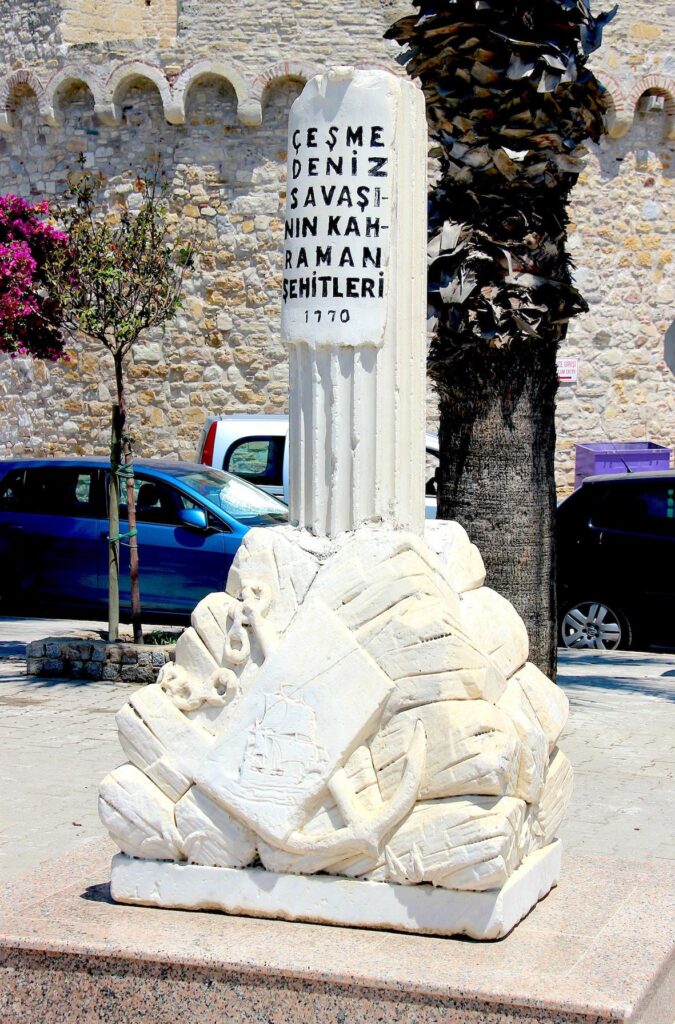
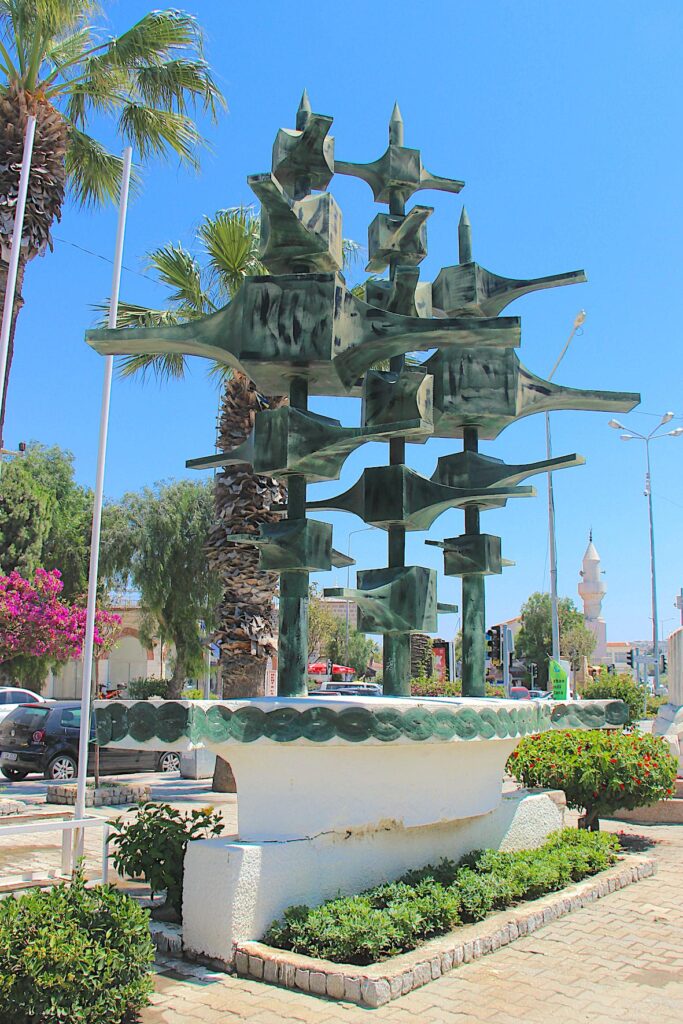
Naval Martyrs’ Monument (5-6 July 1770)
Location: Musalla, 1015. Sk. No:1, 35930 Çeşme/İzmir. In the park opposite to Çeşme Castle near the waterfront.
The Naval Martyrs’ Monument is a stark and solemn memorial dedicated to the sailors who lost their lives during the catastrophic naval engagement of 5–6 July 1770, when the Ottoman fleet was destroyed in Çeşme Bay during the Ottoman–Russian wars of the 18th century. Carved in white stone, the monument uses restrained, symbolic forms rather than heroic figures: a broken column rises from a sculpted base evoking the sea, ships, and shattered naval power. The inscription, simply honouring the “heroic martyrs of the Battle of Çeşme,” reinforces the memorial’s purpose as a site of remembrance rather than triumph. Its visual language speaks of loss, sacrifice, and historical rupture, marking one of the most decisive naval defeats in Ottoman history.
Originally erected in Çeşme in the 1950s, the monument was later transferred in 1972 to the Beşiktaş Naval Museum in Istanbul, where it became part of Türkiye’s national naval heritage collection. Its return to Çeşme in March 2012, after restoration, was symbolically significant, restoring the memorial to the very landscape where the battle took place and where the sailors it commemorates lost their lives. Today, positioned in the harbour gardens opposite Çeşme Castle, the monument reconnects local memory with national history, serving as a quiet counterpoint to the surrounding cafés, promenades, and daily life.
See also: LikeCesme.com – The Battle of Çeşme (1770)
See also: LikeTürkiye.com – Best of Istanbul Top 10 Istanbul Museums – Istanbul Naval Museum (Deniz Müzesi)
Contemporary & Symbolic Sculptures
Alongside historical monuments, Çeşme also features contemporary and symbolic sculptures that reflect its maritime identity, Aegean culture and relaxed coastal character. These works often serve as landmarks and photo points rather than formal memorials.
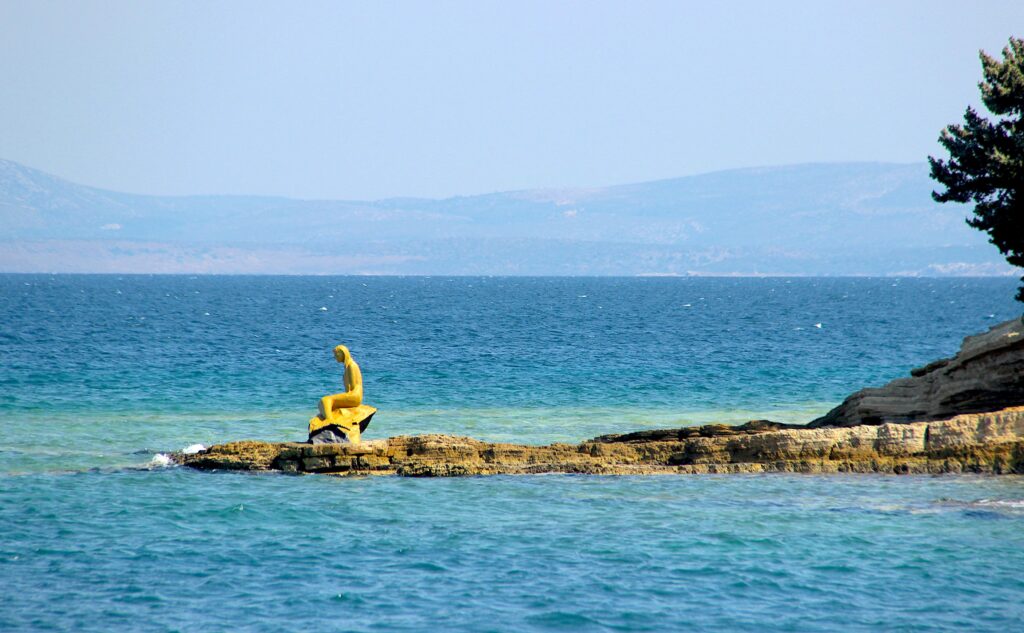
The Mermaid at Dalyanköy Harbour
Locationı: Dalyan, 4266. Sk. No:45, 35930 Alev Ada/Çeşme/İzmir, Türkiye. Across the harbour entrance from Amiral Turgut Reis Monument.
The Mermaid at Dalyanköy Harbour is a small but distinctive coastal sculpture positioned on the rocks at the eastern side of the harbour entrance in Dalyanköy, just outside Çeşme. Rather than functioning as a formal historical monument, the mermaid serves as a symbolic guardian of the harbour, quietly marking the boundary between land and sea. Its placement is deliberate: low to the water and partially integrated into the natural rock formations, the statue feels less like an imposed artwork and more like a watchful presence emerging from the coastline itself. The mermaid motif draws on long-standing Aegean and Mediterranean maritime folklore, in which such figures are associated with navigation, protection, and the sea’s unpredictability.
In contrast to the grand naval monuments and heroic statues found closer to Dalyanköy Harbour, the Dalyanköy mermaid reflects the village’s quieter, more intimate relationship with the sea. Dalyanköy has long been a small fishing and wintering harbour, and the sculpture resonates with local maritime life rather than national history.
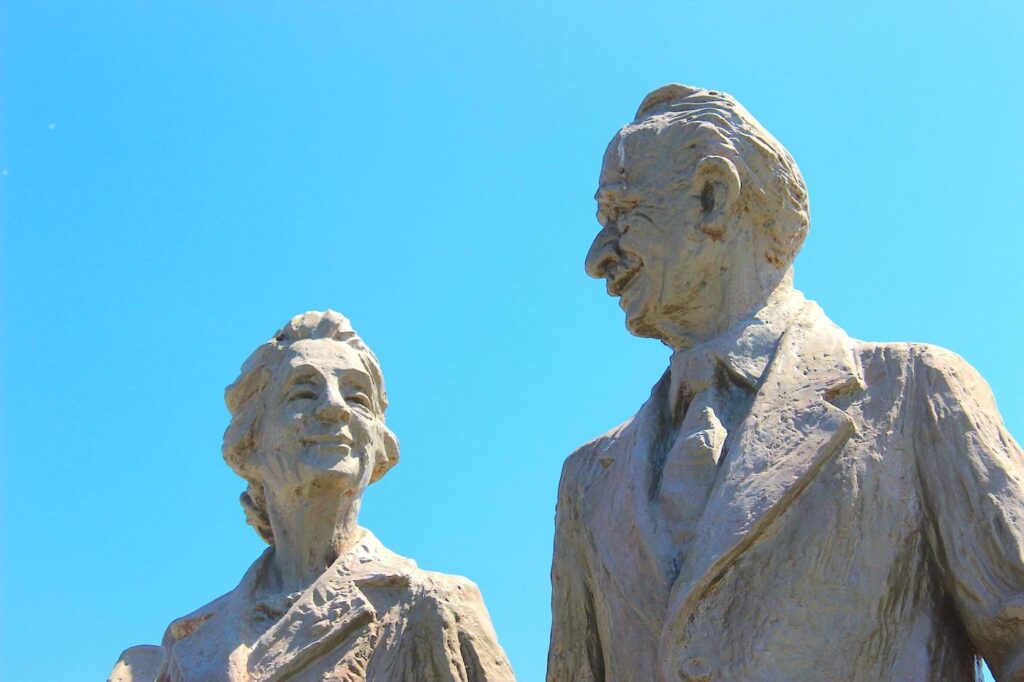
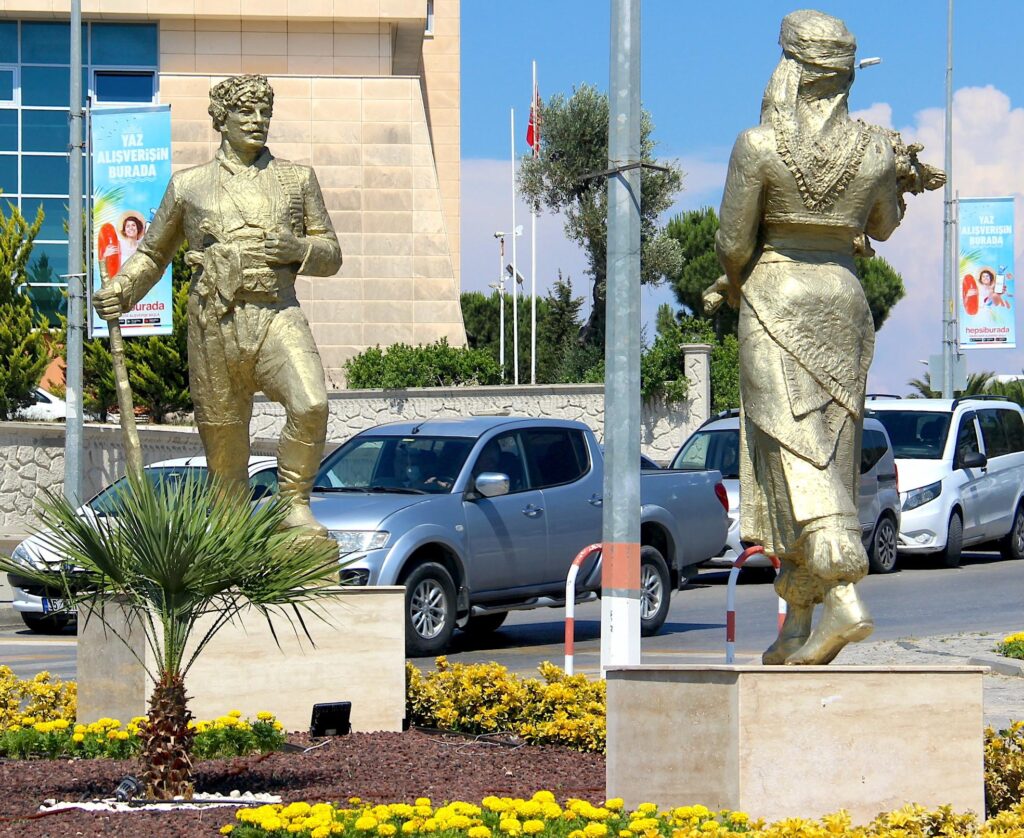
Gold Statue of Aegean Couple
Location: İsmet İnönü, Cumhuriyet Meydanı, 35930 Çeşme/İzmir, Türkiye
These paired statues of a man and a woman stand on the roundabout at the entrance to Çeşme, marking the point where Atatürk Boulevard meets the town centre and forming a symbolic gateway into the peninsula. Cast in a gold-toned finish and dressed in traditional Aegean clothing, the figures are positioned slightly apart, creating a quiet narrative rather than a single focal scene. The male figure carries a rifle in his right hand, with ammunition slung across his shoulder, suggesting a soldier or irregular fighter setting out rather than engaged in battle. His forward-facing stance conveys movement and departure, while the absence of overt heroics keeps the emphasis on duty rather than triumph.
The female figure, by contrast, holds flowers and adopts a composed, grounded posture, representing home, continuity, and civilian life. Together, the statues can be interpreted as a visual metaphor for separation, sacrifice, and endurance, themes deeply embedded in the late Ottoman and early Republican experience. Positioned at a busy roundabout, they are designed to be read in motion by those entering Çeşme, functioning less as contemplative memorials and more as threshold markers.